Copper Rain Gauge Manufacturer,Supplier and Exporter in India

Product Code : EL-WE-7502
Jlab Export is a leading Copper Rain Gauge Manufacturer,and suppliers in India
Copper Rain Gauge (code EL-WE-7502) is a BA-pattern rain gauge with a 127 mm funnel, an inner receiving vessel and outer body all of copper, and a glass measuring cylinder graduated 0 to 10 mm x 0.1 mm. It is used for daily rainfall observation at school and college weather stations and in geography and environmental science fieldwork. It is made by Jain Laboratory Instruments Pvt Ltd (JLab) at its works in Ambala, India.
Specifications
| Parameter | Detail |
|---|---|
| Pattern | BA pattern |
| Funnel | 127 mm |
| Inner receiving vessel | Copper |
| Outer body | Copper |
| Measuring cylinder | Glass, graduated 0 to 10 mm x 0.1 mm (100 divisions) |
| Quality check | Each rain gauge is visually inspected before dispatch |
| Pack quantity | Each (sold individually) |
| Minimum order quantity | 10 units |
| Dispatch time | Usually 7–10 working days |
| Product code | EL-WE-7502 |
| Manufacturer | Jain Laboratory Instruments Pvt Ltd (JLab) — OEM |
| Country of origin | India (made in Ambala, Haryana) |
How Does It Compare with Other JLab Rain Gauges?
| Model | Body | How rainfall is read | Other listed details |
|---|---|---|---|
| This copper gauge (EL-WE-7502) | Copper inner receiving vessel and outer body | Glass measuring cylinder, 0 to 10 mm x 0.1 mm (100 divisions) | BA pattern; 127 mm funnel |
| Rain Gauge | Translucent material | Calibrated in millimetres and inches | 210 x 100 mm (dia.); rainfall chart included |
| Rain Gauge with Plastic Measuring Cylinder | GI sheet | Plastic measuring cylinder | Measures precipitation over a set period of time |
Choose the copper gauge when you want a separate glass measure that reads rainfall to 0.1 mm and a metal body that stays outdoors; the translucent gauge is the simpler option for younger classes, and the GI-sheet gauge pairs a metal body with a plastic measuring cylinder.
What Is the Copper Rain Gauge Used For?
Rain falls into the funnel and collects in the inner copper vessel, which keeps it from evaporating before it is measured. At the daily observation time the water is poured into the glass measuring cylinder, which is graduated for this funnel so that it reads rainfall depth directly, in tenths of a millimetre. Students use it to keep a continuous rainfall record for a school weather station, total the figures by week, month and season, compare monsoon and dry months, and set their data beside published district rainfall. It suits weather-instrument practicals in senior secondary geography, college climatology and environmental monitoring projects.
Set the gauge on open, level ground away from trees and buildings, with the funnel rim level. Read it at the same time each day, holding the measure upright with the bottom of the meniscus at eye level. If more than 10 mm of rain has fallen, measure the water in portions and add the readings. Copper resists corrosion outdoors, but the glass measure can break, so many observers keep a spare.
What to Specify When Ordering
- Quantity — the minimum order is 10 gauges.
- Spare measuring glasses — add the Rain Gauge Spare Measure Glass to the order so a breakage does not interrupt the record.
- Other station instruments — thermometers, a wind vane and a weather station housing can be quoted together.
- Delivery — destination country and port or city, and any tender reference.
Frequently Asked Questions
What size is the funnel of this rain gauge?
127 mm. The glass measuring cylinder is graduated to read rainfall for this funnel size.
How is the measuring cylinder graduated?
From 0 to 10 mm of rainfall in 0.1 mm steps, giving 100 divisions. Readings are taken at the bottom of the meniscus.
Which parts are made of copper?
The inner receiving vessel and the outer body are both copper; the measuring cylinder is glass.
Can I order a spare measuring glass?
Yes. The Rain Gauge Spare Measure Glass, graduated 0 to 10 mm x 0.1 mm and listed as a spare for the BA pattern rain gauge, is a separate item linked below.
What if more than 10 mm of rain falls in a day?
Pour the water from the inner vessel into the measure in portions, read each one and add them together for the day’s total.
What information is needed for an export quotation?
The quantity, destination country and port or city, delivery terms such as FOB or CIF, packing or labelling requirements, and the tender reference if there is one.
Who manufactures the Copper Rain Gauge?
JLab (Jain Laboratory Instruments Pvt Ltd) at its works in Ambala, Haryana, India.
OEM Manufacturer
JLab is the trading name of Jain Laboratory Instruments Pvt Ltd, an Indian manufacturer of weather instruments, geography lab equipment and school science apparatus, incorporated in 2017 and based on Hargolal Road, Ambala, Haryana. The copper rain gauge is built in JLab’s own works instead of being bought from a trader, which means schools, colleges, dealers and importers buy at source, each gauge is visually inspected before it leaves, and spare measuring glasses and repeat orders come from the manufacturer. JLab exports worldwide and ships to buyers in every region — for example Cameroon in Central Africa, Ireland in Western Europe, Cyprus in Southern Europe, Japan in East Asia and Malaysia in Southeast Asia. For tenders, see the JLab lab tenders page.
Spares and Weather Station Instruments
- Rain Gauge Spare Measure Glass — a spare glass measuring cylinder, 0 to 10 mm x 0.1 mm, for the BA pattern rain gauge.
- Weather Station — a wooden station with ventilation holes and a louvered door for mounting weather instruments.
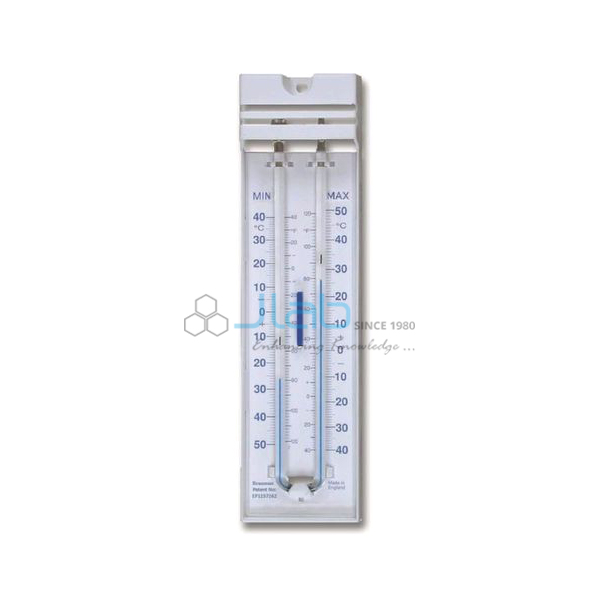
- Mercury Free Max Min Thermometer — a maximum minimum thermometer with a mercury-free filling.
- Weather Instruments Chart — a laminated chart in English and Hindi combined.
View the full Weather Equipment range or all Geography Lab Models.
Request a Quote
Quotes come direct from the manufacturer. Use the Add To Cart enquiry button on this page, or send the quantity (minimum 10 units), the number of spare measuring glasses you want, and your delivery location through the contact page.
Last updated: 3 October 2026