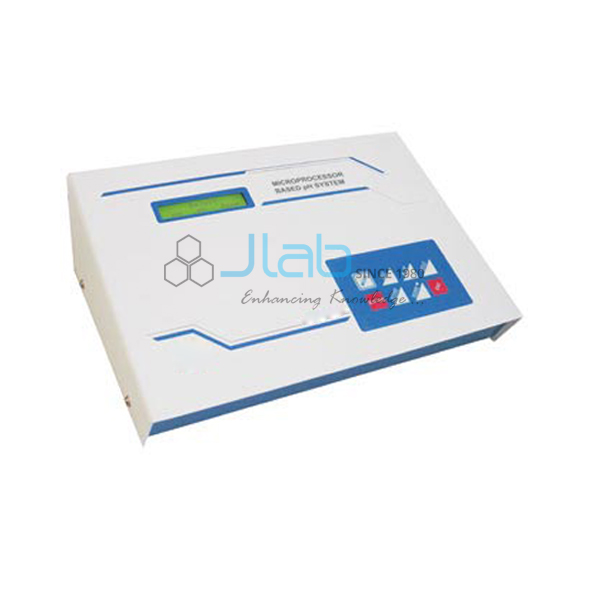
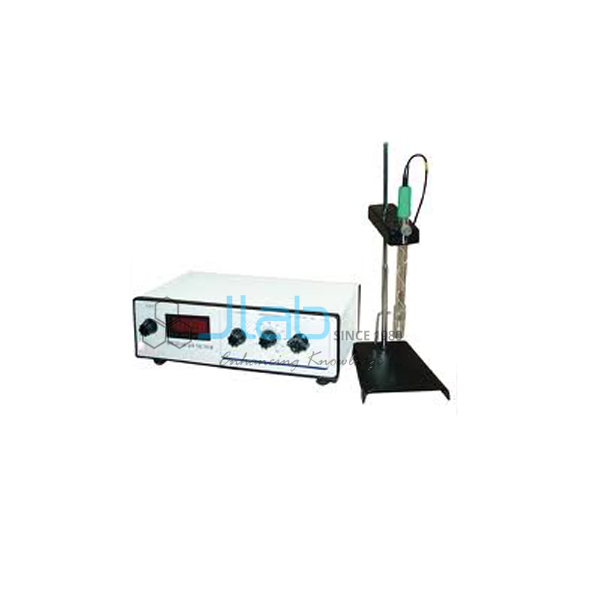
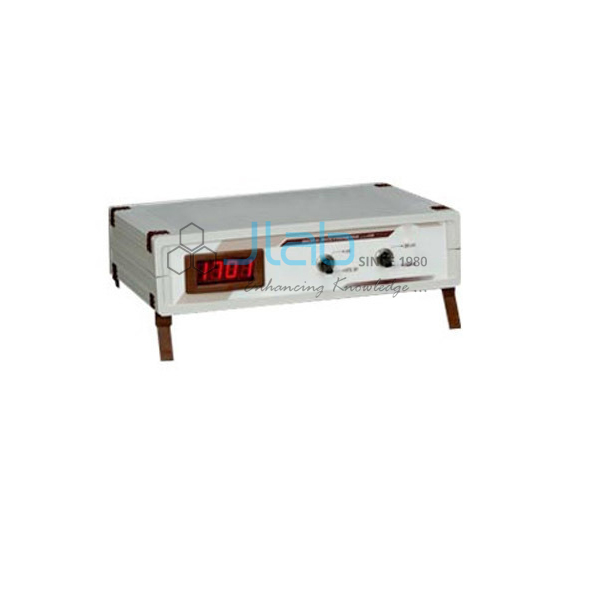
Digital pH, Conductivity & Temperature Meter Manufacturer,Supplier and Exporter in India
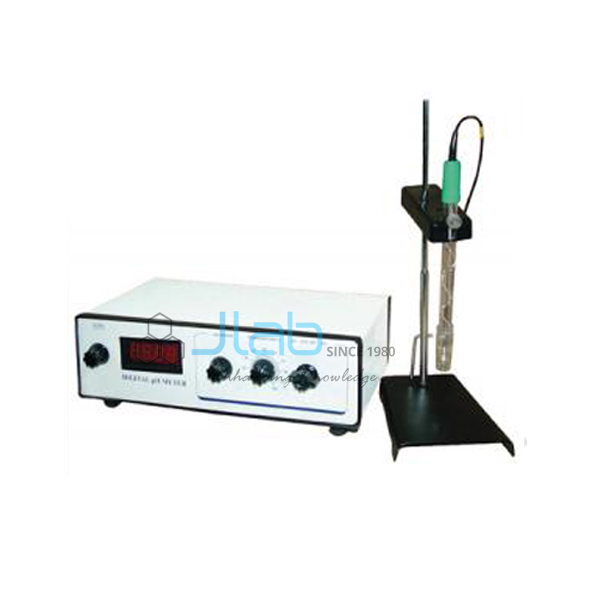
Product Code : EL-PM-2180
Jlab Export is a leading Digital pH, Conductivity & Temperature Meter Manufacturer,and suppliers in India
Three measurements share one bench case here: pH through a glass electrode, conductivity through a cell of known cell constant, and temperature. All three appear on a 3½-digit red LED display. The pH side has slope correction from 80 to 120%, and the conductivity side covers 0 to 20 mS/cm in two ranges, with the cell constant set from 0.2 to 1.8.
Specifications
| Display | 3½-digit seven-segment red LED |
| pH | 0–14 pH, resolution 0.01 pH, accuracy 0.01 ±1 digit |
| pH input impedance | Above 10^12 ohms |
| pH temperature compensation | Manual, 0–100 °C |
| Slope correction | 80–120% |
| Conductivity | 0–20 mS/cm in 2 ranges, accuracy ±0.5% of range ±1 digit, 1 kHz built-in oscillator |
| Cell constant | Adjustable from 0.2 to 1.8 on the digital display |
| Conductivity temperature compensation | 0–50 °C, adjusted from a temperature table to 25 °C |
| Temperature | 0–100 °C, resolution 0.1 °C, accuracy ±0.2% ±1 digit |
| Power, size and weight | AC mains, 50 Hz; 75 x 175 x 275 mm; 2.5 kg (approx.) |
| Minimum order quantity | 1 unit |
| Dispatch time | Usually 7–10 working days |
| Manufacturer | JLab (Jain Laboratory Instruments Pvt Ltd), Ambala, India |
Water and Solution Practicals
Before any conductivity work, students check the cell constant. They make a standard solution from Potassium Chloride, measure it and adjust the cell constant on the display until the reading matches the known value for that standard. The same check repeated each term shows whether the cell is fouling.
The classic college practical is a conductometric titration of a strong acid with a strong base. The acid sits in one of the Beakers on the Magnetic Stirrer, and base is added from a Burette. Conductance falls as fast-moving hydrogen ions are used up, then rises once excess base is present. The break where the two straight lines meet is the end point. A water-quality survey of tap, well and pond samples uses the pH and conductivity channels together.
Frequently Asked Questions
How do I set the cell constant?
Dip the cell in a standard potassium chloride solution at a known temperature. Adjust the cell constant on the display, within 0.2 to 1.8, until the meter shows the standard’s known conductivity. Rinse the cell and measure the samples.
Why does conductivity need temperature compensation?
The conductivity of a solution rises as it warms. This meter adjusts readings taken between 0 and 50 °C to 25 °C using a temperature table, so samples measured on a cold morning and a warm afternoon can be compared.
What is the slope correction on the pH side for?
A glass electrode gives less voltage per pH unit as it ages. During a two-buffer calibration, set the zero in a neutral buffer, then use the slope control (80 to 120%) to match the reading in the second buffer. A slope near the lower limit points to a worn electrode.
How is pH corrected for temperature on this meter?
The pH compensation is manual, from 0 to 100 °C. Measure the sample temperature on the meter’s temperature channel, then set that temperature for the pH reading. Calibrate and measure at similar temperatures for the closest results.
Which conductivity range should I use?
Start on the higher of the two ranges and switch down if the reading is small. Drinking water and distilled water read on the lower range. Treated waste water and dilute salt solutions need the higher range, which reads up to 20 mS/cm. Brine and sea water lie above it.
Other Water and Electrochemistry Meters
- pH/Conductivity/TDS/Salt/Temp Waterproof Tester (pocket tester for field work)
- Conductivity Meter (portable, remote probe)
- Microprocessor pH Meter
- Digital pH Meter
For a quote, use Add To Cart or send us a message through the contact page.
Last updated: 6 November 2026