Digital Potentiometer Manufacturer,Supplier and Exporter in India
Product Code : EL-PM-2182
Jlab Export is a leading Digital Potentiometer Manufacturer,and suppliers in India
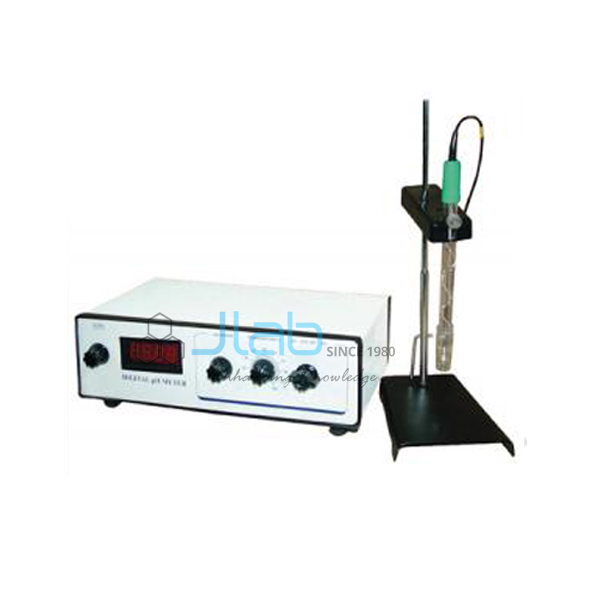
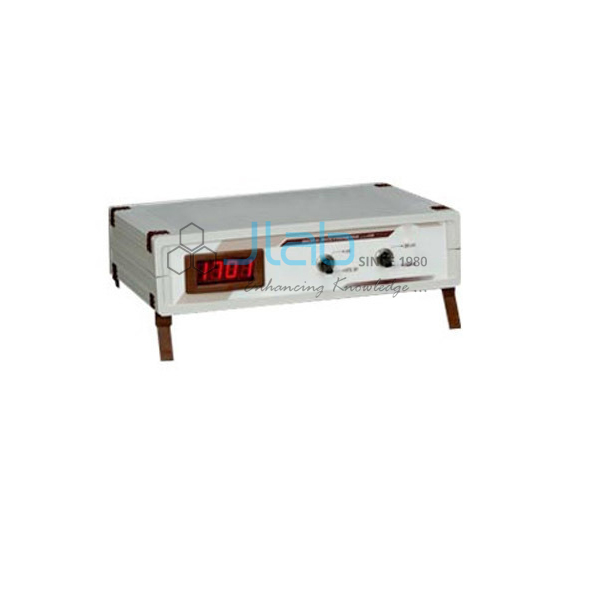
This mains-powered potentiometer shows millivolts directly on a 3½-digit LED display with automatic polarity. It is used to follow potentiometric, ORP and acid-base titrations by hand. There are two ranges, ±199.9 mV and ±1999 mV, and it reads to 0.1 mV on the lower one. Four electrodes come with it: reference, platinum, silver and glass.
Specifications
| Ranges | 0 to ±199.9 mV and 0 to ±1999 mV |
| Resolution | 0.1 mV |
| Repeatability | ±1 mV |
| Accuracy | ±1 mV ±1 digit |
| Input impedance | Above 10^12 ohms |
| Display | 3½-digit, 0.5 inch seven-segment LED with auto polarity |
| Operating temperature | 10–45 °C |
| Power | 230 V ±10% AC, 50 Hz |
| Size and weight | 275 x 175 x 75 mm, 2.5 kg (approx.) |
| Supplied with | Platinum, reference, glass and silver electrodes, electrode stand, clamp, dust cover |
| Minimum order quantity | 1 unit |
| Dispatch time | Usually 7–10 working days |
| Manufacturer | JLab (Jain Laboratory Instruments Pvt Ltd), Ambala, India |
Titration Experiments by Hand
This model has no built-in stirrer or memory. Students stand the titration vessel, one of the Beakers, on a separate Magnetic Stirrer and write each reading in a table. That makes it a good instrument for teaching how a titration curve is built up point by point.
A favourite precipitation exercise uses the silver and reference electrodes. Students titrate a solution made from Potassium Chloride with Silver Nitrate and watch the mV change sharply as the last chloride precipitates. A redox titration with the platinum electrode and an acid-base titration with the glass electrode complete the set.
Frequently Asked Questions
Which range should I select?
Use the ±199.9 mV range when the potential stays inside that band and you want 0.1 mV steps. Switch to the ±1999 mV range for redox and acid-base titrations, where the potential can swing by hundreds of millivolts.
What does auto polarity mean?
The display adds a minus sign by itself when the electrode potential is negative. You do not have to swap the leads, and readings on both sides of zero can be logged in one titration.
How do I take an ORP reading?
Place the platinum electrode and the reference electrode in the sample and wait until the mV value is steady. An ORP value depends on the reference electrode used, so note which reference was in the cell when you record it.
How should the reference electrode be cared for?
Keep its junction wet and store the tip in solution when not in use. If it has a filling hole, open it during measurements and keep the filling solution topped up. A dry or blocked junction gives drifting readings.
How does it differ from the Microprocessor Potentiometer?
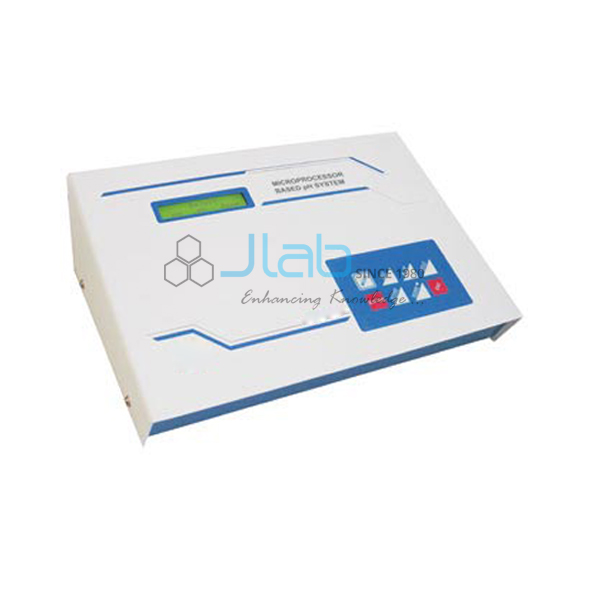
The Microprocessor Potentiometer adds a temperature channel, an LCD with prompts, sample memory, printer output and its own stirrer. This model is simpler: an LED mV display with two ranges, for labs that record by hand.
Other Electrochemistry Instruments
- Platinum Electrode
- Microprocessor pH Meter
- Digital pH Meter (pH and mV, recorder output)
For a quote, use Add To Cart or send us a message through the contact page.
Last updated: 6 November 2026