Engine Management Principle Manufacturer,Supplier and Exporter in India

Product Code : EL-AELE-9371
Jlab Export is a leading Engine Management Principle Manufacturer,and suppliers in India
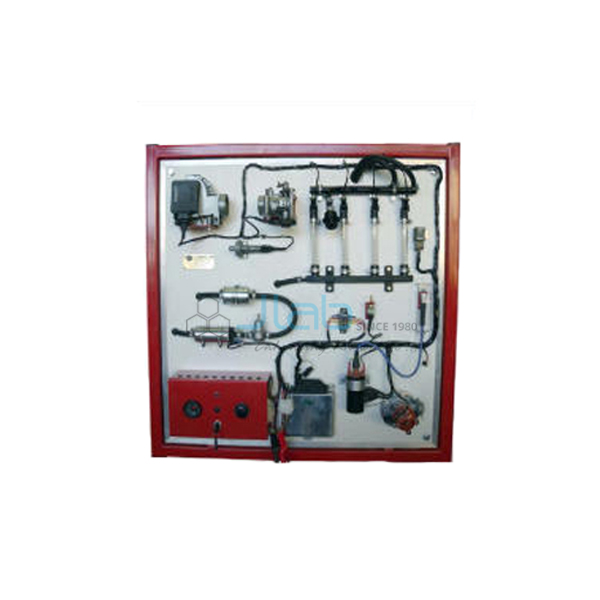
An engine control unit reads its sensors, works out fuel and spark, and drives its actuators, over and over while the engine runs. This trainer lays that loop out on one board, with sensors, actuators, fuel, ignition and emission systems around a microcontroller-based control unit. Self-diagnosis and trouble codes are part of the course.
Specifications
| Type | Trainer for engine management principles |
| Layout | Typical engine with sensors, actuators, fuel, ignition and emission systems and engine control unit |
| Topics | Fuel system electronics, transducers, engine control unit, actuators |
| Diagnosis and emissions | Emission control, self-diagnosis and trouble codes |
| Electronics | Circuit board with electronic components and microcontroller systems |
| Included | System diagrams, power supply, electrical test leads |
| Manual | Student experiment manual in hard copy and PDF |
| Minimum order quantity | 1 unit |
| Dispatch time | Usually 14–18 working days |
| Manufacturer | JLab (Jain Laboratory Instruments Pvt Ltd), Ambala, India |
Practicals on Sensors, ECU and Actuators
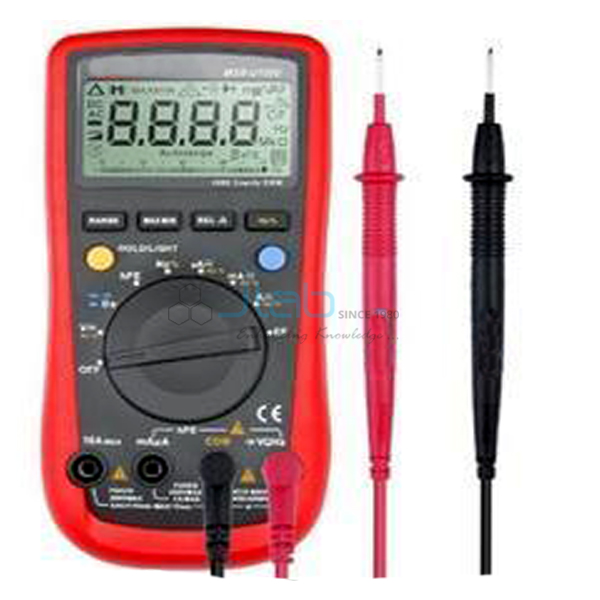
Students first find each transducer on the board and read its output with a Digital Multimeter, relating the voltage or resistance to the quantity it measures. On the output side they see how the control unit switches injectors and the ignition by turning their earth circuits on and off. The same injection layout can be seen working on the Fuel Supply System Petrol MPFI Type model.
The self-diagnosis exercise shows what happens when a signal goes out of range. The control unit stores a trouble code, and students read the code and trace the fault back to its circuit. In the workshop the same job is done on a vehicle with an Auto Diagnostic Analyzer.
Frequently Asked Questions
What is the difference between a sensor and an actuator?
A sensor, or transducer, turns a physical quantity such as temperature, pressure or speed into an electrical signal for the control unit. An actuator does the reverse: it turns a control unit output into an action, such as opening an injector or firing an ignition coil.
What are trouble codes?
When the self-diagnosis in the control unit finds a signal it cannot accept, it stores a code that points to the circuit concerned. A technician reads the codes with a scan tool, then tests the sensor, wiring and connectors to find the actual cause.
How is emission control tied to engine management?
The control unit trims the fuel so the mixture stays close to the chemically correct ratio. It uses feedback from an oxygen sensor in the exhaust to do this, which also lets the catalytic converter work properly. Faults in this loop raise emissions.
Does the trainer need a running engine?
No. It represents a typical engine on a circuit board, with its sensors, actuators and control unit, and works from its own power supply. Students can study engine management in a classroom without fuel, exhaust or noise.
What makes an engine run rich or lean?
Rich running comes from too much fuel for the air, for example a leaking injector, a faulty oxygen or air flow sensor, or a blocked air intake. Lean running means too little fuel, often from a vacuum leak or low fuel pressure. Each cause can be traced to a sensor, actuator or fuel system part on the board.
Other Fuel, Ignition and Diagnosis Equipment
- Fuel Injection Trainer - Multi Point EFI System
- Ignition and Charging System
- Gas Exhaust Analyzer
- EFI Petrol Engine Test Bed
For a quote, use Add To Cart or send us a message through the contact page.
Last updated: 5 November 2026