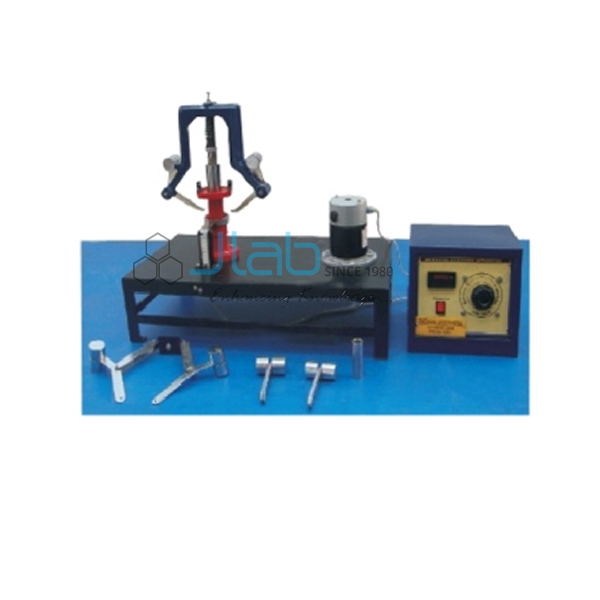
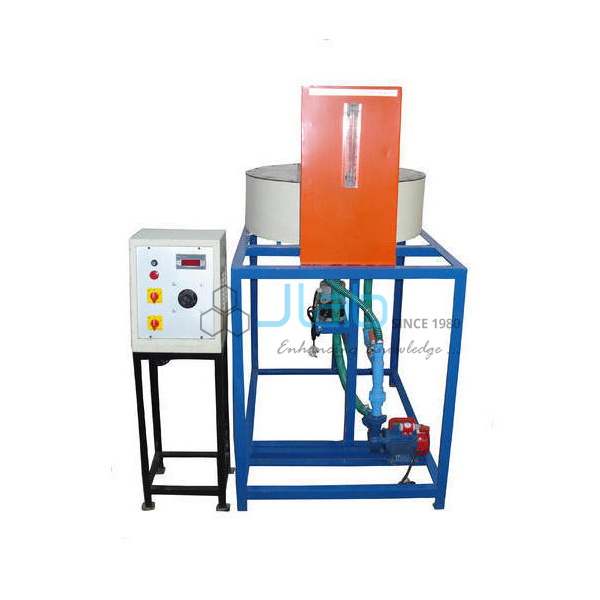
Interference and Undercutting Manufacturer,Supplier and Exporter in India
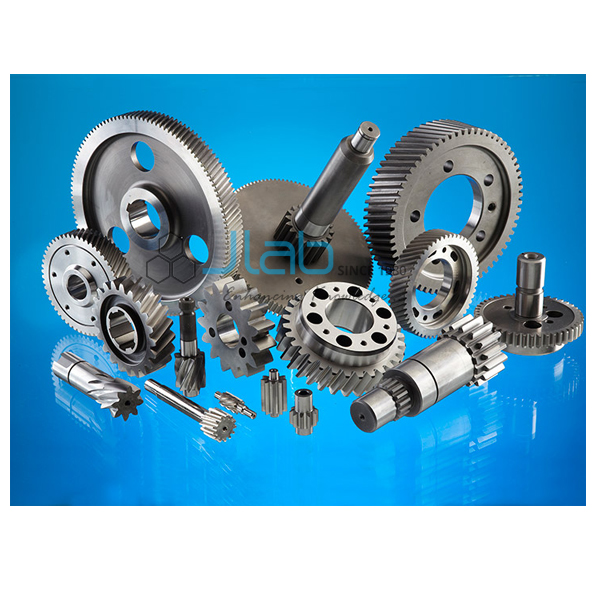
Product Code : EL-TOMLE-10012
Jlab Export is a leading Interference and Undercutting Manufacturer,and suppliers in India
This board demonstrates two gear faults side by side: interference and undercutting. Turned anticlockwise, the teeth run smoothly because they are undercut and the rack tip clears them. Turned clockwise, the rack tip is resisted by the tooth flank, and that resistance is interference.
Specifications
| Type | Demonstration board |
| Shows | Interference and undercutting of gear teeth |
| Anticlockwise rotation | Undercut teeth, smooth working |
| Clockwise rotation | Rack tip resisted by the tooth flank (interference) |
| Minimum order quantity | 1 unit |
| Dispatch time | Usually 14–18 working days |
| Manufacturer | JLab (Jain Laboratory Instruments Pvt Ltd), Ambala, India |
Why Interference Happens
Involute action takes place only outside the base circle, because that is where the involute starts. A gear can have too few teeth for its pressure angle. Then the tip of the mating rack or gear tooth reaches below the base circle and tries to cut into the flank. In running gears this jams the mesh. When teeth are generated by a cutter, the cutter tip removes that part of the flank instead, which is undercutting. An undercut tooth runs freely but is weaker at the root.
Classroom Demonstrations and Practicals
Teachers turn the board one way and then the other, so the class sees the smooth run and then the rack tip stopping on the flank. Students sketch the tooth contact in both directions and mark where the tip meets the flank. They then trace teeth on the Generation of Involute Gear Tooth Profile board, where the smaller discs show the undercut root. Assembling the Rack & Pinion trainer lets them compare a full working mesh with the one on the board.
Frequently Asked Questions
What is the difference between interference and undercutting?
Interference is the fault in running gears: the tip of one tooth digs into the flank of the other below its base circle, and the mesh jams. Undercutting happens during cutting, when the generating cutter removes part of the flank near the root.
When does interference occur?
It occurs when a gear has too few teeth for its pressure angle. Contact would then begin inside the base circle of the smaller gear, where there is no involute. More teeth or a larger pressure angle reduce the risk.
How can interference be avoided in a gear design?
Use more teeth on the pinion, a larger pressure angle, stub teeth with a shorter addendum, or a positive profile shift when cutting. Undercutting also clears the interference, but it leaves the tooth weaker at the root.
Why does the board run smoothly in only one direction?
In the anticlockwise direction the undercut teeth let the rack tip pass, so the board runs smoothly. In the clockwise direction the rack tip is resisted by the tooth flank, which is the interference the board is made to show.
Other Gear Teaching Models
For a quote, use Add To Cart or send us a message through the contact page.
Last updated: 6 November 2026