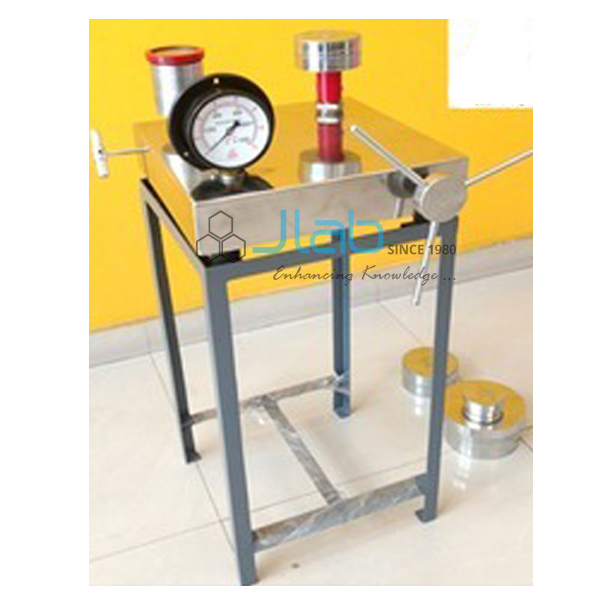
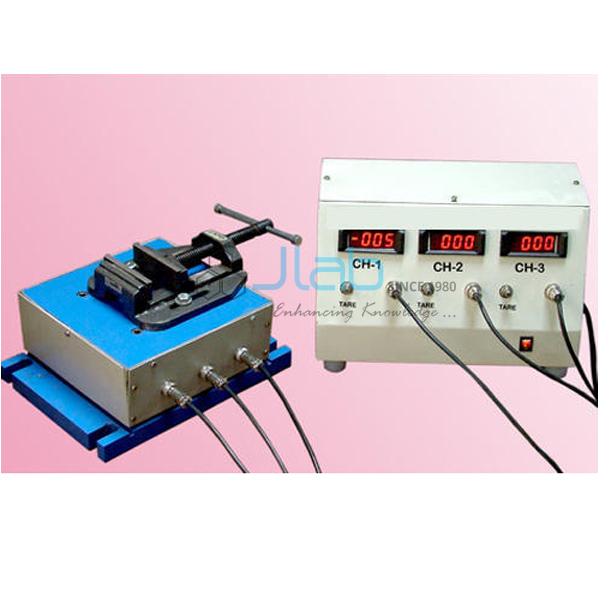
Lathe Tool Manufacturer,Supplier and Exporter in India
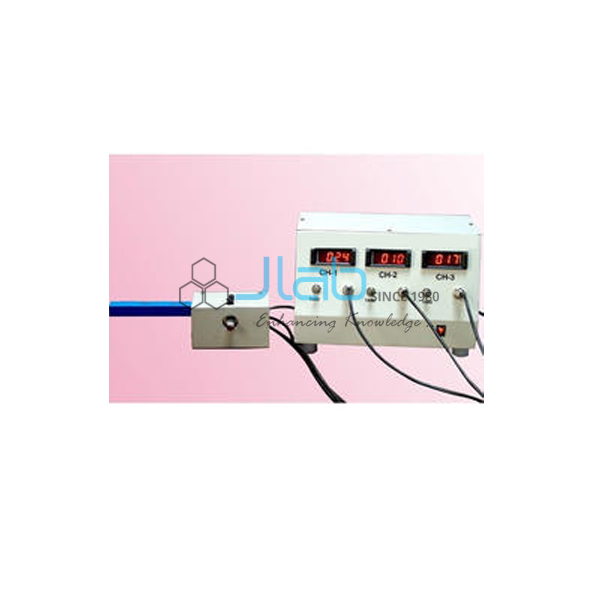
Product Code : EL-TOMLE-10020
Jlab Export is a leading Lathe Tool Manufacturer,and suppliers in India
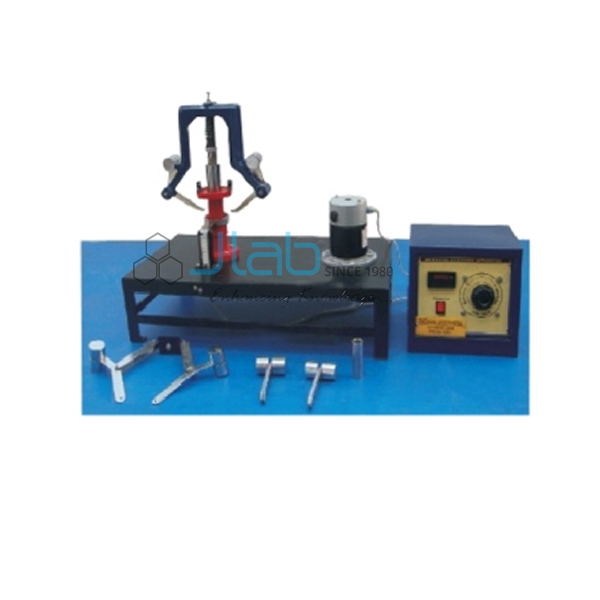
Mounted in place of the compound slide on a lathe, this two-component dynamometer holds the cutting tool and measures the vertical and horizontal forces in orthogonal cutting. Strain gauges in the tool holder feed a digital indicator that reads both forces at once, from 0 to 500 kg. A 1/2 in HSS tool comes with it.
Specifications
| Type | Two-component strain gauge lathe tool dynamometer |
| Forces measured | Vertical and horizontal, read together |
| Force range | 0 to 500 kg |
| Sensing unit | Tool holder with strain gauges |
| Mounting | On the cross slide, after removing the swivel base and compound slide |
| Tool supplied | HSS tool, 1/2 in |
| Control panel | Digital force indicator, balancing potentiometers, switches, fuses, connecting cable |
| Front plate | Polycarbonate |
| Cutting fluid | Can be used during the cut |
| Also available | Three-component lathe tool dynamometer |
| Minimum order quantity | 1 unit |
| Dispatch time | Usually 7–10 working days |
| Manufacturer | JLab (Jain Laboratory Instruments Pvt Ltd), Ambala, India |
Fitting It to Your Lathe
The tool holder replaces the swivel base and compound slide, so it bolts straight onto the cross slide. Its size has to suit the machine. With an enquiry, send the centre height of your lathe, the pitch circle diameter of the clamping bolts and the bolt size.
Turning Practicals with the Lathe Tool
On a Center Lathe Machine or an All Geared Lathe, students set up an orthogonal cut. A common way is to turn the end of a thin-walled tube with the tool fed along the axis, so the width of cut equals the wall thickness. They change cutting speed, feed and depth one at a time and record both forces. Runs with and without cutting fluid show its effect.
Chip thickness is measured with an External Micrometer and compared with the feed to give the chip thickness ratio. With the two force readings, students draw the Merchant circle and find the shear angle and the friction coefficient at the tool face. Teachers can point out that the vertical force is usually the larger of the two.
Frequently Asked Questions
Which forces does a two-component lathe dynamometer read?
It reads the vertical force, the main cutting force acting down on the tool, and the horizontal force along the feed. The three-component model adds the radial force that pushes the tool away from the job.
Can it be used with cutting fluid?
Yes. Cutting fluid can be used during the cut, so forces can be compared for dry cutting and for cutting with fluid on the same job and tool.
How do feed, depth of cut and speed change the forces?
Both forces rise almost in step with feed and with depth of cut, because the area of the chip grows. A higher cutting speed lowers them a little, as the chip thins and slides more easily over the tool face.
What tool comes with it?
A 1/2 in HSS tool is supplied for the tool holder. Its rake and clearance angles can be ground to suit the cut, so students can compare the forces for different tool angles.
Other Machining Force Dynamometers
- Tool Dynamometers (the full set of four)
- Milling Tool (three-component milling unit)
- Grinder Tool (surface grinding forces)
- Drilling Tool (thrust and torque in drilling)
For a quote, use Add To Cart or send us a message through the contact page.
Last updated: 6 November 2026