Laboratory Mill Manufacturer,Supplier and Exporter in India

Product Code : EL-PLE-2258
Jlab Export is a leading Laboratory Mill Manufacturer,and suppliers in India
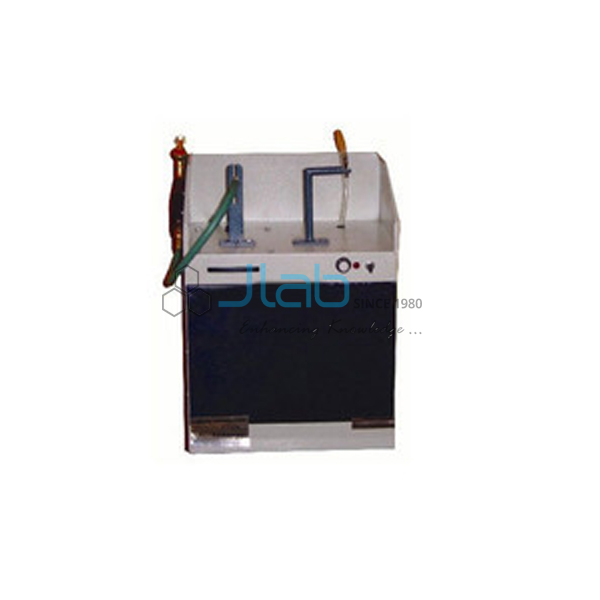
This laboratory mill is a cutting mill. Rotating knives cut the sample until the pieces are small enough to pass the delivery sieve into the receiver. It prepares samples for analysis with little loss of moisture or volatile matter. Its rotating parts are weighted and balanced, so it runs steadily and quietly with little vibration.
Specifications
| Type | Cutting mill for preparing analysis samples |
| Motor | 1/4 HP |
| Hopper | Nickel plated, 50 mm diameter, with cover |
| Delivery sieves | Three: 20, 40 and 80 mesh |
| Supplied with | Plastic receiver, brush, L-N key, cord and plug |
| Power | 220 V, single phase, 50 Hz AC |
| Minimum order quantity | 1 unit |
| Dispatch time | Usually 14–18 working days |
| Manufacturer | JLab (Jain Laboratory Instruments Pvt Ltd), Ambala, India |
Sample Preparation Practicals
In pharmacognosy and food analysis classes, students cut the same dried leaf or seed through the 20, 40 and 80 mesh sieves in turn. They compare how fine each powder is and how long each batch takes. A Test Sieve shows how much of each batch falls within the size the method calls for.
The milled powder then goes on to moisture, ash or extractive tests. Students weigh portions on an Analytical Balance, and teachers can grind a hard crystalline solid in a Ball Mill for comparison, to show why fibrous and brittle materials need different mills.
Frequently Asked Questions
What kinds of sample suit a cutting mill?
Soft, fibrous and tough materials cut cleanly: leaves, stems, roots, seeds, feeds and similar plant matter. Hard, brittle minerals blunt the knives and are better crushed or ground in a ball mill.
Why does this mill keep moisture and volatile matter in the sample?
Cutting breaks the material with little rubbing, so the chamber warms less than in mills that grind by friction. Less heat means less water and fewer volatile oils lost before analysis. Long runs still warm it, so grind in short batches.
Why does the sieve clog?
Moist, sticky or oily material packs into the mesh, and the 80 mesh sieve clogs first because its openings are smallest. Dry the sample, feed it slowly through the hopper and start on the 20 mesh sieve if the material is gummy.
How should the mill be cleaned between samples?
Switch off and unplug it, open the chamber and brush out the knives, the sieve and the receiver with the brush supplied. For analysis work, run a little of the next sample through and discard it before collecting.
How do I know the knives need attention?
Grinding becomes slower, the chamber gets warmer, and the pieces come out torn or stringy instead of cleanly cut. Check the knife edges for chips or dullness and have them sharpened or replaced before the next batch.
Other Mills for Pharmacy Labs
- Disintegrator (hammer type)
- Hand Grind Mill (hand operated)
- Granulating Sieves
For a quote, use Add To Cart or send us a message through the contact page.
Last updated: 12 November 2026