Model of Hydraulic Braking System Manufacturer,Supplier and Exporter in India
Product Code : EL-AELE-9421
Jlab Export is a leading Model of Hydraulic Braking System Manufacturer,and suppliers in India
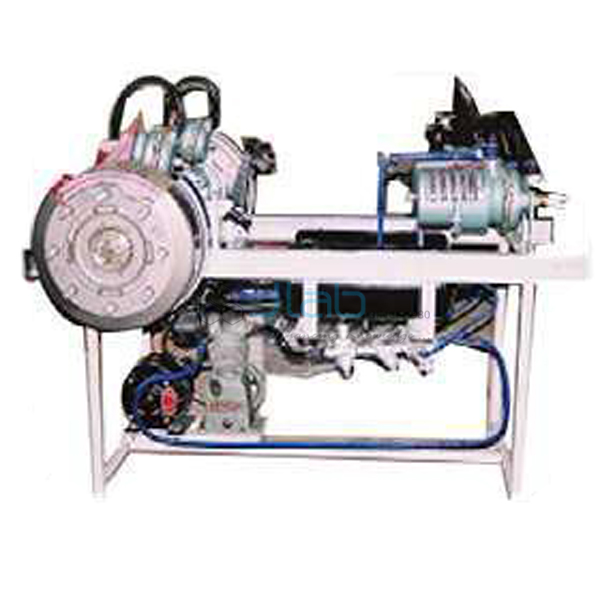
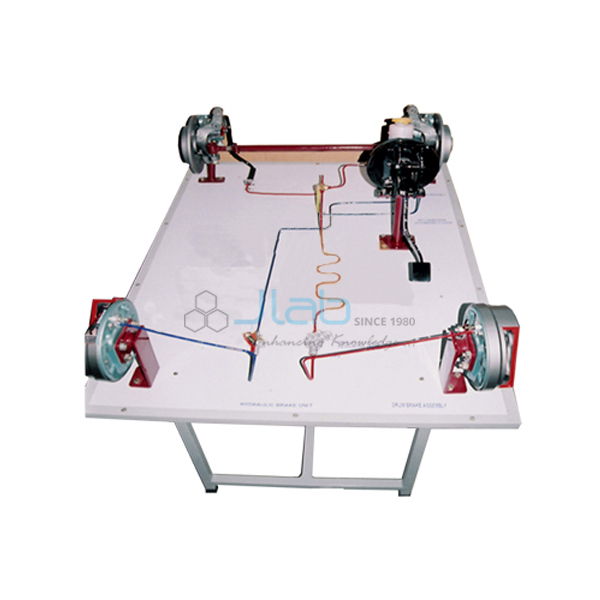
One side of this hydraulic braking system works and the other side is cut open. The left front disc brake and left rear drum brake are connected to the master cylinder, and they apply when the brake pedal is pressed through the booster. The aggregates on the other side are sectioned dummies that show the internal details.
Specifications
| Built from | Used brake aggregates, paint finished |
| Working side | Left front disc brake and left rear drum brake |
| Other side | Sectioned dummy aggregates showing internal details |
| Operation | Brake pedal to master cylinder through booster |
| Mounting | Sturdy iron frame |
| Minimum order quantity | 1 unit |
| Dispatch time | Usually 14–18 working days |
| Manufacturer | JLab (Jain Laboratory Instruments Pvt Ltd), Ambala, India |
One Pedal, a Disc and a Drum
Pressing the pedal moves the booster pushrod into the master cylinder. Fluid pressure travels along the brake lines to the caliper of the left front disc and the wheel cylinder of the left rear drum. Both brakes therefore apply from one pedal. The pads grip the disc faces while the shoes press outwards on the drum.
On a car the master cylinder is usually a tandem unit that feeds two separate circuits, so a leak in one still leaves braking on the other. The sectioned aggregates on the dummy side let students see the pistons, seals and springs that do this work. The model is built from used brake aggregates, paint finished, on a sturdy iron frame.
Brake Circuit Practicals for Students
Students press the pedal and watch the disc and drum brakes on the working side apply together. They then trace the pipe from the master cylinder to each brake and draw the circuit, marking the booster, master cylinder, caliper and wheel cylinder.
Bleeding and fault-finding practice fits well on the Hydraulic Brake Chassis Trainer, which is built for maintenance and repair training. The Model of Hydraulic Brake Unit Four Wheel Type adds a lever-worked layout with discs at the front and drums at the rear.
Frequently Asked Questions
What does a hydraulic braking system consist of?
A brake pedal, often with a booster, a master cylinder with its reservoir, brake lines, and a caliper or wheel cylinder at each wheel. On this model one disc and one drum on the left side are working, and the other side is sectioned.
What happens if one circuit of a tandem master cylinder leaks?
The piston serving the leaking circuit travels until it meets the other piston or reaches its stop. Only then does the sound circuit build pressure. The pedal therefore goes much further and braking is weaker. Many cars light a brake warning lamp. Repair the leak before the vehicle is driven again.
How can a disc and a drum work from the same master cylinder?
Brake fluid passes the same pressure to every connected piston. The caliper and the wheel cylinder are each sized for their own brake, so the front disc and the rear drum each give the braking force they need.
Why is brake fluid used instead of water or oil?
Brake fluid has a high boiling point, stays liquid in cold weather and does not attack the rubber seals. Water would boil and rust the cylinders, and mineral oil swells seals made for brake fluid.
Brake Trainers and Hydraulic Units
- Model of Hydraulic Braking System with Vacuum Booster
- Vacuum Assisted Hydraulic Drum Brake
- Model of Drum Brake Unit
For a quote, use Add To Cart or send us a message through the contact page.
Last updated: 5 November 2026