
Parasitic Plants Chart Manufacturer,Supplier and Exporter in India
Product Code : EL-BC-9302
Jlab Export is a leading Parasitic Plants Chart Manufacturer,and suppliers in India
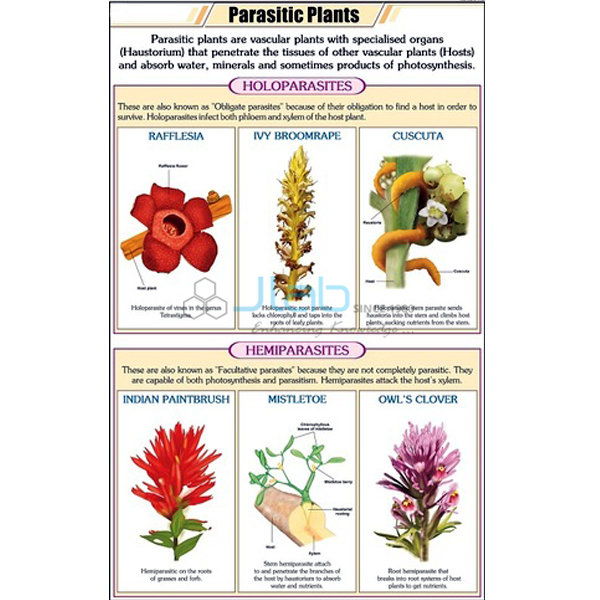
Parasitic Plants Chart (code EL-BC-9302) is a botany chart on plants that draw water or food from other living plants, used in lessons on modes of nutrition in schools and colleges. The 58 x 90 cm chart is printed in full colour on art paper, laminated on both faces with thick plastic film and fitted with plastic rollers, with English text only. JLab (Jain Laboratory Instruments Pvt Ltd, Ambala, India) supplies it to schools, colleges and dealers.
Specifications
| Parameter | Detail |
|---|---|
| Chart topic | Parasitic plants |
| Size | 58 x 90 cm (about 22.8 x 35.4 in) |
| Printing | Full colour on art paper |
| Lamination | Both sides, thick plastic film |
| Fittings | Plastic rollers |
| Language | English only |
| Quality check | Each chart is visually inspected before dispatch |
| Pack quantity | Each (sold individually) |
| Minimum order quantity | 10 units |
| Dispatch time | Usually 7–10 working days |
| Product code | EL-BC-9302 |
| Supplied by | Jain Laboratory Instruments Pvt Ltd (JLab), Ambala, India |
What Is the Parasitic Plants Chart Used For?
A parasitic plant attaches itself to a host plant and pushes special absorbing organs, called haustoria, into the host’s tissues. Total parasites have no chlorophyll and take all their food from the host: dodder (Cuscuta, known in India as amarbel) twines around host stems as yellow threads, and broomrape (Orobanche) attacks the roots of crops such as mustard and tobacco. Partial parasites are green and make some of their own food but take water and minerals from the host, as mistletoe does from tree branches and witchweed (Striga) does from the roots of cereals. Students first meet Cuscuta in the class 7 lesson on nutrition in plants, and the topic returns in senior-secondary biology and college botany, where parasitic roots and the economic damage caused by dodder and Striga are discussed.
If dodder grows on hedges near the school, a short field visit shows the haustoria clearly and makes the chart easier to explain. The laminated chart can be wiped clean and rolled up on its rollers after use. The listing does not say which parasitic plants the artwork shows, so ask JLab for a larger image if you need to confirm particular examples.
What to Specify When Ordering
- Quantity — minimum 10 units.
- Language — English only; ask JLab first if you need another language.
- Nutrition charts — the insectivorous plants chart below covers another special mode of plant nutrition.
- Delivery — destination city and country or port, and any packing requirements.
Frequently Asked Questions
What does the Parasitic Plants Chart teach?
It teaches how parasitic plants live on other plants and obtain water or food from them, for class 7 science, senior-secondary biology and college botany. The listing does not detail the artwork; see the photograph on this page or ask JLab for a larger image.
What size and finish is the chart?
It is 58 x 90 cm (about 22.8 x 35.4 in), printed in full colour on art paper, laminated on both sides with thick plastic film and fitted with plastic rollers for hanging.
What is the difference between a total and a partial parasite?
A total parasite, such as dodder or broomrape, has no chlorophyll and depends on its host for all its food. A partial parasite, such as mistletoe, is green and photosynthesises but takes water and minerals from its host.
What are haustoria?
They are the specialised absorbing structures of a parasitic plant. They penetrate the host’s stem or root and connect with its conducting tissues, so the parasite can draw water and nutrients directly.
Who supplies the Parasitic Plants Chart?
JLab, trading name of Jain Laboratory Instruments Pvt Ltd in Ambala, Haryana, India, supplies the chart and quotes directly.
Supplier
Jain Laboratory Instruments Pvt Ltd — JLab — was incorporated in 2017 and has its base on Hargolal Road, Ambala, Haryana. Besides its own laboratory equipment, the company supplies botany teaching charts like this one to schools, colleges, dealers and importers, visually inspects each chart before shipping, and handles repeat orders without intermediaries. JLab exports worldwide and ships to buyers in every region — among them Armenia in Eastern Europe, Uzbekistan in Central Asia, Egypt in North Africa, Croatia in Southern Europe and the UK in Western Europe. Tender buyers will find details on the JLab lab tenders page.
Related Botany Charts
- Insectivorous Plants Chart — plants that trap insects, another special mode of nutrition.
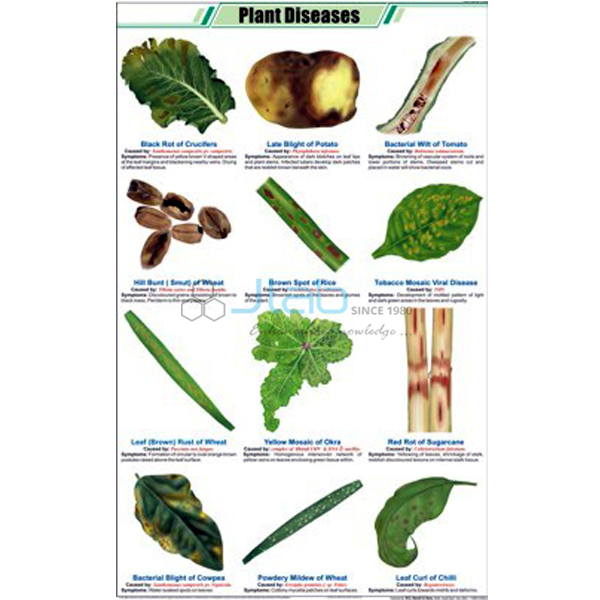
- Plant Diseases Chart — other causes of crop damage, from fungi, bacteria and viruses.
- Root Modifications Chart — modified roots, a topic that includes parasitic roots.
- Typical Plant Chart — the parts of a normal green plant, for comparison.
All titles are listed in the Botany Charts range; other subjects are in the Charts range.
Request a Quote
Contact JLab directly for a quote: use the Add To Cart enquiry button on this page or the contact page, and give the quantity (minimum 10 units), any other botany charts you need, and the delivery city and country.
Last updated: 3 October 2026