Typical Plant Chart Manufacturer,Supplier and Exporter in India
Product Code : EL-BC-9229
Jlab Export is a leading Typical Plant Chart Manufacturer,and suppliers in India
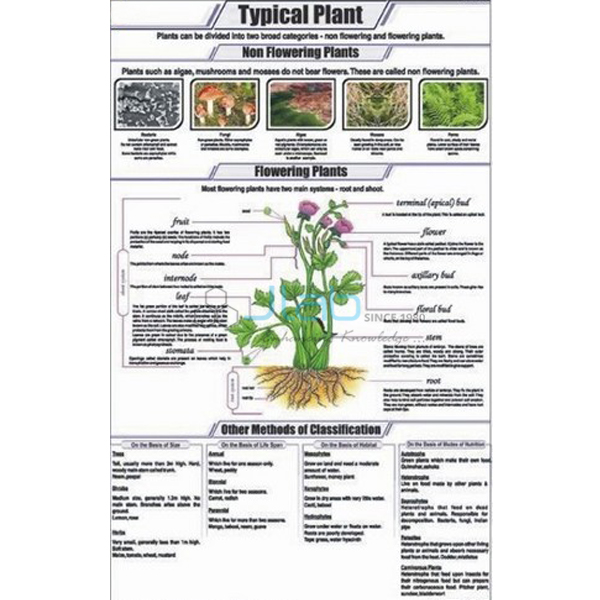
Typical Plant Chart (code EL-BC-9229) is a 58 x 90 cm laminated wall chart for introducing the parts of a flowering plant in primary and middle-school science, and for quick revision in senior biology. The listing describes a simple, easy-to-understand design, printed in full colour on art paper, with plastic rollers and English text. JLab (Jain Laboratory Instruments Pvt Ltd, Ambala, India) supplies it to schools, colleges and dealers.
Get a quote: use the Add To Cart enquiry button below, or send your quantity and destination through the contact page.
Specifications
| Parameter | Detail |
|---|---|
| Chart topic | The typical flowering plant and its parts |
| Size | 58 x 90 cm (about 22.8 x 35.4 in) |
| Printing | Full colour on art paper |
| Lamination | Both sides, thick plastic film |
| Fittings | Plastic rollers for hanging |
| Language | English only |
| Design | Simple layout, easy to understand |
| Quality check | Each chart is visually inspected before dispatch |
| Pack quantity | Each (sold individually) |
| Minimum order quantity | 10 units |
| Dispatch time | Usually 7–10 working days |
| Product code | EL-BC-9229 |
| Supplied by | Jain Laboratory Instruments Pvt Ltd (JLab), Ambala, India |
What Is the Typical Plant Chart Used For?
A flowering plant is usually described in two parts. The root system grows below the ground, anchoring the plant and taking up water and minerals. The shoot system above the ground is made up of the stem, with its nodes and internodes, and the leaves, buds, flowers and later the fruits that it carries. Leaves make food by photosynthesis, the stem carries water and food between roots and leaves and holds the leaves up to the light, and flowers produce the seeds. With one large labelled picture, the teacher can name every part before students look at a real plant, and the chart leads naturally into later lessons on roots, leaves and flowers.
Hang it by its plastic rollers where the whole class can see it, and keep a potted plant or a freshly uprooted weed beside it so that students can find each part for themselves. Both sides are laminated with thick plastic film, so finger marks wipe off with a damp cloth; roll the chart up when it is not in use.
What to Specify When Ordering
- Quantity — at least 10 units per order.
- Language — English is the only version listed; check with JLab if you need another.
- Follow-on charts — the root system, types of leaves and structure of flower charts linked below cover each part in more depth and can be quoted together.
Frequently Asked Questions
Which age group is the Typical Plant Chart suited to?
Primary and middle-school science, where children first learn to name the parts of a plant; it also works as a revision chart in secondary biology. The listing describes the design as simple and easy to understand.
How big is the chart?
58 x 90 cm, about 22.8 x 35.4 inches. It is printed in full colour on art paper and laminated on both sides with thick plastic film.
Can it hang without a frame?
Yes. It is fitted with plastic rollers, so it can hang from a hook or a rail and be rolled up for storage. The listing does not mention a hanging cord, so ask JLab if you need one.
Which parts of the plant does the artwork label?
The listing does not itemise the labels. The product photograph on this page shows the chart; ask JLab to confirm the current print if your lesson depends on a particular label.
Is there a version in a language other than English?
Only an English version is listed. Ask JLab before ordering if your school teaches in another language.
What is the minimum order and lead time?
Orders start at 10 units. Each chart is visually inspected before dispatch, which usually takes 7–10 working days; export shipments then need transit time that depends on the destination and the shipping method.
Who supplies the Typical Plant Chart?
JLab — Jain Laboratory Instruments Pvt Ltd of Ambala, Haryana, India — supplies it and sends quotations directly.
Supplier
The chart is supplied by JLab, the trading name of Jain Laboratory Instruments Pvt Ltd, a science teaching aids and laboratory equipment company incorporated in 2017 and based on Hargolal Road, Ambala, Haryana. Besides the lab equipment it produces itself, JLab resells wall charts such as this one, so a school or dealer can order charts and apparatus together; every chart is checked by eye before it is packed, and reorders are handled by the same team. JLab exports worldwide and can serve buyers in every region — Laos in Southeast Asia, South Africa in Southern Africa, Tonga in Oceania, Sri Lanka in South Asia and Saudi Arabia in the Middle East are some examples. For tender purchases, see the JLab lab tenders page.
Charts and Teaching Items on Plant Parts
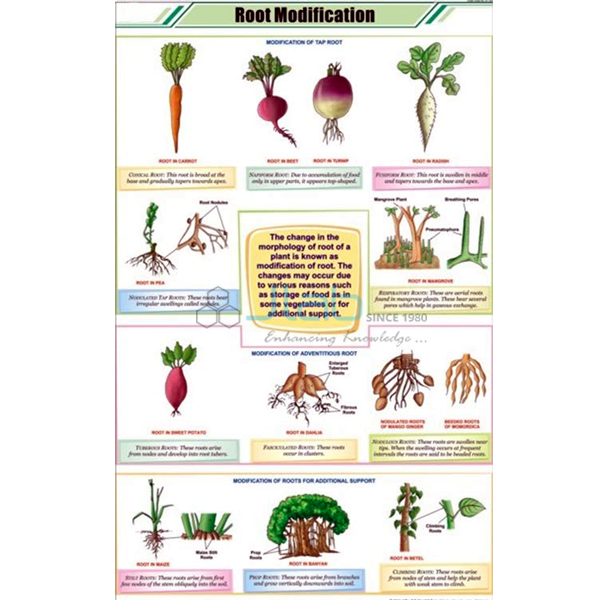
- Root System Chart — takes the root part of the plant further.
- Types of Leaves Chart — for a follow-up lesson on leaves.
- Structure of Flower Chart — for the parts of the flower itself.
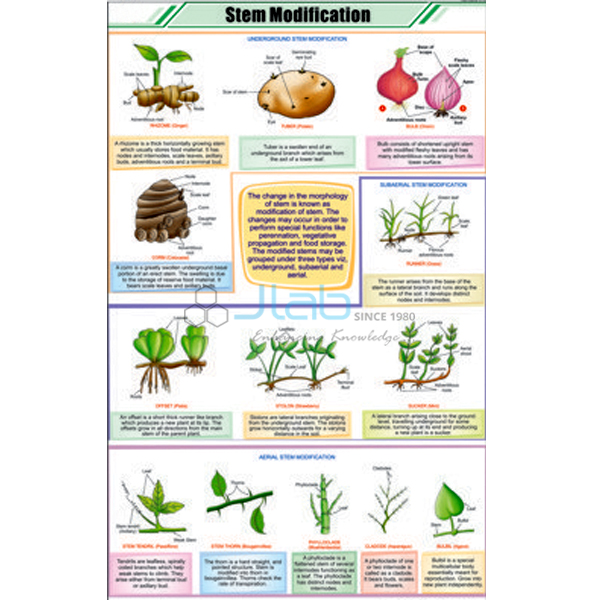
- Stem Modification Chart — for the ways stems can be modified.
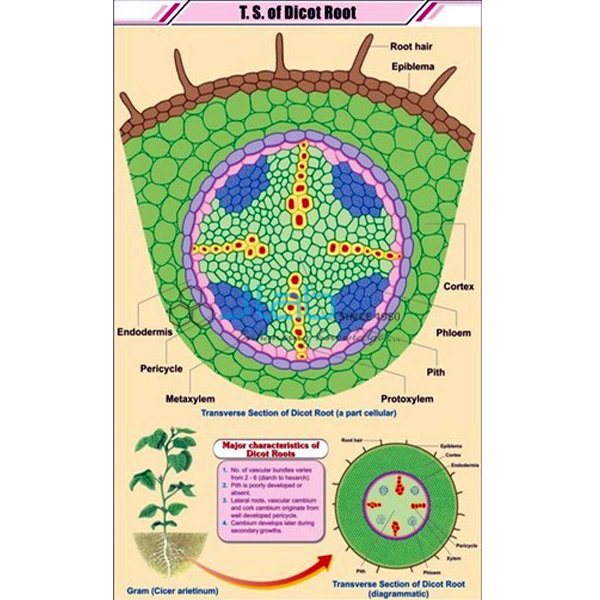
- The Root of a Flowering Plant — listed with a buttercup root, root cap, root hairs and the zones of growth, elongation and maturation.
See every title in the Botany Charts range or browse all Charts.
Request a Quote
Ask JLab directly for a quote: use the Add To Cart enquiry button on this page, or write through the contact page with the quantity (minimum 10 units), any other charts you want on the same order, and the delivery address or port.
Last updated: 4 October 2026