Replication Cycle of Viruses Model Manufacturer,Supplier and Exporter in India
Product Code : EL-BE-6214
Jlab Export is a leading Replication Cycle of Viruses Model Manufacturer,and suppliers in India
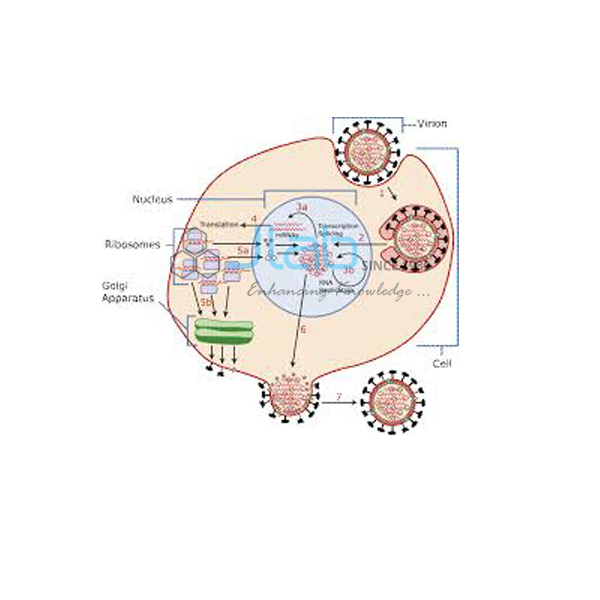
Replication Cycle of Viruses Model (code EL-BE-6214) is a virology teaching model on how a virus multiplies, from attaching to a host cell to the release of new virus particles. Viruses have no metabolism of their own, so this is the key lesson on how they take over a cell. It suits class 11 and class 12 biology and college microbiology. Jain Laboratory Instruments Pvt Ltd (JLab) makes it at its works in Ambala, India.
Specifications
| Parameter | Detail |
|---|---|
| Topic | Replication cycle of viruses |
| Suggested courses | Class 11 and class 12 biology, undergraduate microbiology, biotechnology, medical and nursing teaching |
| Parts, labels, size and material | Not described in this listing — ask for a description and photo with your quote |
| Quality check | Each model is visually inspected before dispatch |
| Pack quantity | Each (sold individually) |
| Minimum order quantity | 10 units |
| Dispatch time | Usually 7–10 working days |
| Product code | EL-BE-6214 |
| Manufacturer | Jain Laboratory Instruments Pvt Ltd (JLab) — OEM |
| Country of origin | India (made in Ambala, Haryana) |
What Is the Virus Replication Model Used For?
The cycle is usually taught in six stages. In attachment, viral proteins bind specific receptors on the host cell. In penetration the virus enters by endocytosis or by fusing its envelope with the cell membrane, while a bacteriophage injects only its nucleic acid. Uncoating then frees the genome. During synthesis the cell’s ribosomes and enzymes copy the viral genome and make viral proteins — most DNA viruses in the nucleus, most RNA viruses in the cytoplasm, while retroviruses such as HIV first make DNA with reverse transcriptase. Assembly packs the genomes into new capsids, and release frees them by bursting the cell or, for enveloped viruses, by budding through its membrane.
Bacteriophages show two patterns. In the lytic cycle the phage multiplies at once and the bacterium bursts; in the lysogenic cycle the phage DNA joins the bacterial chromosome as a prophage and is copied with it until a trigger switches it to the lytic cycle. Class 12 biology uses the HIV cycle, in which viral DNA is built into the host cell’s DNA, to explain AIDS.
Frequently Asked Questions
What does the virus replication model show?
The replication cycle of viruses, as its title states. Which virus is shown and the parts, labels, size and material are not listed, so ask JLab for a description and photo.
What is the difference between the lytic and lysogenic cycles?
In the lytic cycle a phage multiplies straight away and bursts the cell; in the lysogenic cycle its DNA is built into the host chromosome and passed on quietly until it is activated.
How does it differ from the Replication of DNA Viruses Model?
That model’s title limits it to DNA viruses, while this one covers the general cycle. Ask JLab what each shows.
OEM Manufacturer
JLab is Jain Laboratory Instruments Pvt Ltd, a maker of biology lab equipment in India, incorporated in 2017 and working from Hargolal Road, Ambala, Haryana. It manufactures this model in its own works, so schools, colleges, dealers and importers buy from the producer rather than a reseller. JLab exports worldwide and ships to buyers in every region — for example Switzerland in Western Europe, Brunei in Southeast Asia, Kazakhstan in Central Asia, Bangladesh in South Asia and Hong Kong in East Asia.
Related Virology Models
- Replication of DNA Viruses Model — how DNA viruses copy their genome.
- Classification of Virus Model — how viruses are sorted into groups.
- Bacteriophage Virus Model — the virus that infects bacteria.
- HIV Virus Model — the retrovirus that causes AIDS.
Other models are listed in Biology Equipment under Biology Lab Equipment.
Request a Quote
Get a quotation direct from the manufacturer through Add To Cart or the contact page; mention the quantity (minimum 10 units) and the destination.
Last updated: 4 October 2026