Replication of DNA Viruses Model Manufacturer,Supplier and Exporter in India

Product Code : EL-BE-6215
Jlab Export is a leading Replication of DNA Viruses Model Manufacturer,and suppliers in India
Replication of DNA Viruses Model (code EL-BE-6215) is a virology teaching model on how viruses with DNA genomes — such as adenoviruses, herpesviruses, papillomaviruses and poxviruses — copy themselves inside a host cell. It suits college microbiology, biotechnology, medical and nursing courses. Jain Laboratory Instruments Pvt Ltd (JLab) makes it at its works in Ambala, India.
Specifications
| Parameter | Detail |
|---|---|
| Topic | Replication of DNA viruses |
| Suggested courses | Undergraduate microbiology, biotechnology, medical and nursing teaching |
| Parts, labels, size and material | Not described in this listing — ask for a description and photo with your quote |
| Quality check | Each model is visually inspected before dispatch |
| Pack quantity | Each (sold individually) |
| Minimum order quantity | 10 units |
| Dispatch time | Usually 7–10 working days |
| Product code | EL-BE-6215 |
| Manufacturer | Jain Laboratory Instruments Pvt Ltd (JLab) — OEM |
| Country of origin | India (made in Ambala, Haryana) |
What Is the DNA Virus Replication Model Used For?
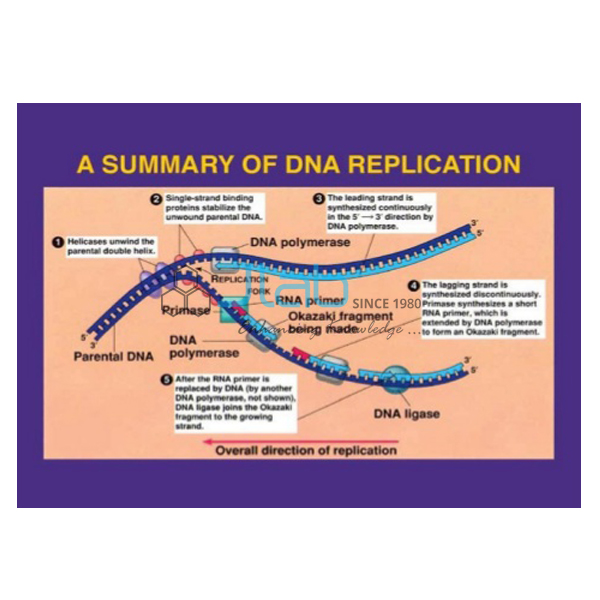
After attachment, entry and uncoating, most DNA viruses deliver their genome to the host cell nucleus, where the cell’s own RNA polymerase transcribes the viral genes. Expression is timed: early genes make regulatory proteins and enzymes, in many viruses including a viral DNA polymerase; the genome is then replicated; and late genes make the structural proteins of the capsid. New particles are assembled in the nucleus and leave when the cell breaks open or, in herpesviruses, by budding through cell membranes to gain an envelope.
The exceptions are as instructive as the rule. Poxviruses, which are very large, complex viruses, replicate entirely in the cytoplasm and carry their own enzymes for making messenger RNA. Hepatitis B virus copies its DNA through an RNA intermediate using reverse transcriptase. Small DNA viruses such as papillomaviruses and polyomaviruses make no DNA polymerase of their own and instead push the cell into its DNA-synthesis phase — one reason some of them can cause cancer. Herpesviruses can also stay latent in the nucleus for years and later reactivate.
Frequently Asked Questions
What does the DNA virus model show?
The replication of DNA viruses, as its title states. Which viruses are shown and the parts, labels, size and material are not listed, so ask JLab for a description and photo.
Where do DNA viruses replicate?
Most replicate in the host cell nucleus. Poxviruses are the main exception, completing their whole cycle in the cytoplasm.
How does it differ from the Replication Cycle of Viruses Model?
That model covers the general cycle for all viruses, while this one’s title focuses on DNA viruses. Ask JLab what each shows.
OEM Manufacturer
Made at JLab’s own works on Hargolal Road, Ambala, Haryana, the model is sold factory-direct by Jain Laboratory Instruments Pvt Ltd (JLab), a manufacturer of microbiology lab equipment and biology teaching models in India, incorporated in 2017. Schools, colleges, dealers and importers therefore deal with the maker, not a trader. JLab exports worldwide and ships to buyers in every region — for example Belgium in Western Europe, Singapore in Southeast Asia, Taiwan in East Asia, Finland in Northern Europe and Papua New Guinea in Oceania.
DNA Virus Models
- Replication Cycle of Viruses Model — the general replication cycle.
- Adenovirus Infection Model — a non-enveloped DNA virus.
- Structure and Replication of Herpes Virus Model — an enveloped DNA virus that can stay latent.
- Life Cycle of Papilloma Virus Model — a small DNA virus of skin and mucosa.
- Pathology and Pathogenesis of Pox Virus Model — the poxviruses, which replicate in the cytoplasm.
See the full series in Biology Equipment and the wider Biology Lab Equipment range.
Request a Quote
Quotes come direct from the manufacturer: use Add To Cart or the contact page with the quantity (minimum 10 units) and the destination.
Last updated: 4 October 2026