Sericulture (L. H. Silkworm) Manufacturer,Supplier and Exporter in India
Product Code : EL-GSC-2966
Jlab Export is a leading Sericulture (L. H. Silkworm) Manufacturer,and suppliers in India
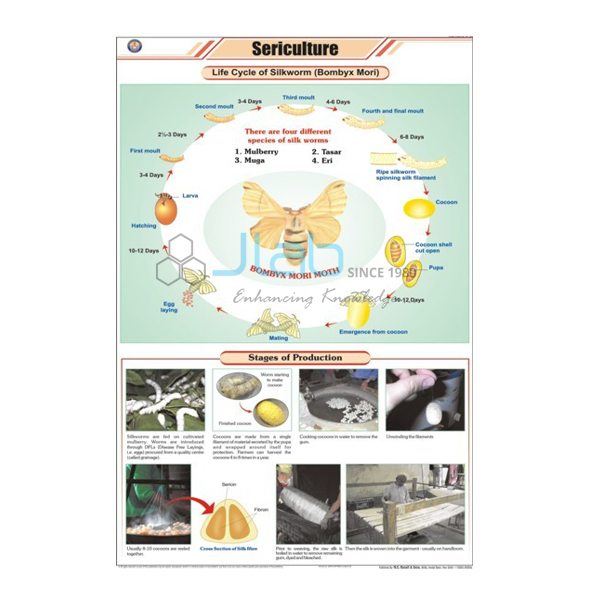
Sericulture (L. H. Silkworm) (code EL-GSC-2966) is a 58 x 90 cm wall chart on sericulture, the rearing of silkworms to obtain silk, for science, agriculture and textile lessons that cover the silkworm and how silk is produced. It is printed in full colour on coated art paper, laminated on both sides and fitted with plastic rollers for wall display. JLab (Jain Laboratory Instruments Pvt Ltd, Ambala, India) supplies it to schools, colleges and dealers.
Get a quote: use the Add To Cart enquiry button below, or send your quantity and destination through the contact page.
Specifications
| Parameter | Detail |
|---|---|
| Chart topic | Sericulture — rearing silkworms for silk |
| Size (overall) | 58 x 90 cm (about 22.8 x 35.4 in) |
| Size when rolled | 58 x 4 x 2 cm |
| Paper | Coated art paper, 130 gsm |
| Printing | Full colour, offset printing using CTP (computer-to-plate) technology |
| Lamination | Both sides, thick plastic film (30 micron heat-sealable polyester) |
| Fittings | Plastic rollers, for wall hanging |
| Surface | Markable and washable |
| Weight | 228 g |
| Language | English only |
| Quality check | Each chart is visually inspected before dispatch |
| Pack quantity | Each (sold individually) |
| Minimum order quantity | 10 units |
| Dispatch time | Usually 7–10 working days |
| Product code | EL-GSC-2966 |
| Supplied by | Jain Laboratory Instruments Pvt Ltd (JLab), Ambala, India |
What Is the Sericulture Chart Used For?
Silk comes from the cocoon of the silkworm, the caterpillar stage of a moth. The mulberry silkworm, Bombyx mori, is reared on mulberry leaves and goes through complete metamorphosis: egg, larva, pupa and adult moth. When the larva is fully grown it spins a cocoon around itself from a single, very long silk filament produced by its silk glands, and changes into a pupa inside. India also produces non-mulberry silks such as tussar, eri and muga from other silk moths.
To obtain the silk, cocoons are boiled or steamed, which loosens the filament, and the threads of several cocoons are unwound together — a process called reeling — to make raw silk, which is then twisted, dyed and woven. The chart lets teachers follow both the life cycle and the production steps in one lesson on fibres, useful insects or food and agriculture resources, and it suits vocational courses on sericulture as a rural enterprise. Students can mark the stages on the washable laminated surface.
What to Specify When Ordering
- Quantity — the minimum order is 10 charts, each supplied individually.
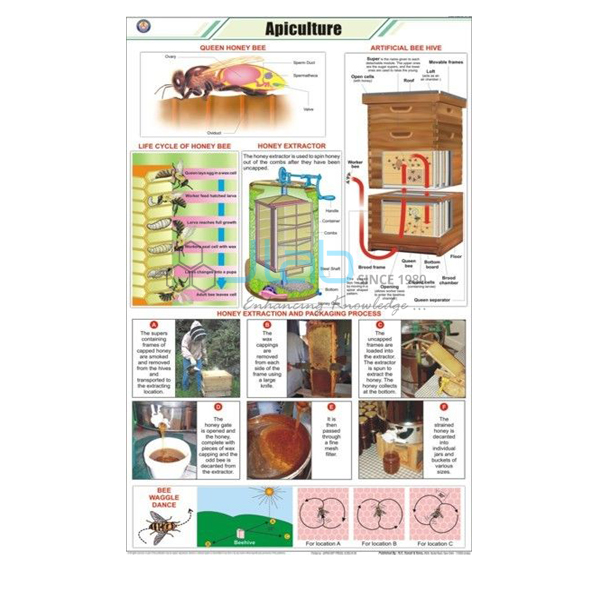
- Useful insects set — the Apiculture chart from this series and the Beneficial Insects Chart cover honey bees and other useful insects.
- Specimens and slides — a silkworm life-cycle chart, fibre collection or textile fibre slides add hands-on material.
- Print check — listed in English only; JLab can send a larger image of the current print.
Frequently Asked Questions
What does the Sericulture chart show?
The listing does not itemise the panels. The silkworm’s life cycle and the stages of silk production, from rearing to reeling, are what the topic normally covers; ask JLab for a larger image of the current print to check.
Which silkworm is used for most silk?
The mulberry silkworm, Bombyx mori, which feeds on mulberry leaves. Tussar, eri and muga silks come from other moth species.
What is the chart made of?
130 gsm coated art paper, offset printed in full colour using CTP technology, with 30 micron heat-sealable polyester lamination on both sides; it weighs 228 g.
How big is it?
58 x 90 cm (about 22.8 x 35.4 in). It hangs from plastic rollers and rolls down to 58 x 4 x 2 cm.
What are the minimum order and dispatch time?
The minimum order is 10 units. Charts are checked visually and are usually dispatched within 7–10 working days; international transit depends on the destination.
What does an export quotation need?
The quantity, the destination country and port or city, your delivery terms such as FOB or CIF, any packing or labelling requirement and the tender reference if applicable.
Who supplies the Sericulture chart?
JLab — Jain Laboratory Instruments Pvt Ltd, Ambala, Haryana — supplies it and provides quotations directly.
Supplier
JLab is the trading name of Jain Laboratory Instruments Pvt Ltd, incorporated in 2017 and based on Hargolal Road, Ambala, Haryana. Together with the biology and school laboratory equipment it produces, JLab supplies this general science chart series, so a school can order its agriculture and zoology charts with slides and specimens in one go; each chart is inspected by eye before packing. JLab exports worldwide and ships to buyers in every region — the UAE in the Middle East, Kyrgyzstan in Central Asia, Chad in Central Africa, Finland in Northern Europe and Guyana in South America are a few examples. For tenders, see the JLab lab tenders page.
Silk, Fibre and Useful Insect Teaching Aids
- Silk Worm (Life Cycle) — a laminated chart on the stages of the silkworm’s life cycle.
- Beneficial Insects Chart — a wall chart on pollinators, producers of honey, silk and lac, and predators of crop pests.
- Apiculture — the series chart on bee-keeping.
- Textile Fibre Prepared Slide Set — prepared microscope slides of textile fibres, including silk and silkworm.
- Collection of Fibres — samples of natural and synthetic fibres for comparison.
See the whole General Science Charts range or all Charts.
Request a Quote
JLab handles quotations itself. Use the Add To Cart enquiry button on this page, or send the quantity (minimum 10 units), any slides, specimens or other charts you need and your delivery location through the contact page.
Last updated: 4 October 2026