Single Phase Fully Controlled Bridge Converter Manufacturer,Supplier and Exporter in India

Product Code : EL-PET-1427
Jlab Export is a leading Single Phase Fully Controlled Bridge Converter Manufacturer,and suppliers in India
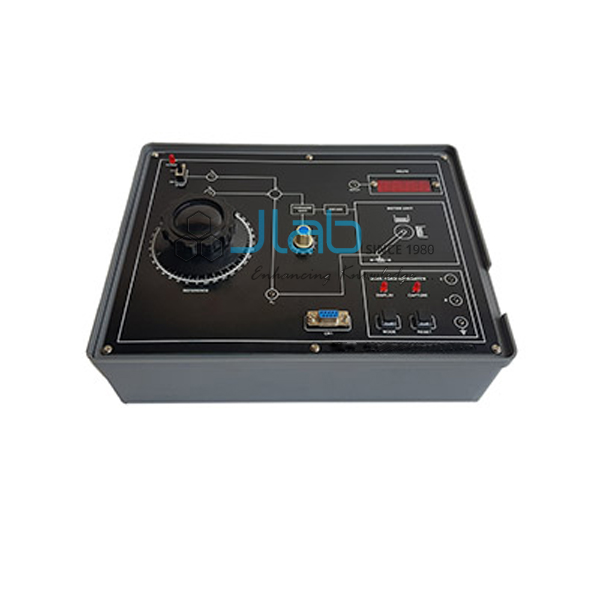
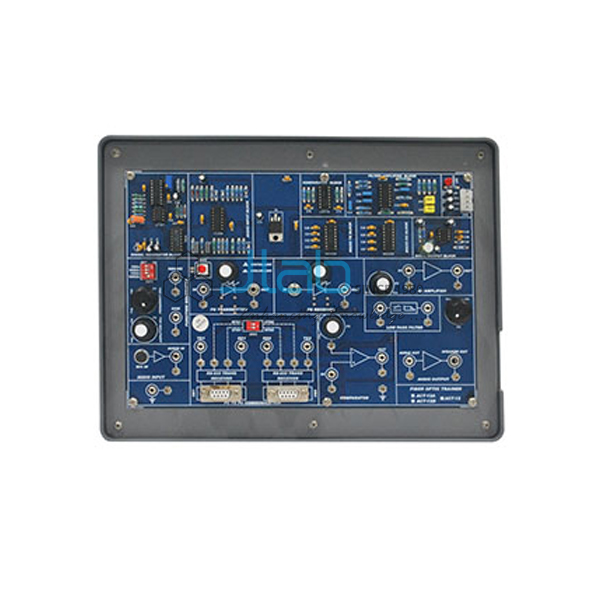
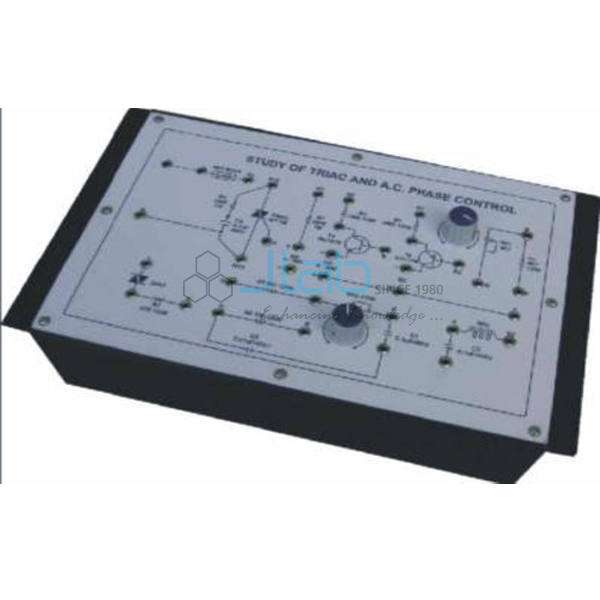
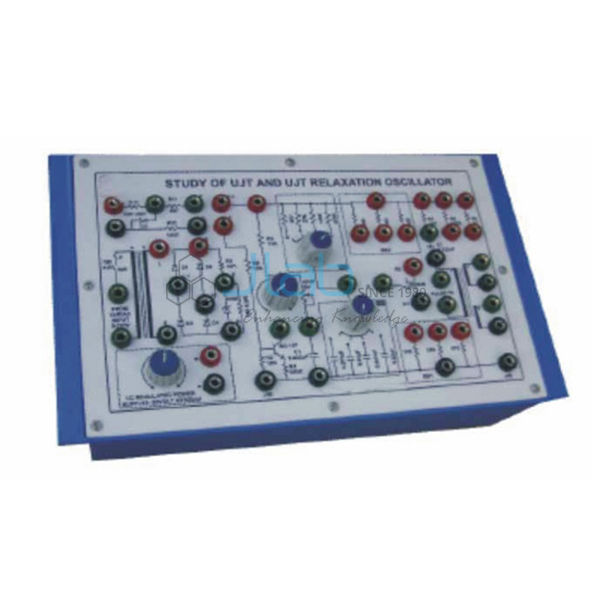
Single Phase Fully Controlled Bridge Converter (code EL-PET-1427) is a power electronics training board for studying a single-phase bridge converter built from four SCRs. Two UJTs, two 1:1:1 pulse transformers and two potentiometers for the UJT firing angle make up its firing side. JLab, the trading name of Jain Laboratory Instruments Pvt Ltd, builds the trainer in Ambala, India.
Specifications
| Parameter | Detail |
|---|---|
| Experiment | Study and obtain the single-phase fully controlled bridge converter |
| Thyristors | Four SCRs |
| Firing circuit | Two UJTs; two potentiometers for controlling the UJT firing angle |
| Pulse transformers | Two, 1:1:1 |
| Isolated transformer | 230 V AC, 50 W |
| DC supply | 9 V DC at 100 mA, zener regulated |
| Bulb | 40 W, 230 V AC |
| Other components | Adequate number of other electronic components |
| Mains controls | Mains ON/OFF switch, fuse and jewel light |
| Mains supply | 230 V ±10%, 50 Hz AC |
| Patch cords | Adequate number, stackable, 4 mm spring-loaded plugs, ½ metre long |
| Terminals | Terminals and sockets on the panel for connections and observation of waveforms |
| Weight | 6 kg (approx.) |
| Dimensions | W 300 × H 140 × D 200 |
| Oscilloscope | Dual-trace cathode ray oscilloscope, 20 MHz (unearthed), or with an isolation transformer for unearthing |
| Packing | Corrugated box |
| Quality check | Each board is visually inspected before dispatch |
| Pack quantity | Each (sold individually) |
| Minimum order quantity | 10 units |
| Dispatch time | Usually 7–10 working days |
| Product code | EL-PET-1427 |
| Manufacturer | Jain Laboratory Instruments Pvt Ltd (JLab) — OEM |
| Country of origin | India (made in Ambala, Haryana) |
What Is the Fully Controlled Bridge Converter Board Used For?
In a fully controlled bridge all four arms are SCRs, and they conduct in pairs: one diagonal pair during the positive half-cycle and the other during the negative half-cycle, each pair switched on at the chosen firing angle. Delaying the firing lowers the average DC output, so the bridge works as a controllable rectifier. In general, with a highly inductive load and a large firing angle the average output of such a bridge can even become negative, which is how fully controlled converters return energy to the supply. Single-phase controlled bridges are a core topic in power electronics and are found in DC motor drives and battery chargers.
What to Specify When Ordering
- How many converter boards you need.
- Companion converter trainers — half-controlled, reactive-load or three-phase boards — if the course covers several converter types.
- Destination, delivery terms and any tender reference.
Frequently Asked Questions
How does a fully controlled bridge differ from a half-controlled bridge?
A fully controlled bridge uses four SCRs. A half-controlled bridge replaces two of them with diodes, so its output can be varied but its average voltage cannot reverse. JLab’s Single Phase Half Controlled Symmetrical board, which has two SCRs, covers the symmetrical and asymmetrical half-controlled bridges.
Why are the pulse transformers of the 1:1:1 type?
A 1:1:1 pulse transformer has one primary and two isolated secondary windings, so a single trigger pulse can reach two SCRs at once while their gate circuits stay isolated from each other and from the trigger circuit. The board has two such transformers for its four SCRs.
Which supplies are on the board?
It works from 230 V ±10%, 50 Hz AC mains. The built-in parts include a 230 V AC isolated transformer rated at 50 W and a 9 V DC, 100 mA zener-regulated supply.
Which oscilloscope is specified for the board?
A 20 MHz dual-trace cathode ray oscilloscope, either of the unearthed type or used with an isolation transformer for unearthing.
What details are needed for an export quotation?
The number of boards, the destination country and port or city, delivery terms (for example FOB or CIF), any packing or labelling needs, and the tender reference for a tender order.
Who manufactures the Single Phase Fully Controlled Bridge Converter?
JLab (Jain Laboratory Instruments Pvt Ltd) manufactures it at its works in Ambala, Haryana, India.
OEM Manufacturer
JLab is the trading name of Jain Laboratory Instruments Pvt Ltd, a power electronics trainer and laboratory equipment manufacturer in India, incorporated in 2017 and based on Hargolal Road, Ambala, Haryana. This converter trainer is produced at JLab’s own works, not bought from a trading company, so engineering colleges, polytechnics, dealers and importers buy it directly from the manufacturer; every unit is visually inspected before dispatch, and repeat orders and spares come from the same source. JLab exports worldwide and ships to buyers in every region — for example Sudan in North Africa, Madagascar in East Africa, Bangladesh in South Asia, the USA in North America and Malta in Southern Europe. Tender information is on the JLab lab tenders page.
Related Converter Trainers and Instruments
- Single Phase Half Controlled Symmetrical — symmetrical and asymmetrical half-controlled bridge converters with two SCRs.
- SCR Converters and Reactive Loads — half-controlled and four-SCR fully controlled bridges with resistive, inductive and capacitive loads.
- Three Phase Fully Controlled Thyristorized Bridge Converter — the three-phase version, studied with R and R-L loads and a freewheeling diode.
- UJT Relaxation Oscillator — a board on the UJT relaxation oscillator used as an SCR trigger circuit.
- SCR Triggering Circuit — controlled gate pulses from a signal conditioner and pulse generator IC.
- Dual Trace Oscilloscope — a 20 MHz dual-channel oscilloscope.
See every model in Power Electronics Trainers or the wider Electronics Lab Equipments range.
Request a Quote
Use the Add To Cart enquiry button on this page or the contact page to request a quotation, noting the quantity, the delivery location and any companion trainers to include.
Last updated: 22 October 2026