Bacterial Families Model Manufacturer,Supplier and Exporter in India

Product Code : EL-BE-6160
Jlab Export is a leading Bacterial Families Model Manufacturer,and suppliers in India
Bacterial Families Model (code EL-BE-6160), headed in its original listing “Classification of Important Bacterial Families”, is a microbiology teaching model on how disease-causing and other important bacteria are grouped into families and told apart. It is meant for college microbiology, medical, nursing and paramedical courses. JLab (Jain Laboratory Instruments Pvt Ltd) manufactures it at its works in Ambala, India.
Specifications
| Parameter | Detail |
|---|---|
| Topic | Classification of important bacterial families (original listing heading) |
| Suggested level | College microbiology, medical, nursing and paramedical courses |
| Families shown, labels, size and material | Not recorded in the listing — ask for a description and photo |
| Quality check | Each model is visually inspected before dispatch |
| Pack quantity | Each (sold individually) |
| Minimum order quantity | 10 units |
| Dispatch time | Usually 7–10 working days |
| Product code | EL-BE-6160 |
| Manufacturer | Jain Laboratory Instruments Pvt Ltd (JLab) — OEM |
| Country of origin | India (made in Ambala, Haryana) |
What Is the Bacterial Families Model Used For?
Students first meet bacterial classification in class 11, where bacteria are grouped by shape into cocci, bacilli, vibrios and spirilla. Microbiology courses add the Gram reaction, oxygen requirement, spore formation and biochemical tests, with DNA sequencing of ribosomal RNA genes now used to confirm relationships. The model gives a framework for organising the families met most often in practice.
Typical examples include Enterobacteriaceae, the Gram-negative gut rods such as Escherichia, Salmonella, Shigella and Klebsiella; the Gram-positive cocci of Staphylococcaceae (grape-like clusters) and Streptococcaceae (chains); the spore-forming rods of Bacillaceae and the anaerobic Clostridiaceae; acid-fast Mycobacteriaceae, which include the agents of tuberculosis and leprosy; Vibrionaceae, home of the cholera organism; and beneficial groups such as Rhizobiaceae, whose Rhizobium fixes nitrogen in legume root nodules. Which families this particular model covers is not stated in the listing.
Frequently Asked Questions
How are bacteria classified into families?
By shared traits — cell shape and arrangement, Gram reaction, oxygen needs, spores and biochemistry — checked today against DNA sequence data.
Which families, labels and size does the model have?
The listing records none of these, nor the material. Ask JLab for a description and photo with your quotation.
Who manufactures it?
JLab, at its own works in Ambala, Haryana; quotations come directly from the manufacturer.
OEM Manufacturer
JLab is the trading name of Jain Laboratory Instruments Pvt Ltd, a microbiology lab equipment and teaching-model manufacturer in India, incorporated in 2017 and based on Hargolal Road, Ambala, Haryana. Its models are made in-house, not obtained from traders, so colleges, nursing schools, dealers and importers buy direct and reorder from the same maker. JLab is registered as a manufacturing enterprise under Udyam number UDYAM-HR-01-0003849 and exports under Importer-Exporter Code 3317504552. It exports worldwide and ships to buyers in every region — for example the Philippines in Southeast Asia, Tunisia in North Africa, Eswatini in Southern Africa, Cyprus in Southern Europe and Congo in Central Africa.
Models of Individual Bacterial Groups
- Enterobacteriaceae Model — the gut-rod family.
- Staphylococcal Species and Disease Model — Gram-positive cocci in clusters.
- Clostridium Species and Summary of Disease Model — anaerobic, spore-forming rods.
- Gram Positive and Gram Negative Cell Wall Model — the wall difference behind the Gram stain.
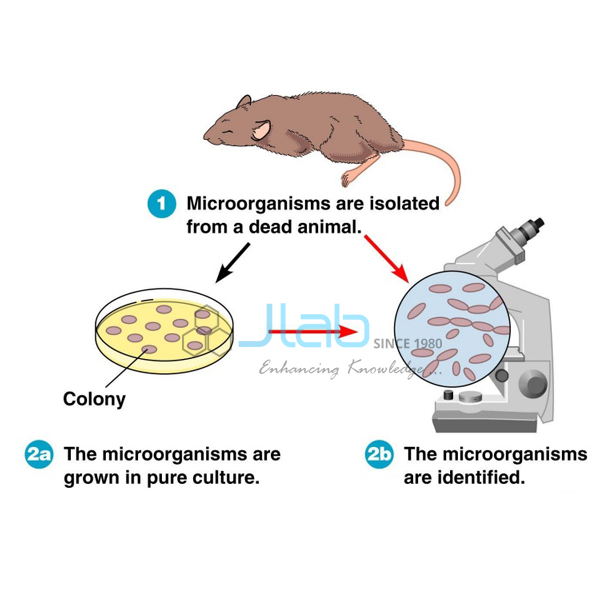
- Koch's Postulate Model — how a bacterium is shown to cause a disease.
Browse Biology Equipment or the complete Biology Lab Equipment range.
Request a Quote
Use Add To Cart or the contact page with quantity (at least 10), destination and delivery terms for a direct quotation.
Last updated: 4 October 2026