Biasing of Transistor BJT Manufacturer,Supplier and Exporter in India
Product Code : EL-AK-1124
Jlab Export is a leading Biasing of Transistor BJT Manufacturer,and suppliers in India
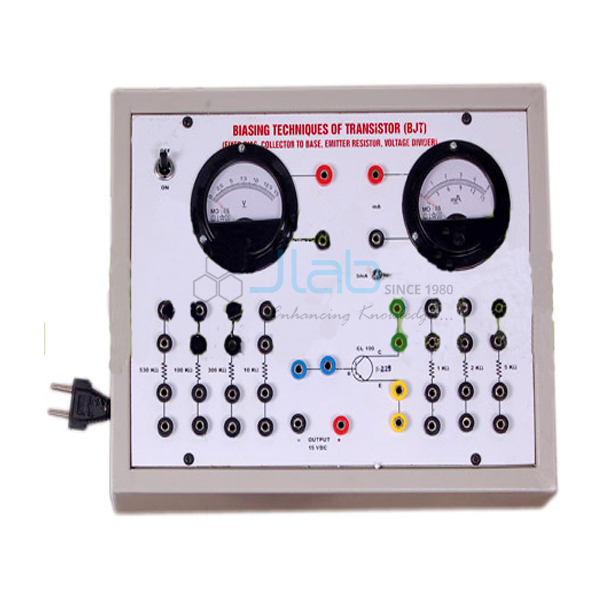
Biasing of Transistor BJT (code EL-AK-1124) is a trainer for comparing four ways of biasing a bipolar junction transistor: fixed bias, collector-to-base bias, emitter resistor bias and voltage divider bias. It contains a DC regulated supply, one NPN transistor, two meters for voltage and current and internal resistances, with connections on terminals. It is made by Jain Laboratory Instruments Pvt Ltd (JLab) at its works in Ambala, India.
Specifications
| Parameter | Detail |
|---|---|
| Bias circuits | Fixed bias, collector-to-base bias, emitter resistor bias, voltage divider bias |
| Transistor | One NPN transistor |
| Power supply | One DC regulated power supply (rating not stated in the listing) |
| Meters | Two meters, for voltage and current |
| Resistances | Different resistances connected inside; connections brought out on terminals |
| Dimensions | 8 x 6 x 4 in (about 203 x 152 x 102 mm) |
| Ask JLab about | Supply voltage, meter ranges, transistor type number and mains input |
| Quality check | Each trainer is visually inspected before dispatch |
| Pack quantity | Each (sold individually) |
| Minimum order quantity | 10 units |
| Dispatch time | Usually 7–10 working days |
| Product code | EL-AK-1124 |
| Manufacturer | Jain Laboratory Instruments Pvt Ltd (JLab) — OEM |
| Country of origin | India (made in Ambala, Haryana) |
How Does It Compare with Other JLab Transistor Trainers?
| Trainer | Purpose (as listed) | Listed hardware |
|---|---|---|
| This trainer (EL-AK-1124) | Four bias circuits for an NPN transistor | One DC regulated supply, one NPN transistor, two meters, internal resistances |
| Transistor Characteristics Apparatus | Input and output characteristics of CB and CE transistors, PNP and NPN | Two DC regulated supplies, four round meters, one PNP and one NPN transistor |
| Training Board for Transistor | Input and output characteristics in CE, CB and CC modes | Two variable DC supplies, digital voltmeters and current meters, silicon and germanium NPN and PNP transistors |
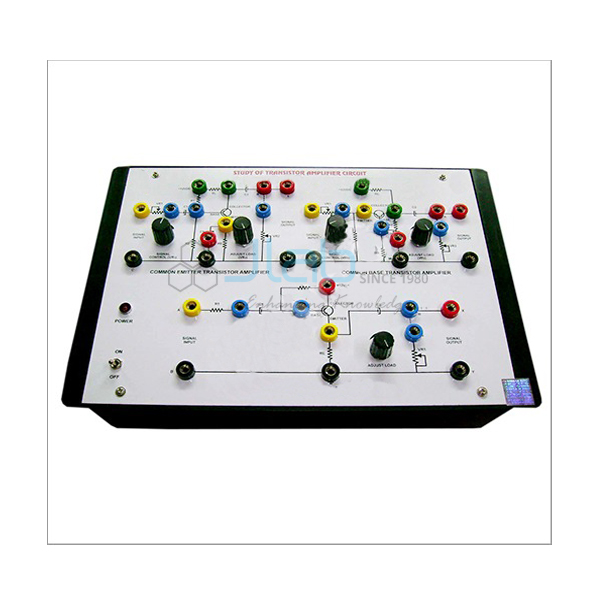
| Study of Transistor Amplifier Circuits | Frequency response, impedances and negative feedback of CB, CE and CC amplifiers | Components on front panel, terminals |
The characteristics trainers plot how a transistor behaves; this one shows how to hold it at a steady operating point, the step before building an amplifier.
What Is the Transistor Biasing Trainer Used For?
Biasing sets a transistor’s DC operating point (Q-point) — its collector current and collector-emitter voltage with no signal — so that an amplifier can handle the whole signal without cutting off or saturating. It is a core topic in analog electronics for B.Sc. physics and electronics, diploma and engineering courses and ITI/TVET electronics trades. On this trainer students wire each bias circuit in turn, read the collector-emitter voltage and collector current on the two meters, and mark the Q-point on the DC load line.
The comparison shows why designers prefer some circuits. Fixed bias is the simplest but its operating point depends heavily on the transistor’s current gain and temperature. Collector-to-base and emitter resistor bias add negative feedback that pulls the operating point back if the collector current rises. Voltage divider bias, which fixes the base voltage and adds an emitter resistor, is the most stable and the most widely used in practice.
What to Specify When Ordering
- Quantity — the minimum order is 10 trainers.
- Companion trainers for the same practical cycle, such as transistor characteristics or amplifier kits.
- Mains voltage at the destination and any connecting leads you need, since the listing states neither.
Frequently Asked Questions
Which bias circuits can be studied?
Four: fixed bias, collector-to-base bias, emitter resistor bias and voltage divider bias, all with the trainer’s single NPN transistor and its internal resistances.
Which bias method is the most stable?
Voltage divider bias. Its base voltage is set by two resistors and an emitter resistor adds feedback, so the operating point changes least when the transistor’s current gain or temperature changes. Fixed bias is the least stable.
What do the two meters measure?
One reads voltage and the other current, which is enough to find the Q-point: the collector-emitter voltage and the collector current. Meter ranges are not given in the listing; JLab can confirm them.
What information helps with an export quotation?
Quantity, destination country and port or city, preferred delivery terms such as FOB or CIF, the mains voltage at site, packing or labelling instructions and any tender reference.
Who manufactures this trainer?
JLab — Jain Laboratory Instruments Pvt Ltd — at its works in Ambala, Haryana, India.
OEM Manufacturer
JLab is the trading name of Jain Laboratory Instruments Pvt Ltd, an electronics trainer and lab instrument manufacturer in India, incorporated in 2017 and based on Hargolal Road, Ambala, Haryana. The biasing trainer is made at JLab’s own works and not bought from a trader, so colleges, polytechnics, ITIs, dealers and importers buy it factory-direct, each piece is visually inspected before dispatch, and repeat orders and spares are handled by the manufacturer. Its GSTIN is 06AADCJ9848D1ZE and its Legal Entity Identifier is 549300DTGS77DGYD6N03. JLab exports worldwide and ships to buyers in every region — for example Botswana in Southern Africa, DR Congo in Central Africa, Afghanistan in South Asia, Vanuatu in Oceania and Senegal in West Africa. Tender information is on the JLab lab tenders page.
Related Amplifier Kits
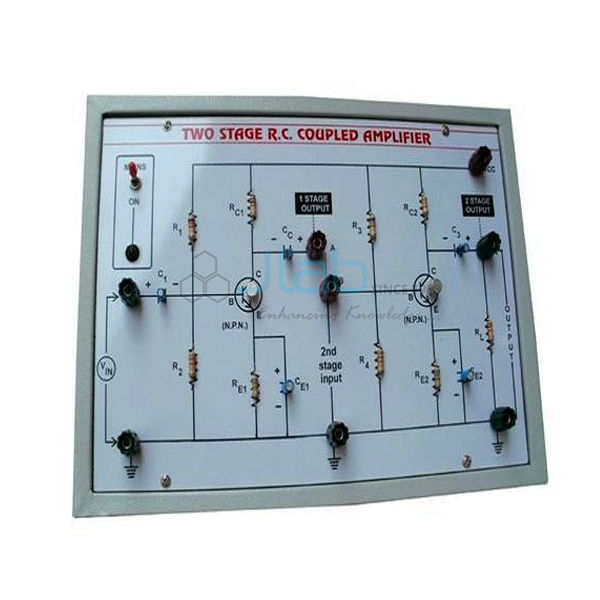
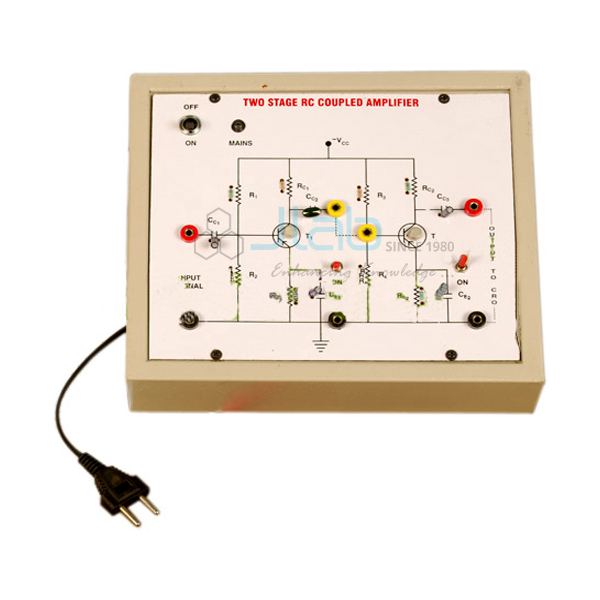
- R.C. Coupled Amplifier Two Stage — biased transistor stages put to work as a two-stage amplifier.
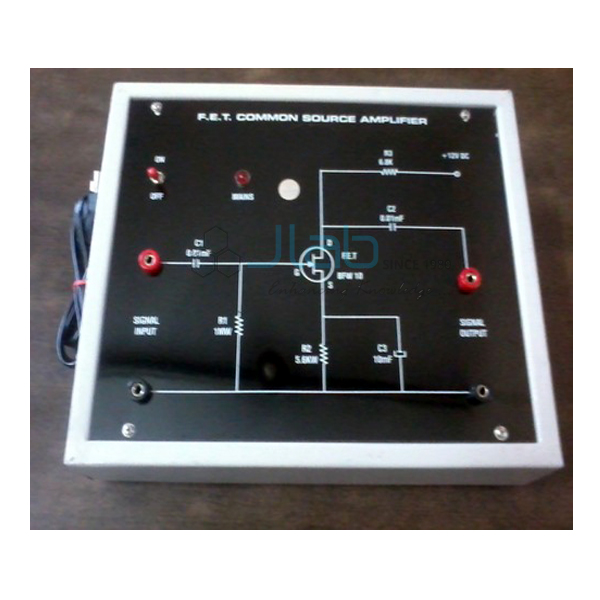
- FET Common Source Amplifier — the field-effect transistor amplifier, in a unit of the same listed size.
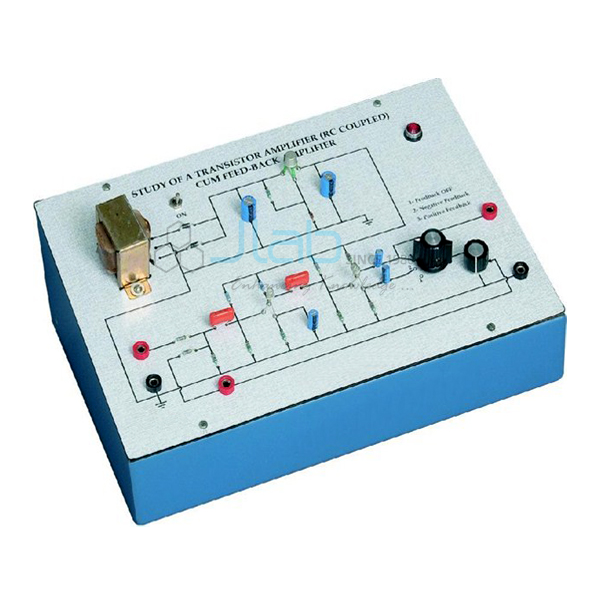
- Study the effect of negative feed back of transistor amplifier — how feedback changes gain and impedance.
See all kits in the Amplifiers Kits range or the wider Scientific Instrument range.
Request a Quote
Quotes come direct from the manufacturer. Use Add To Cart on this page, or send the quantity (minimum 10 units), any companion trainers, your mains voltage and the delivery location through the contact page.
Last updated: 9 October 2026