Critical Radius of Insulating Material Manufacturer,Supplier and Exporter in India

Product Code : EL-HTL-10044
Jlab Export is a leading Critical Radius of Insulating Material Manufacturer,and suppliers in India
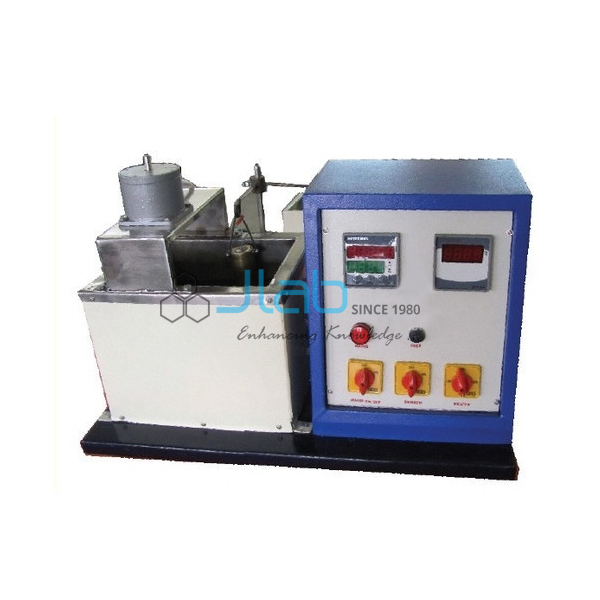
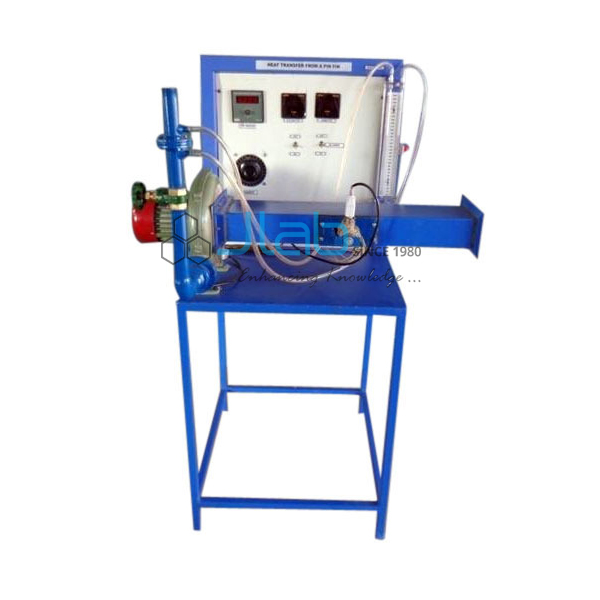
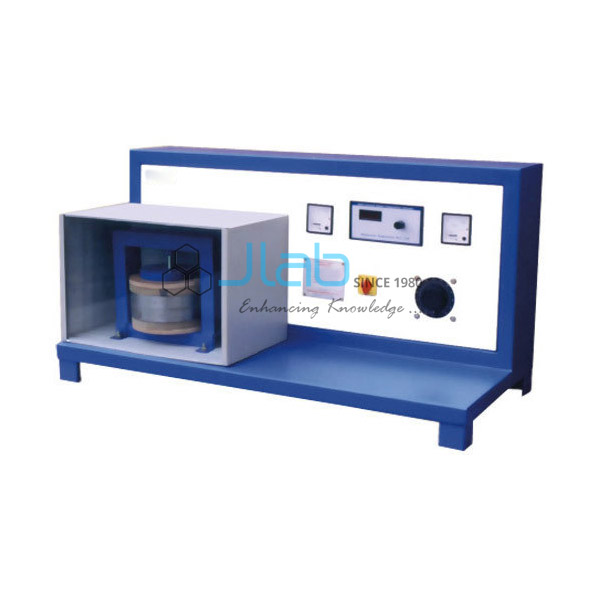
Critical Radius of Insulating Material (code EL-HTL-10044) is a heat transfer unit of four heated G.I. pipes, each insulated with plaster of Paris, in different thicknesses, for showing that heat loss from an insulated cylinder peaks at one radius of insulation, the critical radius r_c = k/h. Four dimmerstats, a common voltmeter and ammeter and a digital temperature indicator give the readings. This critical radius apparatus is made by JLab in Ambala, India.
Specifications
| Parameter | Detail |
|---|---|
| Test pipes | 4 G.I. pipes, each with an electric heater inside |
| Insulation | Plaster of Paris over the pipes, in different thicknesses |
| Heater control | 4 dimmerstats |
| Input measurement | Common voltmeter and ammeter |
| Temperature measurement | Digital temperature indicator for temperatures across the insulation |
| Supplied with | Technical manual |
| Electricity | 230 V, 5 A AC, with earthing |
| Floor area | 1 m x 1 m x 1.5 m height |
| Quality check | Each critical radius unit is visually inspected before dispatch |
| Pack quantity | Each (sold individually) |
| Minimum order quantity | 1 unit |
| Dispatch time | Usually 14–18 working days |
| Product code | EL-HTL-10044 |
| Manufacturer | Jain Laboratory Instruments Pvt Ltd (JLab) — OEM |
| Country of origin | India (made in Ambala, Haryana) |
Why More Insulation Can Raise the Loss
For a pipe of outer radius r1 covered to an outer radius r, the resistance per metre of length is ln(r/r1)/(2πk) for conduction through the insulation plus 1/(2πrh) for convection from its surface. Thickening the layer raises the first term but enlarges the surface and lowers the second. Setting the derivative of the sum to zero gives r = k/h, where the resistance is least and the heat loss therefore greatest. Up to r_c, added insulation increases the loss; only beyond it does insulation start to save heat. A thin electric cable gains from this, since a covering below the critical radius helps it shed heat, while most steam pipes are already larger than r_c, so any lagging cuts their loss.
Using the Four Pipes
Each heater has its own dimmerstat, and the common meters read the input to each pipe in turn, Q = VI. Temperatures on either side of the insulation give k for the plaster of Paris from Q = 2πkL(Ti − To)/ln(r/r1), and the outer surface temperature against room air gives h = Q/[2πrL(To − Ta)]. Comparing the heat lost per degree of difference between pipe and room across the four thicknesses shows where the maximum lies, which is then checked against k/h.
Other Pipe Insulation and Convection Rigs
- Lagged Pipe Apparatus — conductivity of two lagging materials between three concentric G.I. pipes.
- Heat Transfer Through Lagged Pipe — radial heat flow through the lagging on a G.I. pipe.
- Natural Convection Apparatus — heat transfer coefficient of a heated vertical brass pipe in still air.
JLab files it under Heat Transfer Lab in Engineering Lab Equipment.
Request a Quote
Ask for a quotation through the contact page or with Add To Cart, mentioning the number of units and the delivery address.
Last updated: 30 October 2026