Epidemiology and Pathogenesis of Plague Model Manufacturer,Supplier and Exporter in India
Product Code : EL-BE-6191
Jlab Export is a leading Epidemiology and Pathogenesis of Plague Model Manufacturer,and suppliers in India
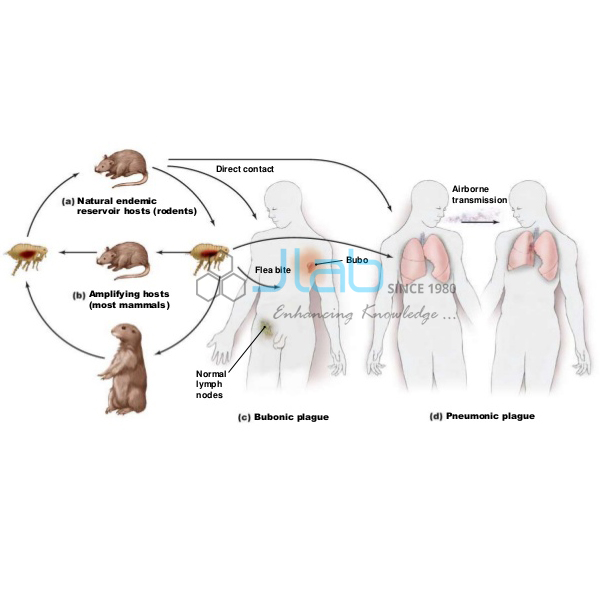
Epidemiology and Pathogenesis of Plague Model (code EL-BE-6191) is a microbiology teaching model on plague: how Yersinia pestis circulates between rodents and their fleas, how it reaches people, and how it causes disease. It is meant for college, medical, nursing and public-health teaching. Jain Laboratory Instruments Pvt Ltd (JLab) makes it at its works in Ambala, India.
Specifications
| Parameter | Detail |
|---|---|
| Topic | Epidemiology and pathogenesis of plague (Yersinia pestis) |
| Intended courses | Undergraduate microbiology, medical, nursing and public-health teaching |
| Parts, labels, size and material | Not described in this listing — ask for a description and photo with your quote |
| Quality check | Each model is visually inspected before dispatch |
| Pack quantity | Each (sold individually) |
| Minimum order quantity | 10 units |
| Dispatch time | Usually 7–10 working days |
| Product code | EL-BE-6191 |
| Manufacturer | Jain Laboratory Instruments Pvt Ltd (JLab) — OEM |
| Country of origin | India (made in Ambala, Haryana) |
What Is the Plague Model Used For?
It explains plague as a zoonosis. Yersinia pestis, a small Gram-negative coccobacillus that often stains more deeply at both ends, lives in wild rodent populations and passes between them through flea bites, notably those of the rat flea Xenopsylla cheopis. The bacteria multiply in the flea’s gut and can block it, so a hungry flea regurgitates them into every new bite. When infected rats die, their fleas move on to other hosts, including people, which is why rodent and flea control are central to prevention.
The pathogenesis part follows the bacteria from the bite to the nearest lymph nodes, where they resist being engulfed by phagocytes and multiply, producing the swollen, painful node called a bubo. Spread into the blood leads to septicaemic plague; infection of the lungs leads to pneumonic plague, the one form that passes directly from person to person in respiratory droplets. Plague was also behind the medieval Black Death.
Frequently Asked Questions
Which forms of plague does the model cover?
The listing names the epidemiology and pathogenesis of plague; teaching normally covers the bubonic, septicaemic and pneumonic forms. Ask JLab for a description and photo of what this model shows.
How does it differ from the Yersinia Pestis and Species Model?
That listing centres on the bubo and on Yersinia species; this one adds the rodent–flea transmission cycle. Both listings give names only, so ask JLab to confirm what each shows.
Who manufactures this plague model?
Jain Laboratory Instruments Pvt Ltd, trading as JLab, at its own works in Ambala, Haryana.
OEM Manufacturer
JLab is the trading name of Jain Laboratory Instruments Pvt Ltd, an Indian manufacturer of biology lab equipment and disease teaching models, incorporated in 2017 and based on Hargolal Road, Ambala, Haryana. The model is built in JLab’s own works, not sourced from a trader, so colleges, dealers and importers deal with the maker directly. JLab exports worldwide and ships to buyers in every region — for example Canada in North America, Liberia in West Africa, Sudan in North Africa, Poland in Eastern Europe and Hong Kong in East Asia.
Related Microbiology Models
- Yersinia Pestis and Species Model — the plague bacillus and the bubo it produces.
- Vibrio and Yersinia Species Model — Yersinia species alongside Vibrio.
- Francisella Species and Summary Model — tularaemia, another bacterial infection carried by rodents and other animals.
- Bacterial Families Model — where Yersinia fits among the important bacterial families.
Browse more microbiology lab equipment in Biology Equipment, within the Biology Lab Equipment range.
Request a Quote
Ask the manufacturer directly: use Add To Cart or the contact page and state the quantity (minimum 10 units) and where the models should be delivered.
Last updated: 4 October 2026