Fertilization in Animals Chart Manufacturer,Supplier and Exporter in India
Product Code : EL-ZC-9318
Jlab Export is a leading Fertilization in Animals Chart Manufacturer,and suppliers in India
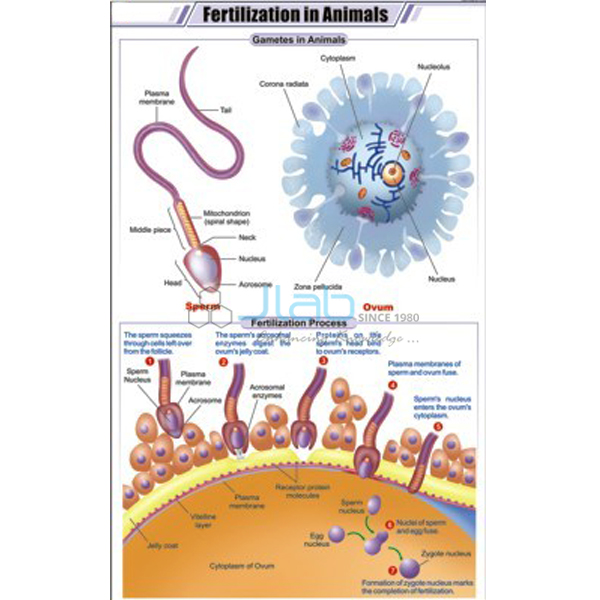
Fertilization in Animals Chart (code EL-ZC-9318) is a 58 x 90 cm wall chart for teaching fertilisation — the fusion of a sperm with an egg to form a zygote — in school biology, class 12 and college zoology. It is printed in full colour on art paper, laminated on both sides with thick plastic film and fitted with plastic rollers, with English-only text. JLab (Jain Laboratory Instruments Pvt Ltd, Ambala, India) supplies it to schools, colleges and dealers.
Get a quote: use the Add To Cart enquiry button below, or send your quantity and destination through the contact page.
Specifications
| Parameter | Detail |
|---|---|
| Chart topic | Fertilisation in animals |
| Size | 58 x 90 cm (about 22.8 x 35.4 in) |
| Printing | Full colour on art paper |
| Lamination | Both sides, thick plastic film |
| Fittings | Plastic rollers |
| Language | English only |
| Quality check | Each chart is visually inspected before dispatch |
| Pack quantity | Each (sold individually) |
| Minimum order quantity | 10 units |
| Dispatch time | Usually 7–10 working days |
| Product code | EL-ZC-9318 |
| Supplied by | Jain Laboratory Instruments Pvt Ltd (JLab), Ambala, India |
What Is the Fertilization in Animals Chart Used For?
Fertilisation joins a haploid sperm and a haploid egg into a diploid zygote, the single cell from which a new animal develops. Younger students learn the difference between external fertilisation, where eggs and sperm are released into water as in most bony fishes and in frogs, and internal fertilisation inside the female's body, as in reptiles, birds and mammals. In the class 12 chapter on human reproduction the process is followed in detail: fertilisation takes place in the ampulla of the fallopian tube, enzymes from the sperm's acrosome help it through the layers around the egg, the entry of one sperm changes the zona pellucida so that no others can enter, the secondary oocyte completes its second meiotic division, and the two nuclei fuse.
A large, colourful chart makes these microscopic events easy to follow in front of a whole class and gives students a model for their labelled diagrams. It fits between gametogenesis and embryo development in the reproduction unit and pairs well with the plant counterpart, double fertilisation in flowering plants. The laminated surface can be wiped down and the chart rolls up for storage. The listing does not describe the artwork, so ask JLab for a larger image if you need to check what is illustrated.
What to Specify When Ordering
- Number of charts — a minimum of 10 units, each one packed on its own.
- Reproduction set — the gametogenesis chart and the frog and bird life-history charts listed below can be quoted at the same time.
- Sperm models or prepared slides to accompany the chart, if needed.
- Delivery address details — city and country, and for export the port and delivery terms (for example FOB or CIF).
Frequently Asked Questions
What is the Fertilization in Animals Chart for?
It is for lessons on how sperm and egg meet and fuse to form a zygote. The listing does not describe the artwork; the photograph on this page shows the chart, and JLab can send a larger image before you order.
How big is it, and what is it printed on?
It is 58 x 90 cm (about 22.8 x 35.4 inches), printed in full colour on art paper and laminated on both sides with thick plastic film; plastic rollers are fitted.
What is the difference between external and internal fertilisation?
In external fertilisation, eggs and sperm meet outside the body, usually in water, so huge numbers of gametes are released. In internal fertilisation sperm are placed inside the female, which protects the gametes and needs far fewer eggs.
Why does only one sperm fertilise the egg?
As soon as one sperm makes contact and enters, the egg changes its outer coat, the zona pellucida, so that further sperm are blocked. This keeps the zygote at the correct, diploid chromosome number.
What is the minimum order and how long is dispatch?
At least 10 units per order, sold individually. Dispatch usually follows within 7–10 working days, after a visual check of each chart; transit for export depends on destination and shipping method.
Who supplies this chart?
JLab — Jain Laboratory Instruments Pvt Ltd, Ambala, Haryana, India — supplies it and quotes directly.
Supplier
JLab is the trading name of Jain Laboratory Instruments Pvt Ltd, a laboratory and education equipment company incorporated in 2017 and based on Hargolal Road, Ambala, Haryana. As well as offering its own equipment range, it supplies zoology wall charts like this one to schools, colleges, dealers and importers, makes a visual check of every chart before dispatch and manages repeat orders in-house. JLab exports worldwide and ships to buyers in every region — for example Nepal in South Asia, Sudan in North Africa, Tajikistan in Central Asia, Iceland in Northern Europe and Eswatini in Southern Africa. See the JLab lab tenders page for tender purchases.
Charts and Models for the Reproduction Unit
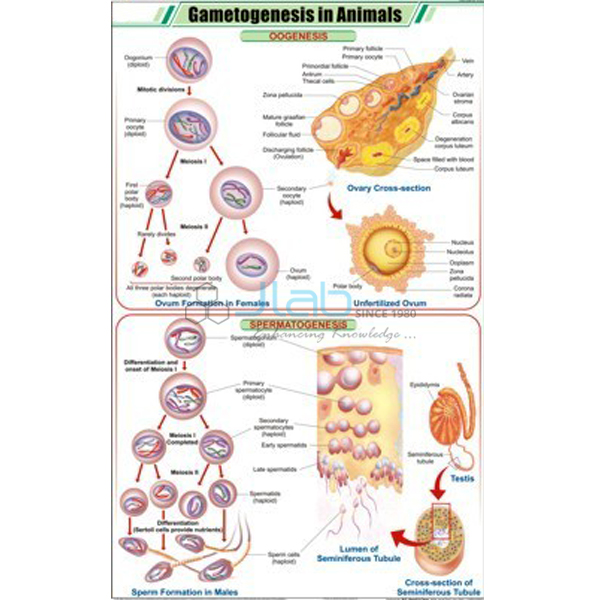
- Gametogenesis in Animals Chart — how the sperm and egg are formed before fertilisation.
- Human Sperm Model — an enlarged sperm mounted on a base.
- Male Sperm Prepared Slide — for observing sperm under the microscope.
- Double Fertilization Chart — fertilisation in flowering plants, from the botany series.
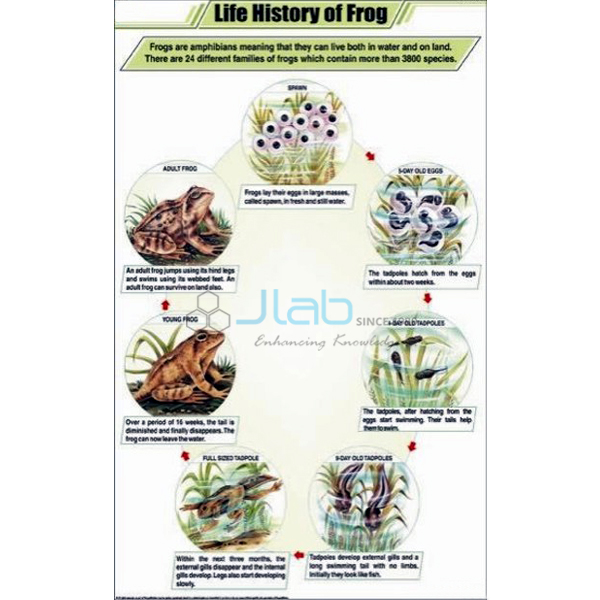
- Life History of Frog Chart — an animal with external fertilisation, from the same zoology series.
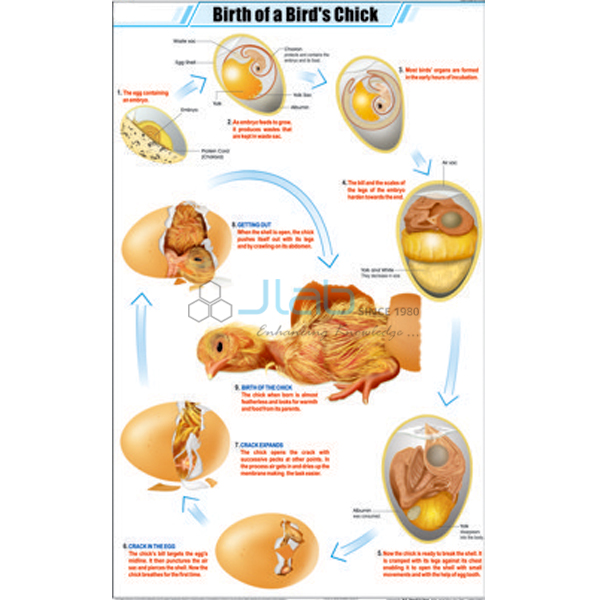
- Birth of a Bird's Chick Chart — development of a bird, an animal with internal fertilisation.
See all titles in the Zoology Chart range or the full Charts range.
Request a Quote
JLab will quote directly: use the Add To Cart enquiry button on this page, or send the number of charts (minimum 10 units), any companion charts or models and the delivery city and country through the contact page.
Last updated: 3 October 2026