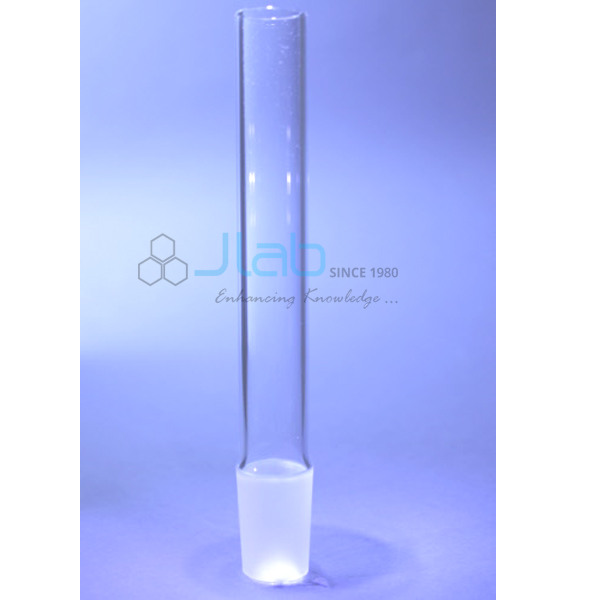
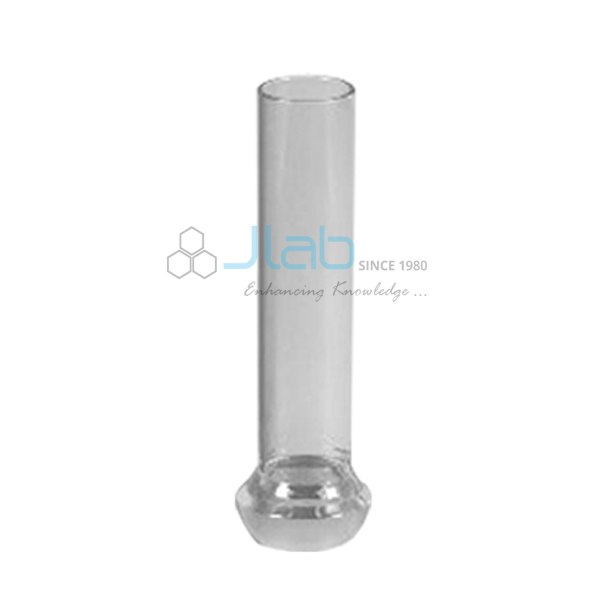
Joints, Flat Flange Manufacturer,Supplier and Exporter in India

Product Code : EL-SDAJ-1672
Jlab Export is a leading Joints, Flat Flange Manufacturer,and suppliers in India
A flat flange joint is a wide, flat glass rim on the end of a tube. Two flanges of the same size are clamped face to face, giving a wide-bore connection that comes apart easily, as on a reaction vessel and its lid. Bores run from 10 mm to 100 mm, with flange diameters from 30 mm to 150 mm.
Specifications
| Type | Flat flange joint |
| Bore 10 mm | Flange diameter 30 mm |
| Bore 25 mm | Flange diameter 55 mm |
| Bore 50 mm | Flange diameter 85 mm |
| Bore 75 mm | Flange diameter 120 mm |
| Bore 100 mm | Flange diameter 150 mm |
| Minimum order quantity | 50 units |
| Dispatch time | Usually 3–5 working days |
| Manufacturer | JLab (Jain Laboratory Instruments Pvt Ltd), Ambala, India |
Reaction Vessel Practicals and Glassblowing
In a glassblowing class, trainees can seal one flange onto a wide tube to form a vessel body and a second onto a domed lid with necks. They then check that the two faces sit flat together without rocking.
In a college organic practical, the vessel is clamped shut and its lid carries a Condensers Allihn for reflux and one of the Thermometer Pockets to follow the temperature. At the end, students let it cool, release the clamp and lift the lid off. A thick or solid product comes out far more easily than through a narrow neck.
Frequently Asked Questions
How is a flat flange joint sealed?
Two flange faces of the same bore meet face to face. A gasket or O-ring between them, or a thin film of grease on ground faces, makes the seal. A flange clamp around the rims then presses the two faces together.
How tight should the flange clamp be?
Just firm, and even all round. Tighten the screws of the clamp a little at a time in turn, so the faces close square. Forcing one side down first can tilt the lid and crack the rim, and too much force on a cold flange can crack it later on heating.
Why does a flange joint leak after assembly?
The usual causes are grit or a hair on a face, an O-ring that is twisted or out of place, or a clamp tightened unevenly. A chip on the rim also lets air in. Wipe both faces clean, reseat the seal and clamp again.
How do I choose the flange size?
Pick the bore that suits the vessel or tube, from 10 mm up to 100 mm. Both halves of the joint must be the same size, and the flange diameter, from 30 mm to 150 mm, decides which clamp fits.
Other Joint Types for Glass Apparatus
For a quote, use Add To Cart or send us a message through the contact page.
Last updated: 14 November 2026