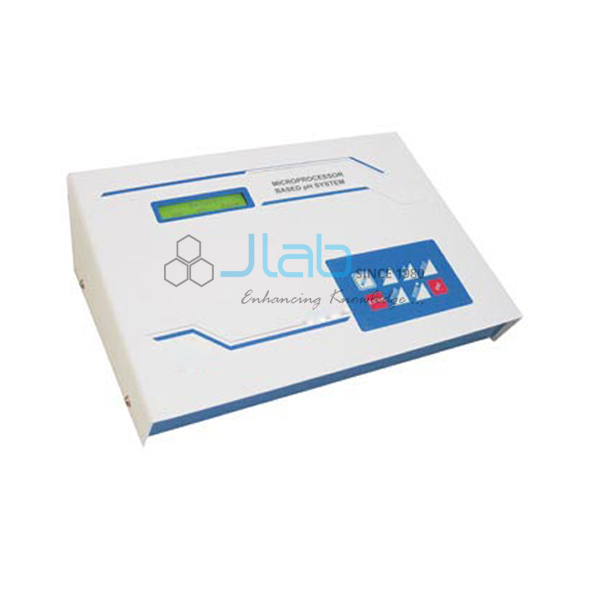
Microprocessor pH-EC-TDS Meter Manufacturer,Supplier and Exporter in India
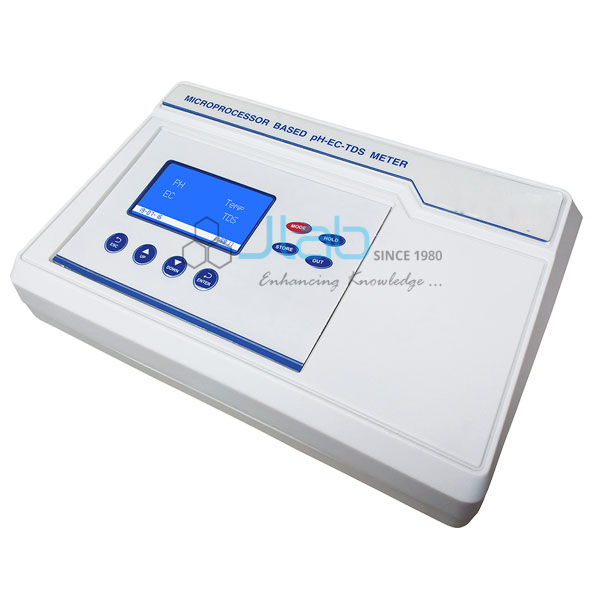
Product Code : EL-CM-2187
Jlab Export is a leading Microprocessor pH-EC-TDS Meter Manufacturer,and suppliers in India
This bench meter measures pH, conductivity, TDS and temperature with one microprocessor unit and a separate electrode, cell and temperature probe. It recognises the pH buffers during calibration, selects the conductivity range by itself and keeps up to 90 results in memory after it is switched off. A dot matrix printer with a Centronics interface can be connected to print them.
Specifications
| Measures | pH, conductivity (EC), TDS and temperature |
| pH | 0 to 14.00 pH, resolution 0.01 pH, accuracy ±0.01 pH ±1 digit |
| Conductivity | Five auto ranges from 0–20 µS to 0–200 mS, accuracy ±0.5% FS ±1 digit |
| TDS | Five auto ranges from 0–20 ppm to 0–200 ppt, accuracy ±1% FS ±1 digit |
| Temperature | 0–100 °C, resolution 0.1 °C |
| Cell constant | Adjustable, 0.05–10.5 |
| Temperature compensation | Auto or manual, with programmable reference temperature and coefficient (0.1–4.0%) in EC mode |
| Display and keypad | 16 x 2 line alphanumeric LCD with backlight, 8 soft-touch membrane keys |
| Memory and printer | 90 samples, kept at switch-off, Centronics port for a dot matrix printer |
| Power, size and weight | 230 V ±10% AC, 50 Hz, 285 x 190 x 90 mm, about 2.5 kg |
| Minimum order quantity | 1 unit |
| Dispatch time | Usually 7–10 working days |
| Manufacturer | JLab (Jain Laboratory Instruments Pvt Ltd), Ambala, India |
Practicals for Chemistry and Soil Labs
Students start by calibrating the pH channel with the 4.00 and 7.00 pH buffer tablets supplied. For an acid-base titration curve, they put a measured volume of Hydrochloric Acid Dilute in a beaker. A dilute solution of Sodium Hydroxide is run in from a Burette, Borosilicate Glass, with PTFE Stopcock. The pH is noted after each addition and plotted against volume. The end point lies where the pH rises most steeply.
With the conductivity cell in the same beaker, the class can follow the titration by conductance instead. The reading falls as fast hydrogen ions are replaced by slower sodium ions. It climbs again once excess hydroxide is present, and the two straight lines cross at the end point. Environmental science groups can test the pH and TDS of water samples and of extracts from the four soils in a Soil Kit. The stored results can then be printed for their record.
Frequently Asked Questions
Which buffers does the meter recognise when I calibrate pH?
It comes with buffer tablets for 4.00 and 7.00 pH, and it identifies each buffer as you calibrate. Start with the 7.00 buffer, rinse the electrode, then use the 4.00 buffer. The two points fix the offset and slope of the electrode, and a falling slope is a sign the electrode is ageing.
Why do I set a reference temperature and coefficient for conductivity?
Conductivity changes with temperature, so the meter corrects each reading to the reference temperature you program. The coefficient, adjustable from 0.1 to 4.0%, sets the size of that correction. Keep the same settings for any readings you plan to compare.
How does the meter arrive at a TDS value?
TDS is not read directly. The meter measures conductivity through the cell and converts it to TDS with a factor. It shows the result in ppm or ppt over five ranges up to 200 ppt. Rinse the cell with a little of the sample before each reading.
How should the pH electrode be stored between practicals?
Keep the glass bulb of the combination electrode wet in its storage solution. Do not leave it standing in distilled water for long, because that draws ions out of the glass and slows its response. Rinse it with distilled water before and after each sample.
Other Bench Meters for Water Testing
- Microprocessor pH-EC Meter (pH, EC and temperature, without TDS)
- Microprocessor EC-TDS-Sal Meter (EC, TDS and salinity, no pH channel)
- Microprocessor pH Meter
- Digital pH, Conductivity & Temperature Meter
For a quote, use Add To Cart or send us a message through the contact page.
Last updated: 6 November 2026