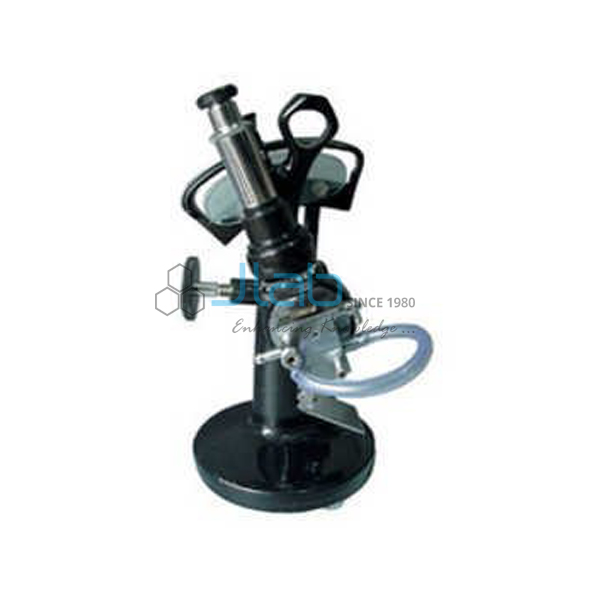
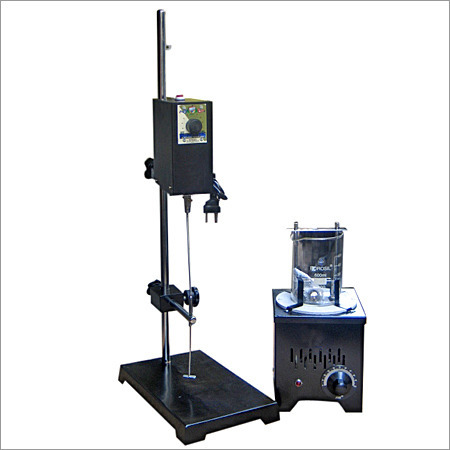
Saybolt Viscometer Apparatus Manufacturer,Supplier and Exporter in India
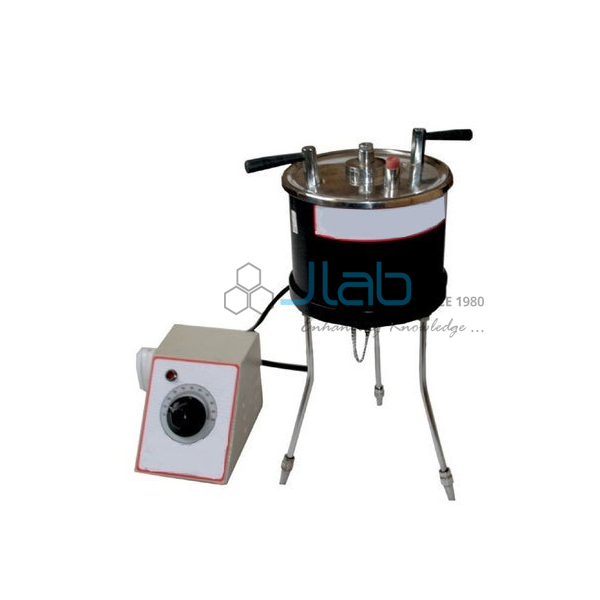
Product Code : EL-GLE-4019
Jlab Export is a leading Saybolt Viscometer Apparatus Manufacturer,and suppliers in India
A Saybolt viscometer times how long a set volume of oil takes to run through a standard orifice into a receiving flask at a set test temperature. That flow time in seconds is the Saybolt viscosity of the oil. This apparatus works on 220 V AC mains, and the oil is stirred by hand with a turntable arrangement so the sample stays at one even temperature.
Technical Details
| Test | Saybolt efflux time of oils |
| Sample stirring | By hand, with a turntable arrangement |
| Power supply | 220 V AC mains |
| Minimum order quantity | 1 unit |
| Dispatch time | Usually 7–10 working days |
| Manufacturer | JLab (Jain Laboratory Instruments Pvt Ltd), Ambala, India |
Oil Viscosity Practicals for Students
In a fuels or fluid mechanics lab, students find the Saybolt viscosity of a lubricating oil at several test temperatures and plot flow time against temperature. Each run is timed with a Digital Stop Watch, started as the orifice is opened and stopped when the oil reaches the mark on the flask.
Testing the same oil in a Redwood Viscometer shows that two efflux methods give different seconds for one oil. A result must always name its method and temperature. Teachers also use the test to show why an engine oil thins out as it warms up.
Frequently Asked Questions
What does a reading in Saybolt seconds mean?
It is the time the sample takes to fill the receiving flask to its mark through the orifice. A thicker oil runs more slowly and gives more seconds. The figure holds only for the temperature at which the test was run.
Why is the oil stirred during the test?
Viscosity changes quickly with temperature, so the oil must be at one temperature all through before timing starts. On this apparatus the stirring is done by hand with the turntable arrangement, until the thermometer reading stops changing.
What makes a flow time come out wrong?
The usual causes are cleaning solvent left in the cup or flask and a cork that lets air past. A flask set off centre, so the stream hits its neck, and a stopwatch started late also spoil the run. Each one changes the seconds recorded.
Why must the oil stand level with the overflow rim before timing?
The flow time depends on the height of oil above the orifice. Fill the cup until oil spills over the rim, then draw off the surplus so every run starts from the same level. Keep the apparatus level for the same reason.
What power supply does the apparatus need?
It is built for 220 V AC mains, so it needs an earthed mains socket near the bench. The stirring is done by hand and does not depend on the supply.
Other Viscometers and Oil Test Apparatus
For a quote, use Add To Cart or send us a message through the contact page.
Last updated: 12 November 2026