Single Cylinder Four Stroke Petrol Engine Test Rig Manufacturer,Supplier and Exporter in India

Product Code : EL-TELE-9429
Jlab Export is a leading Single Cylinder Four Stroke Petrol Engine Test Rig Manufacturer,and suppliers in India
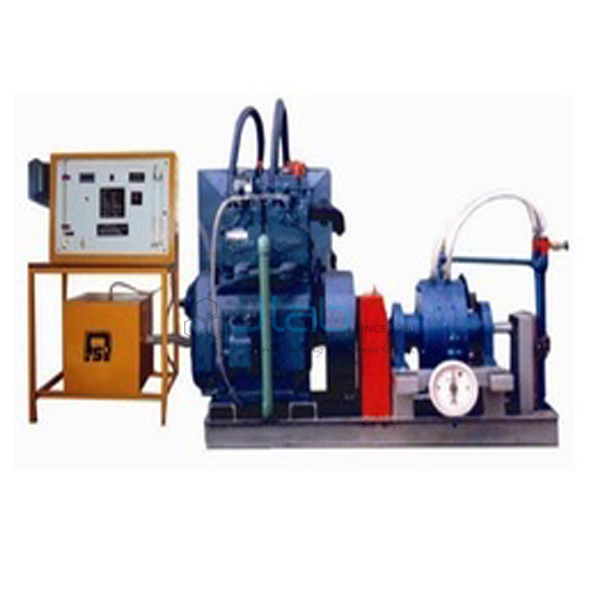
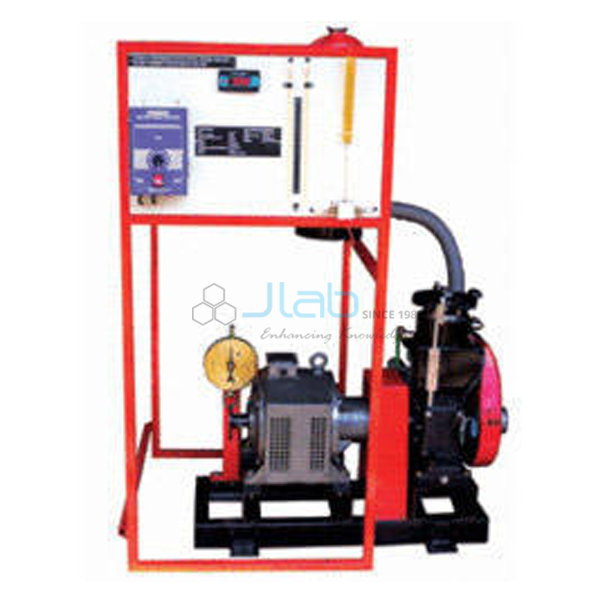
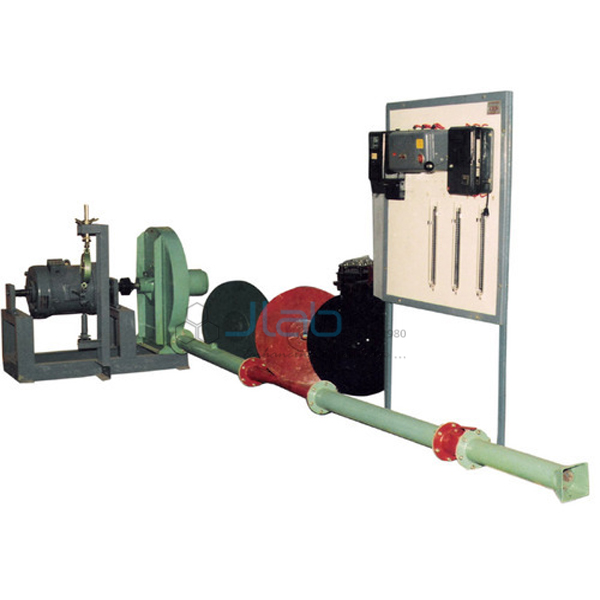
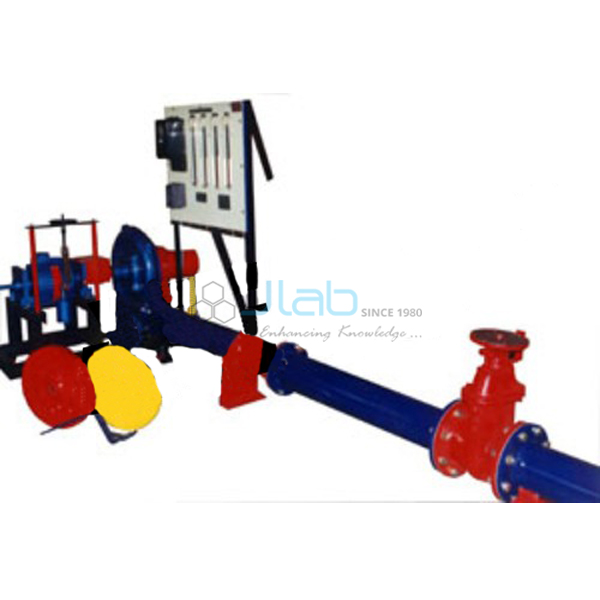
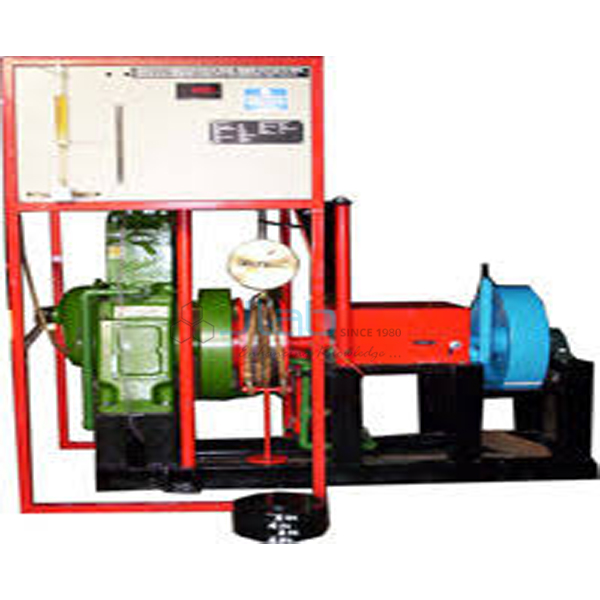
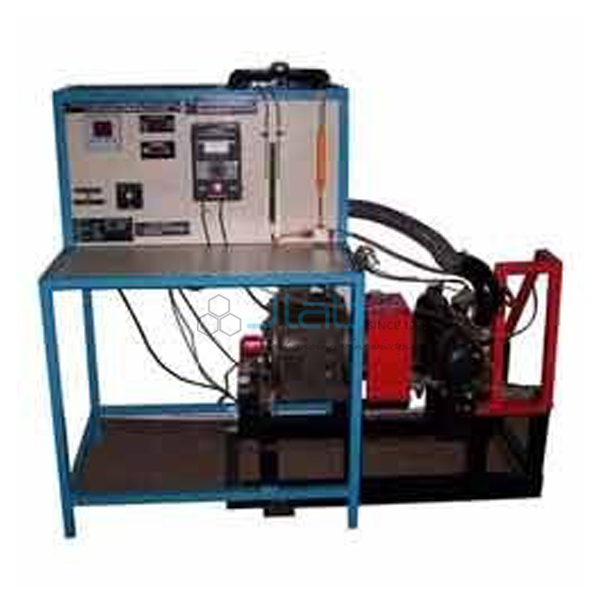
This rig loads a single cylinder four stroke petrol engine with one of four units. The choice is a mechanical belt brake, an AC alternator, a DC generator or an eddy current dynamometer. The belt brake works on a brake drum on the engine shaft, with cooling water, a spring balance and dead weights in kg. The other three are each matched to load the engine up to 3 HP at 3600 rpm.
Specifications
| Engine | Single cylinder, four stroke, petrol |
| Mechanical brake option | Belt brake on a brake drum fitted to the engine shaft, with cooling water, spring balance and a set of dead weights in kg |
| AC alternator option | Loads the engine up to 3 HP at 3600 rpm, resistance loading with selector switches |
| DC generator option | Loads the engine up to 3 HP at 3600 rpm, resistance loading with selector switches |
| Eddy current dynamometer option | Loads the engine up to 3 HP at 3600 rpm |
| Minimum order quantity | 1 unit |
| Dispatch time | Usually 14–18 working days |
| Manufacturer | JLab (Jain Laboratory Instruments Pvt Ltd), Ambala, India |
Engine Lab Experiments on the Four-Stroke Rig
With the belt brake, students load the engine by adding dead weights and read the spring balance at a steady speed. Brake torque is T = (W - S) x R, where W is the dead weight and S the spring balance reading, both in newtons. R is the effective radius of the drum. Brake power is then BP = 2πNT/60000 kW, with N in rpm.
Readings at several loads give torque and brake power against speed. Before the load test, students check the cylinder with a Cylinder Compression Tester for Petrol Engine and set the ignition with a Digital Advance Timing Light. The Valve Timing Diagram shows when the inlet and exhaust valves open in the cycle.
Choosing a Loading Unit
The belt brake is the plainest to teach with, since students see the load as weights and a balance reading. The AC alternator and DC generator turn the engine output into electricity that the resistance bank absorbs, switched in steps. Dividing that electrical output by the generator efficiency gives the brake power. The eddy current dynamometer gives smooth control of load and reads torque from the reaction on its casing.
Frequently Asked Questions
Why does the belt brake need cooling water?
All the power the engine delivers is turned into heat at the brake drum. The cooling water carries that heat away, so the drum and belt do not overheat during a long load test.
How much power can the electrical and eddy current options absorb?
The AC alternator, DC generator and eddy current dynamometer are each matched to load the engine up to 3 HP at 3600 rpm, which is about 2.2 kW.
How do I turn the dead weights into torque?
The weights are marked in kg. Multiply the net load, dead weight minus spring balance reading, by the acceleration due to gravity to get newtons. Then multiply by the effective drum radius in metres to get torque in N m.
How does this rig differ from the two-stroke version?
Here the cylinder fires once every two revolutions and valves control the gas exchange. The Single Cylinder Two Stroke Petrol Engine Test Rig fires every revolution through ports, so the two rigs together show how the cycles compare under load.
Other Petrol Engine Rigs and Models
- Four Stroke Four Cylinder Petrol Engine Test Rig With Morse Test
- Multi Cylinder Four Stroke Petrol Engine Test Rig
- Cut Sectional Model of Four Stroke Single Cylinder Engine Assembly
- EFI Petrol Engine Test Bed
For a quote, use Add To Cart or send us a message through the contact page.
Last updated: 5 November 2026