Slide Wire Rheostats Manufacturer,Supplier and Exporter in India
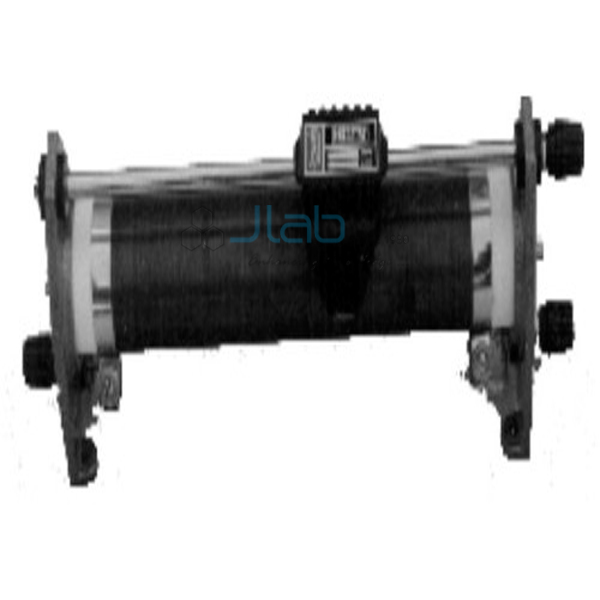
Product Code : EL-DB-1246
Jlab Export is a leading Slide Wire Rheostats Manufacturer,and suppliers in India
Slide Wire Rheostats (code EL-DB-1246) are sliding-contact variable resistors for controlling current or dividing voltage in physics and electrical lab circuits. They are made in a wide choice of resistances and current-carrying capacities: tube lengths from 15 cm to 50 cm and wire grades rated from 6.5 A down to 0.3 A, giving values from 3.5 Ω up to 6750 Ω. They are made by Jain Laboratory Instruments Pvt Ltd (JLab) at its works in Ambala, India.
Specifications
| Parameter | Detail |
|---|---|
| Type | Slide wire rheostat |
| Tube lengths | 15, 20, 25, 30, 35, 40, 45 and 50 cm (columns A to H of the chart) |
| Wire grades and current ratings | Grades (A) to (P), rated from 6.5 A (grade A) down to 0.3 A (grade P) |
| Resistance | From 3.5 Ω (grade A, 15 cm tube) to 6750 Ω (grade P, 50 cm tube) — see the chart below |
| Quality check | Each rheostat is visually inspected before dispatch |
| Pack quantity | Each (sold individually) |
| Minimum order quantity | 10 units |
| Dispatch time | Usually 7–10 working days |
| Product code | EL-DB-1246 |
| Manufacturer | Jain Laboratory Instruments Pvt Ltd (JLab) — OEM |
| Country of origin | India (made in Ambala, Haryana) |
Resistance Chart (ohms) by Wire Grade and Tube Length
| Wire grade | Current rating (A) | 15 cm (A) | 20 cm (B) | 25 cm (C) | 30 cm (D) | 35 cm (E) | 40 cm (F) | 45 cm (G) | 50 cm (H) |
|---|---|---|---|---|---|---|---|---|---|
| (A) | 6.5 | 3.5 | 5.5 | 7.5 | confirm* | 11 | 13 | 15 | confirm* |
| (B) | 5.0 | 5.5 | 8 | 11 | 14 | 17 | 20 | 23 | 26 |
| (C) | 4.2 | 10 | 15 | 20 | 25 | 30 | 35 | 40 | 45 |
| (D) | 3.3 | 14 | 20 | 28 | 34 | 42 | 48 | 58 | 64 |
| (E) | 2.8 | 19 | 28 | 38 | 48 | 57 | 66 | 76 | 86 |
| (F) | 2.3 | 26 | 41 | 56 | 71 | 86 | 102 | 114 | 128 |
| (G) | 1.8 | 47 | 70 | 93 | 116 | 139 | 160 | 185 | 210 |
| (H) | 1.6 | 64 | 96 | 125 | 160 | 190 | 225 | 250 | 290 |
| (I) | 1.4 | 80 | 120 | 160 | 200 | 240 | 280 | 320 | 360 |
| (J) | 1.2 | 115 | 170 | 230 | 290 | 345 | 400 | 445 | 600 |
| (K) | 1.0 | 148 | 225 | 295 | 365 | 445 | 530 | 590 | 675 |
| (L) | 0.8 | 200 | 300 | 400 | 500 | 600 | 700 | 800 | 900 |
| (M) | 0.6 | 345 | 510 | 675 | 835 | 1000 | 1165 | 1300 | 1500 |
| (N) | 0.5 | 500 | 750 | 1000 | 1250 | 1500 | 1750 | 2000 | 2250 |
| (O) | 0.4 | 840 | 1250 | 1650 | 2070 | 2500 | 2900 | 3350 | 3750 |
| (P) | 0.3 | 1350 | 2100 | 2850 | 3600 | 4300 | 5100 | 6000 | 6750 |
* For grade (A) the listing gives 95 Ω at 35 cm and 171 Ω at 50 cm, figures that do not fit the rest of that row; ask JLab to confirm these two values before ordering. Each row keeps the same current rating while the resistance rises with tube length, so a longer tube gives more resistance at the same current.
What Are Slide Wire Rheostats Used For?
A rheostat connected through one end terminal and the slider works as a variable series resistance that sets the current in a circuit; connected through both ends with the slider as the output, it becomes a potential divider that gives an adjustable voltage. School labs use it in the class 10 Ohm’s law experiment and in class 12 practicals such as the potentiometer and galvanometer experiments, while college, polytechnic and ITI labs use larger grades to control field and armature currents, load small circuits and adjust bench supplies.
To choose a model, first pick a wire grade whose current rating is higher than the highest current your circuit will draw, then pick the tube length that gives the resistance you need from the chart. Move the slider smoothly, keep the sliding track clean, and remember that the winding warms under load, so do not leave a rheostat carrying its full rated current longer than the experiment needs.
What to Specify When Ordering
- Wire grade and tube length — give the grade letter (A to P) and the tube length, or the resistance and current you need, and JLab will match a model from the chart.
- Construction — if you need a particular tube material, wire alloy or terminal type, say so, as these are not fixed in the listing.
- Mix of values — physics benches often use a low-resistance, high-current grade for current control and a high-resistance grade as a potential divider.
- Quantity — the minimum order is 10 units in total.
Frequently Asked Questions
What resistance and current ratings are available?
Sixteen wire grades from (A) to (P) on eight tube lengths from 15 cm to 50 cm. Current ratings run from 6.5 A for grade (A) down to 0.3 A for grade (P), and resistance from 3.5 Ω to 6750 Ω, as shown in the chart.
How do I pick the right rheostat?
Choose a grade rated above your circuit’s maximum current, then the tube length that gives enough resistance. For example, grade (C) carries 4.2 A and is listed at 10 Ω on a 15 cm tube and 45 Ω on a 50 cm tube.
Can a slide wire rheostat be used as a potential divider?
Yes. Connecting the supply across both end terminals and taking the output from the slider gives a voltage that can be varied smoothly from zero up to the supply voltage.
What are the tube and wire made of?
The listing does not state the tube material, wire alloy, slider or terminal type. JLab confirms these in the quotation; JLab’s constantan and nichrome rheostats are listed separately if you need a particular alloy.
Why are two figures in row (A) marked to confirm?
The listing shows 95 Ω and 171 Ω for the 35 cm and 50 cm grade (A) tubes, which do not follow the rest of the row, so JLab will confirm the actual values when it quotes.
What should an export enquiry include?
The grade and tube length or resistance and current for each item, the quantities, the destination country and port or city, delivery terms such as FOB or CIF, and any tender reference.
Who manufactures these rheostats?
Jain Laboratory Instruments Pvt Ltd (JLab) makes them at its works in Ambala, Haryana, India.
OEM Manufacturer
JLab is the trading name of Jain Laboratory Instruments Pvt Ltd, a laboratory and electrical teaching equipment manufacturer in India, incorporated in 2017 and based on Hargolal Road, Ambala, Haryana. The rheostats are wound and assembled in JLab’s own works, not sourced from a trader, so schools, colleges, ITIs, dealers and importers buy factory-direct; every rheostat is visually inspected before dispatch, and repeat orders and further grades are supplied by the same works. JLab exports worldwide and ships to buyers in every region, including Mexico in North America, Cameroon in Central Africa, Turkmenistan in Central Asia, Bhutan in South Asia and Latvia in Northern Europe. Tender buyers can see the JLab lab tenders page.
Related Rheostats and Resistance Equipment
- Rheostats (Continuous Constantan Type) — sliding-contact rheostats with constantan wire and bell terminals.
- Rheostats (Nichrome Type) — nichrome-wound sliding rheostats for physics circuits.
- Rheostat Single Tube — oxidised wire on a vitreous enamelled steel tube for electrical labs.
- Groove Type Rheostat Tube — a grooved porcelain or cement tube with air ducts for cooling.
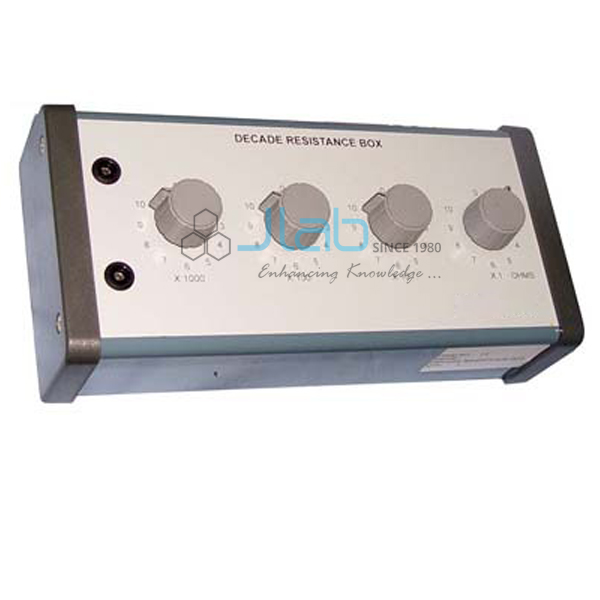
- Resistance Boxes — dial-type boxes when you need a known, stepped resistance.
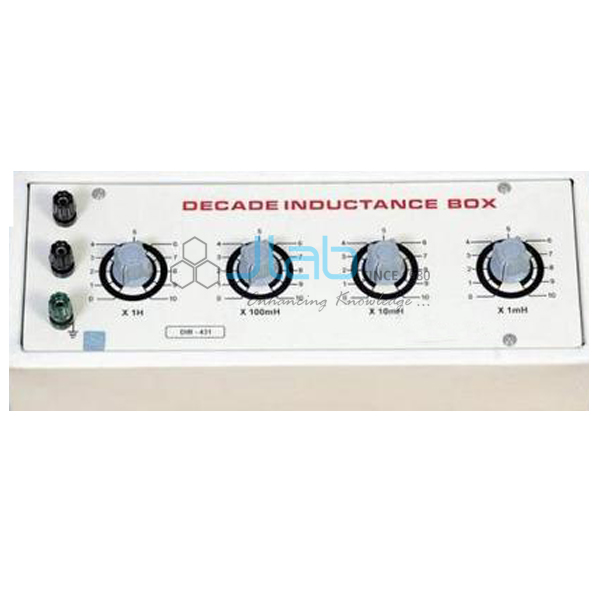
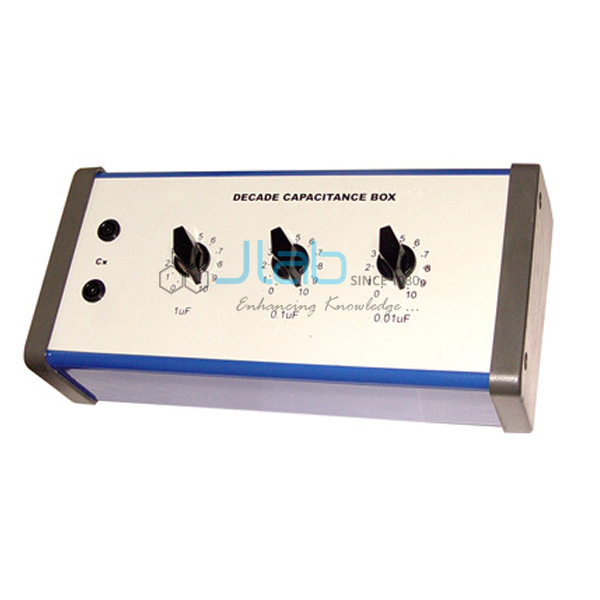
See the Decade Box range and the Scientific Instrument range.
Request a Quote
Quotes come direct from the manufacturer. Use the Add To Cart enquiry button on this page, or send the grade and tube length (or the resistance and current) for each rheostat, the quantity (minimum 10 units) and your delivery location through the contact page.
Last updated: 8 October 2026