Standard Resistance Manufacturer,Supplier and Exporter in India

Product Code : EL-DB-1247
Jlab Export is a leading Standard Resistance Manufacturer,and suppliers in India
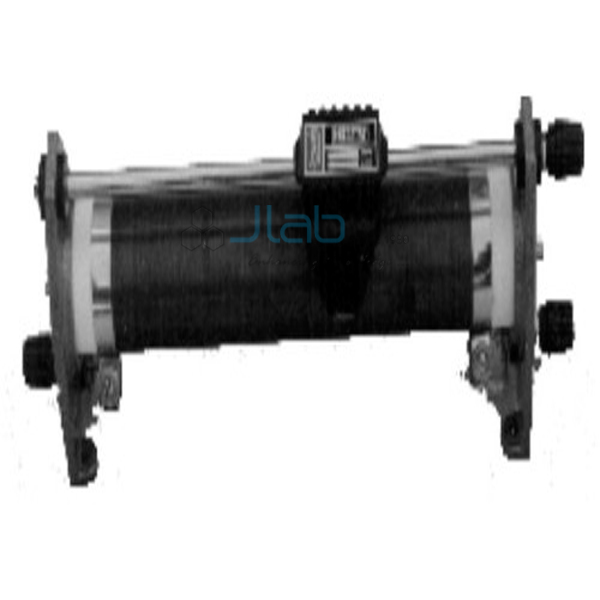
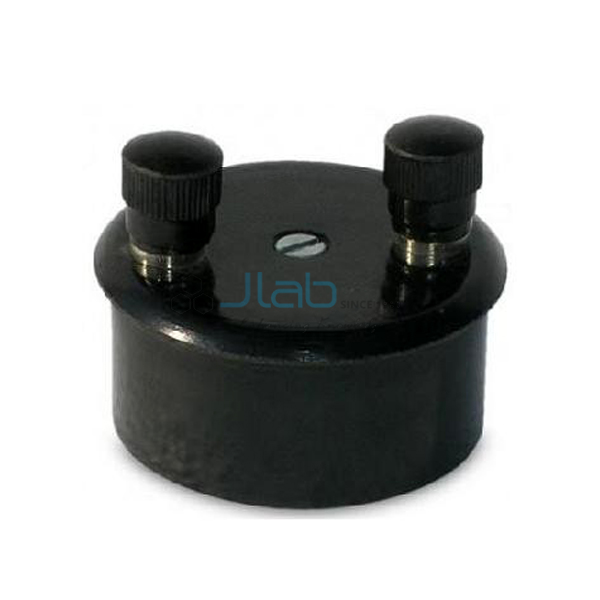
Standard Resistance (code EL-DB-1247) is an oil-immersed reference resistor for precision resistance comparison, current measurement with a potentiometer and meter calibration in college and university electrical measurement labs. It is listed in seven values from 0.001 Ω to 1000 Ω, wound with aged manganin coils, with accuracy from 0.05% to 0.005%. It is made by Jain Laboratory Instruments Pvt Ltd (JLab) at its works in Ambala, India.
Specifications
| Parameter | Detail |
|---|---|
| Values available | 0.001 Ω, 0.01 Ω, 0.1 Ω, 1 Ω, 10 Ω, 100 Ω and 1000 Ω |
| 0.001 Ω standard | Maximum current 10 A; accuracy 0.05%; 4 terminals |
| 0.01 Ω standard | Maximum current 10 A; accuracy 0.05%; 4 terminals |
| 0.1 Ω standard | Maximum current 5 A; accuracy 0.05%; 4 terminals |
| 1 Ω standard | Maximum current 3 A; accuracy 0.01%; 2 terminals |
| 10 Ω standard | Maximum current 1 A; accuracy 0.005%; 2 terminals |
| 100 Ω standard | Maximum current 0.5 A; accuracy 0.005%; 2 terminals |
| 1000 Ω standard | Maximum current 0.2 A; accuracy 0.005%; 2 terminals |
| Resistance element | Manganin coils, thoroughly aged |
| Construction | Coils immersed in moisture-free, non-corrosive oil contained in metal vessels |
| Connections | Silver-soldered |
| Current handling | Carries comparatively large currents without being heated (as listed) |
| Quality check | Each standard resistance is visually inspected before dispatch |
| Pack quantity | Each (sold individually) |
| Minimum order quantity | 10 units |
| Dispatch time | Usually 7–10 working days |
| Product code | EL-DB-1247 |
| Manufacturer | Jain Laboratory Instruments Pvt Ltd (JLab) — OEM |
| Country of origin | India (made in Ambala, Haryana) |
How Does It Compare with Other JLab Resistance Standards?
| Model | Values | Accuracy (as listed) | Construction |
|---|---|---|---|
| This standard resistance (EL-DB-1247) | Seven fixed values, 0.001 Ω to 1000 Ω | 0.05% to 0.005%, depending on value | Aged manganin coils in oil-filled metal vessels; silver-soldered; 4 or 2 terminals |
| Resistance Coil | One value from 0.1 Ω to 500 Ω | ±0.5% | Non-inductively wound constantan coil; hexagonal moulded case; two 4 mm sockets |
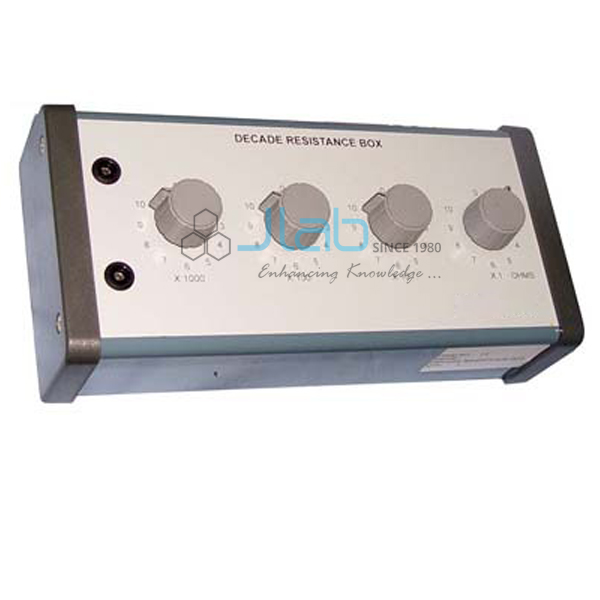
| Resistance Boxes | Adjustable, decades from 0.01 Ω to 10,000 Ω | Not stated | Dial type, one to five decade dials |
Choose the standard resistance when the reference value itself must be known closely — bridge comparisons, current measurement with a potentiometer or meter calibration. The resistance coil is the economical choice for student bridge benches, and a resistance box suits experiments where the value has to be changed while you work.
What Is the Standard Resistance Used For?
A standard resistance is a known, stable resistor against which other resistances, currents and voltages are checked. In the electrical measurement labs of engineering colleges, polytechnics and universities it is the reference arm in Wheatstone and Carey Foster bridge comparisons, the low-value standard in a Kelvin double bridge, and a current-measuring resistor for a DC potentiometer: the potentiometer reads the voltage drop across the standard and the current follows from I = V/R. At its listed 10 A, for example, the 0.01 Ω standard develops 0.1 V. With a standard cell and a volt ratio box, the same bench is used to calibrate ammeters and voltmeters.
The 0.001, 0.01 and 0.1 Ω values have 4 terminals because at milliohm level the resistance of leads and contacts would swamp the reading. Current enters and leaves through one pair of terminals and the voltage is taken across the other pair, so only the resistance between the potential terminals is measured. Manganin is chosen for resistance standards because its resistance changes very little with temperature and it gives only a small thermoelectric emf against copper; ageing the coils settles their value, and the oil carries heat away from the winding. In use, stay within the listed maximum current for each value, keep the terminals clean and tight, and let the unit reach room temperature before precision readings.
What to Specify When Ordering
- Values and quantities — which of the seven values from 0.001 Ω to 1000 Ω you need and how many of each; the minimum order is 10 units.
- Current and accuracy — check the listed maximum current and accuracy of each value against your experiment; the 4-terminal low values carry the highest currents.
- Size and terminal details — vessel dimensions and terminal type are not given in the listing, so ask for them in the quotation if your bench layout or tender needs them.
- Companion instruments — a Crompton potentiometer, standard cell or volt ratio box can be added to the same enquiry.
Frequently Asked Questions
What is a standard resistance used for?
It provides a known reference value for precision work: comparing resistances in bridge circuits, measuring current with a potentiometer from the voltage drop across it, and calibrating ammeters and voltmeters in college and university electrical measurement labs.
Which values are available and how accurate are they?
Seven values are listed. The 0.001, 0.01 and 0.1 Ω standards are accurate to 0.05%, the 1 Ω standard to 0.01%, and the 10, 100 and 1000 Ω standards to 0.005%, as stated in the specification.
Why do the low values have 4 terminals?
To allow a four-terminal (Kelvin) connection. Current is fed through one pair of terminals and the voltage is measured across the other pair, so the resistance of leads and contacts is left out of the result — essential when the standard itself is only a few milliohms.
How much current can each value carry?
As listed: 10 A for the 0.001 and 0.01 Ω standards, 5 A for 0.1 Ω, 3 A for 1 Ω, 1 A for 10 Ω, 0.5 A for 100 Ω and 0.2 A for 1000 Ω. Staying within these limits keeps self-heating, and so drift, low.
How does it differ from the resistance coil?
The resistance coil is an economical constantan resistor in a moulded case, one value from 0.1 Ω to 500 Ω within ±0.5%, meant for student bridge work. The standard resistance uses aged manganin coils in oil and is listed at 0.05% or better, for precision comparison and calibration.
Are a potentiometer and standard cell included?
No. This listing covers the standard resistance only. A Crompton potentiometer, standard cell and volt ratio box are separate items, linked below, and can be quoted together.
What should an export enquiry include?
The values and quantity of each, the destination country and port or city, your delivery terms (for example FOB or CIF), any packing or labelling instructions, and the tender reference if the purchase is for a tender.
Who manufactures this standard resistance?
Jain Laboratory Instruments Pvt Ltd, trading as JLab, makes it at its works in Ambala, Haryana, India, and quotes for it directly.
OEM Manufacturer
JLab is the trading name of Jain Laboratory Instruments Pvt Ltd, a maker of physics lab instruments in India, incorporated in 2017 and located on Hargolal Road, Ambala, Haryana. These standard resistances are produced at JLab’s own works rather than sourced from a trader, so engineering colleges, universities, dealers and importers deal with the manufacturer directly; each unit is visually inspected before it is packed, and repeat orders are handled by the same team. JLab exports worldwide and ships to every region — for example to Estonia in Northern Europe, Congo in Central Africa, South Korea in East Asia, Mexico in North America and Namibia in Southern Africa. Institutional buyers can find tender details on the JLab lab tenders page.
Instruments Used with a Standard Resistance
- Crompton Potentiometer — a panel potentiometer of the Crompton pattern that reads the voltage drop across the standard.
- Standard Cell — a stable voltage reference for standardising the potentiometer before measurements.
- Volt Ratio Box — a tapped divider that extends a Crompton potentiometer’s range for voltmeter calibration.
- Calibration of Voltmeter & Ammeter — a compact electronic unit with a built-in standard cell for potentiometer-based meter calibration.
- Resistance Coil — a constantan fixed resistor for student Wheatstone and meter bridge benches.
Browse the Decade Box range or the wider Scientific Instrument range.
Request a Quote
Quotes come direct from the manufacturer. Use the Add To Cart enquiry button on this page, or send the values you need with the quantity of each (minimum order 10 units), any companion instruments, and your delivery location through the contact page.
Last updated: 8 October 2026