Copper Metallurgy Manufacturer,Supplier and Exporter in India
Product Code : EL-CC-2870
Jlab Export is a leading Copper Metallurgy Manufacturer,and suppliers in India
Copper Metallurgy (code EL-CC-2870) is a 58 x 90 cm chemistry wall chart on how copper is obtained from its sulphide ore and refined to high purity, a standard example in lessons on extracting metals. It comes laminated on both sides with plastic rollers, in English only. JLab (Jain Laboratory Instruments Pvt Ltd, Ambala, India) supplies it to schools, colleges and dealers.
Specifications
| Parameter | Detail |
|---|---|
| Chart topic | Copper metallurgy (Chemistry Charts series) |
| Size (overall) | 58 x 90 cm (about 22.8 x 35.4 in) |
| Paper | Coated art paper, 130 gsm |
| Printing | Full colour, offset printed using CTP technology |
| Lamination | Both sides, 30 micron heat-sealable polyester film |
| Hanging | Wall hanging, fitted with plastic rollers |
| Surface | Markable and washable |
| Weight | 228 g |
| Size when rolled | 58 x 4 x 2 cm |
| Language | English only |
| Quality check | Each chart is visually inspected before dispatch |
| Pack quantity | Each (sold individually) |
| Minimum order quantity | 10 units |
| Dispatch time | Usually 7–10 working days |
| Product code | EL-CC-2870 |
| Supplied by | Jain Laboratory Instruments Pvt Ltd (JLab), Ambala, India |
What Is the Copper Metallurgy Chart Used For?
Most copper comes from sulphide ores such as copper pyrites (chalcopyrite, CuFeS2). The crushed ore is concentrated by froth flotation, in which oil-coated ore particles rise with the froth while the rocky gangue sinks. The concentrate is roasted in air and smelted with silica, so that much of the iron is removed as slag and a mixture of copper and iron sulphides called matte is left. When air is blown through the molten matte, part of the copper(I) sulphide is oxidised to copper(I) oxide, which then reacts with the remaining sulphide to give copper metal and sulphur dioxide without any added reducing agent. Class 10 textbooks write this self-reduction as 2Cu2S + 3O2 → 2Cu2O + 2SO2, followed by 2Cu2O + Cu2S → 6Cu + SO2. Escaping sulphur dioxide leaves a blistered surface, so this impure product is called blister copper.
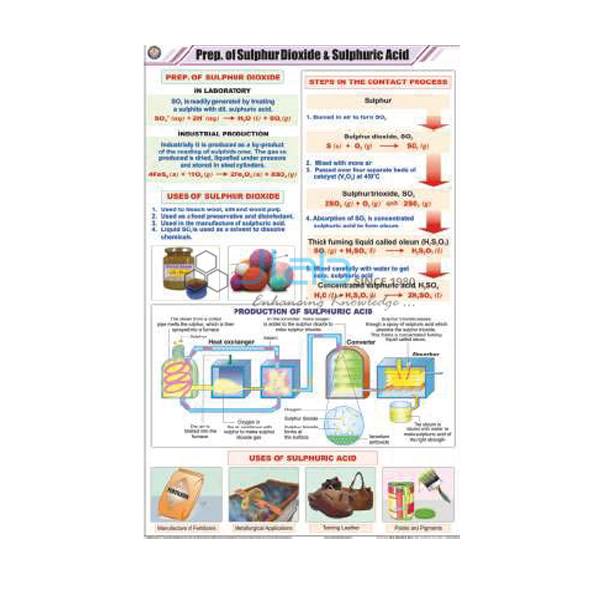
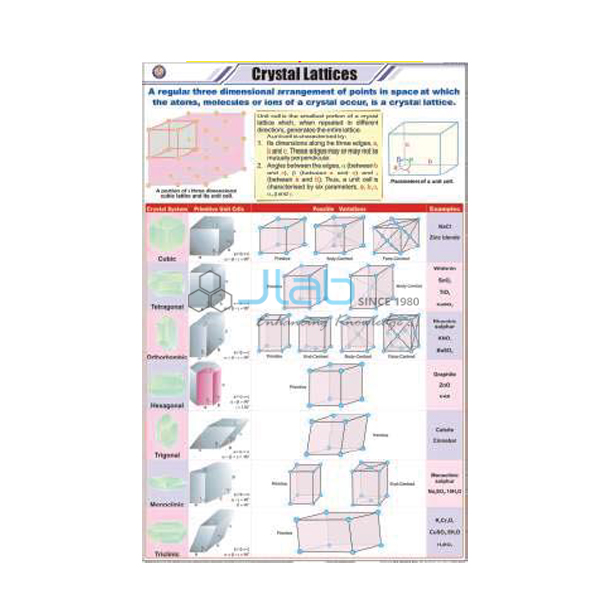
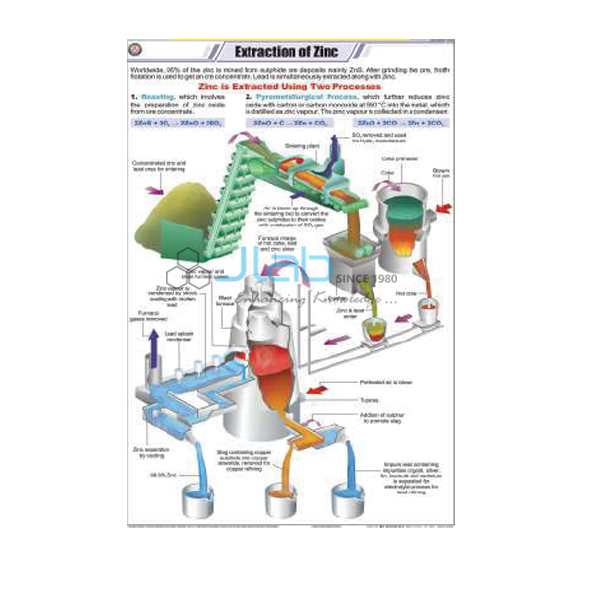
Blister copper is purified by electrolytic refining: a block of impure copper is the anode, a thin strip of pure copper is the cathode, and acidified copper sulphate solution is the electrolyte. Copper dissolves from the anode and deposits as pure metal on the cathode, while insoluble impurities, which can include silver and gold, collect below the anode as anode mud. Indian students meet both self-reduction and electrolytic refining in class 10 science, and the full process again in college metallurgy and in ITI or polytechnic courses. The markable, washable lamination lets a teacher add notes during the lesson. The listing does not itemise the diagrams printed on this chart, and the photograph currently shown on this page is of a different title in the series, so ask JLab for an image of the current print before ordering.
What to Specify When Ordering
- Quantity — at least 10 units; each chart is supplied individually.
- Image check — ask for a picture of the current Copper Metallurgy print with your quotation.
- Electrolysis demonstration — a copper voltameter can be quoted on the same enquiry to show copper moving from anode to cathode.
- Other metallurgy titles — Blast Furnace, Extraction of Zinc and Aluminium Metallurgy are available in the same format.
Frequently Asked Questions
What does the Copper Metallurgy chart cover?
Its subject is the extraction of copper from its ore and its refining. The listing does not itemise the diagrams, so request a preview image to see exactly what is printed.
Does the photograph on this page show this chart?
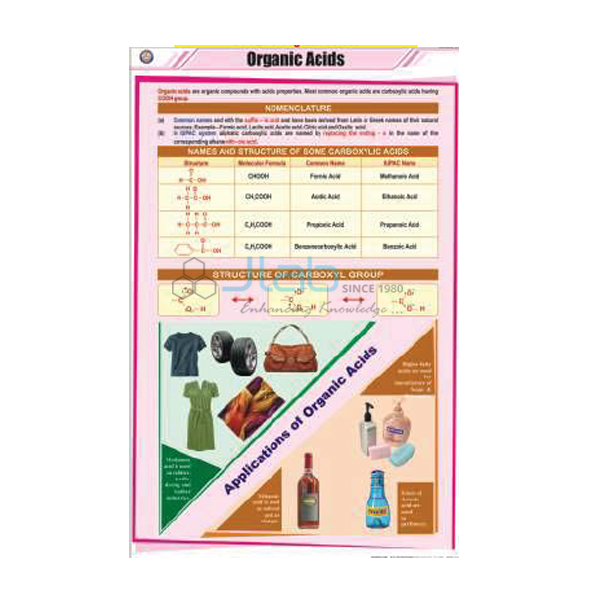
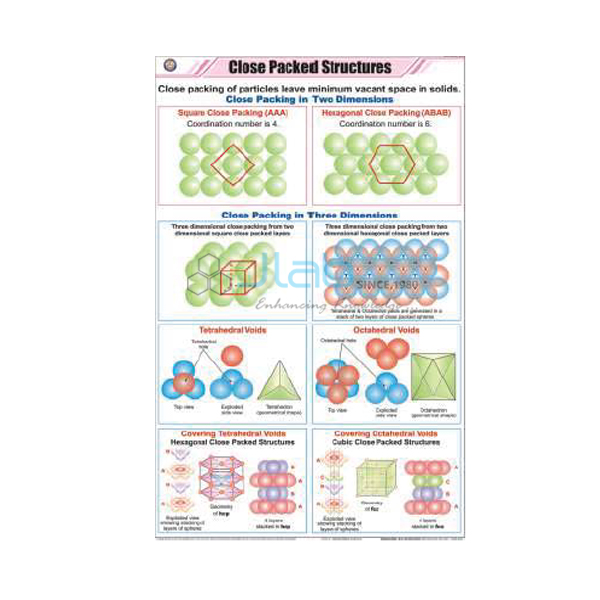
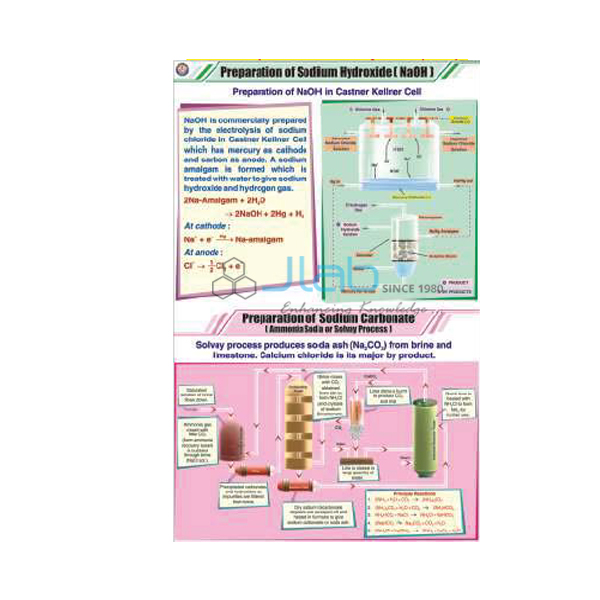
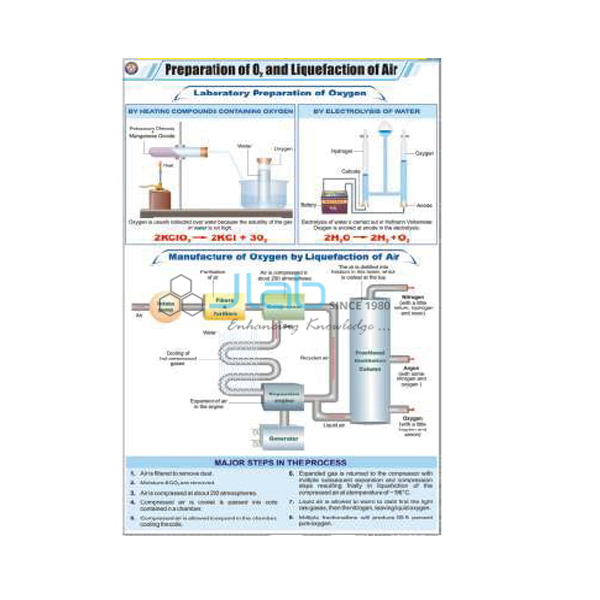
No. The photograph currently on this page shows another chart from the same series, so ask JLab for an image of the Copper Metallurgy print you will receive.
What is blister copper?
It is the impure copper produced after self-reduction of the sulphide ore. Sulphur dioxide escaping as the metal solidifies leaves blisters on its surface.
How is copper refined to high purity?
By electrolysis, with impure copper as the anode, pure copper as the cathode and acidified copper sulphate solution as the electrolyte. Pure copper builds up on the cathode and impurities settle as anode mud.
What size is the chart and what is it printed on?
It is 58 x 90 cm (about 22.8 x 35.4 in), offset printed in full colour on 130 gsm coated art paper, laminated on both sides with 30 micron polyester film and fitted with plastic rollers. It weighs 228 g.
What information is needed for an export quotation?
The quantity, destination country and port or city, delivery terms such as FOB or CIF, any packing or labelling requirements and the tender reference, if any.
Who supplies the Copper Metallurgy chart?
JLab, the trading name of Jain Laboratory Instruments Pvt Ltd in Ambala, Haryana, supplies it and quotes for it directly.
Supplier
JLab is the trading name of Jain Laboratory Instruments Pvt Ltd, a company incorporated in 2017 on Hargolal Road, Ambala, Haryana. It supplies printed chemistry charts such as this one next to its own range of laboratory apparatus, including electrolysis equipment, so a teacher can order the chart and the matching demonstration together; every chart is visually inspected before dispatch. JLab exports worldwide and can ship to buyers in every region — Germany in Western Europe, Serbia in Southern Europe, Colombia in South America, Turkmenistan in Central Asia and Singapore in Southeast Asia, for example. See the JLab lab tenders page for tender information.
Related Metallurgy and Electrolysis Items
- Copper Voltameter Electrolysis Apparatus — three thick copper plates with brass terminals in an inert plastic jar, for electrolysis experiments.
- Extraction of Zinc — another sulphide ore, roasted and reduced with carbon, in the same series.
- Blast Furnace — the extraction of iron with coke, limestone and hot air.
- Electroplating and Corrosion — electrolysis used to coat objects with metals such as copper.
Browse all Chemistry Charts or every title in Charts.
Request a Quote
Quotations come directly from JLab. Use the Add To Cart enquiry button on this page, or send the quantity (minimum 10 units), a request for an image of the current print and your delivery location through the contact page.
Last updated: 4 October 2026