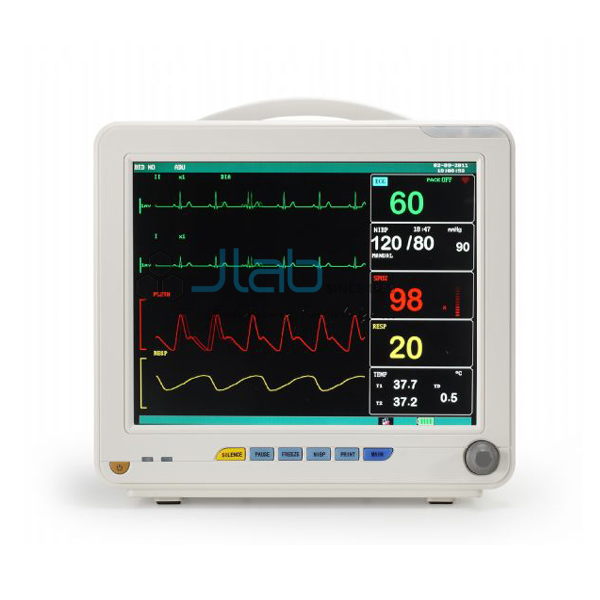
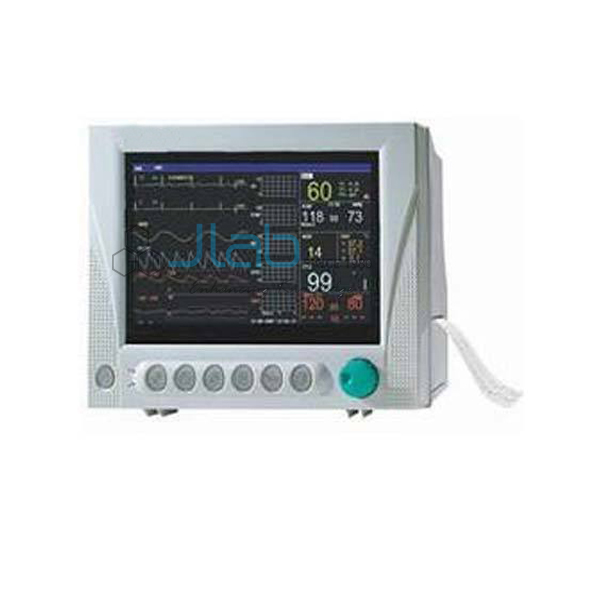
Digital Multipara Monitors Manufacturer,Supplier and Exporter in India
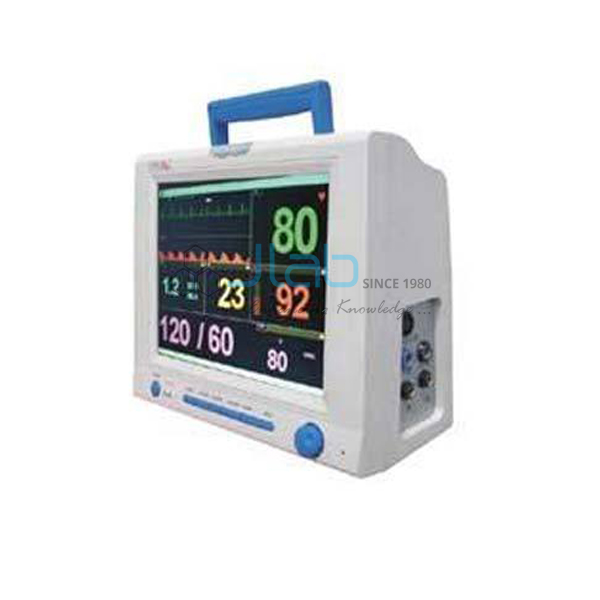
Product Code : EL-MMS-3884
Jlab Export is a leading Digital Multipara Monitors Manufacturer,and suppliers in India
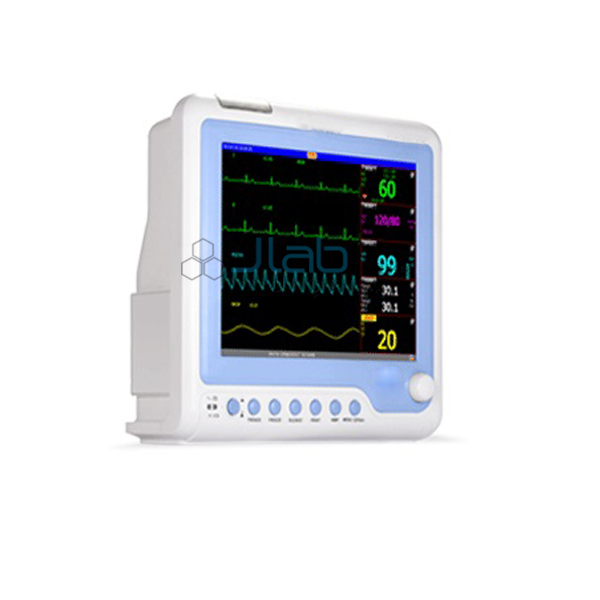
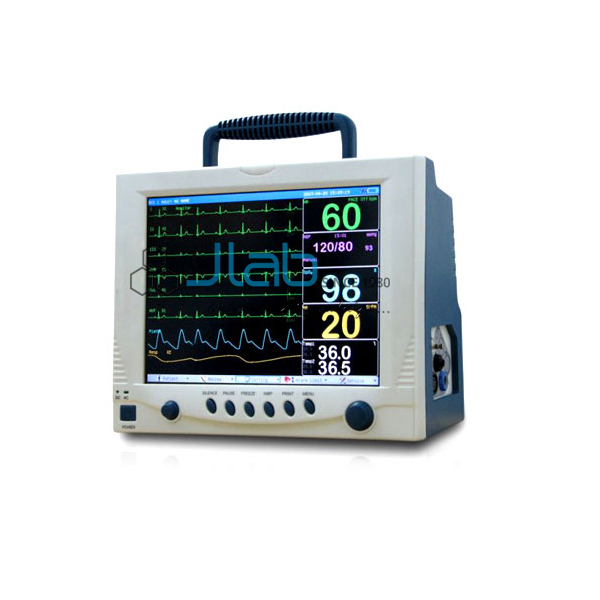
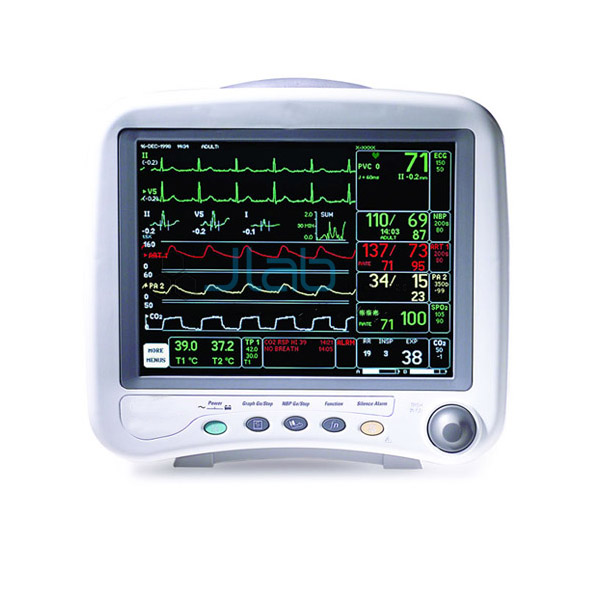
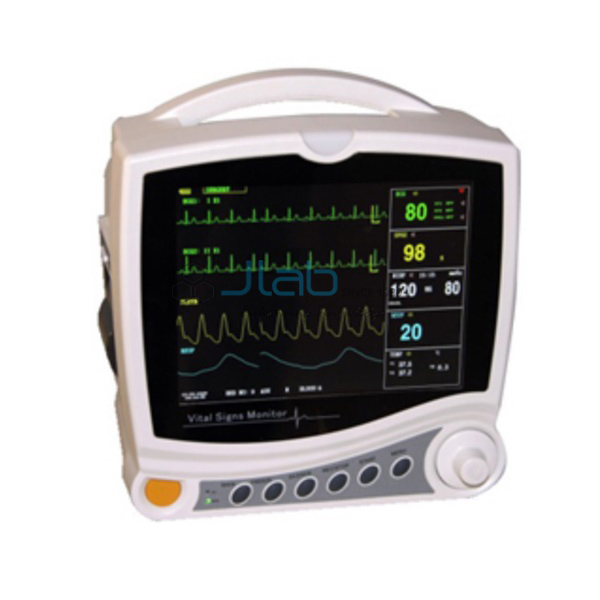
This digital multipara monitor puts ECG, SpO2 and NIBP on an 8.4 in colour TFT screen. Its case is built to go from the bedside to a patient transfer. Alarm ranges are adjustable, data can be networked and stored, and it covers adults, children and newborns.
Specifications
| Display | 8.4 in colour TFT |
| Basic parameters | ECG, SpO2, NIBP |
| Use | Bedside and transport monitoring |
| Alarms | Visual, with adjustable alarm ranges |
| Data | Networkable data management and storage |
| Patient groups | Adult, paediatric and neonatal |
| Minimum order quantity | 1 unit |
| Dispatch time | Usually 7–10 working days |
| Manufacturer | JLab (Jain Laboratory Instruments Pvt Ltd), Ambala, India |
Lab Exercises with ECG, SpO2 and NIBP
The ECG practical starts with skin preparation and electrode placement on a volunteer. Students then unclip one lead on purpose to see the leads-off message, and refit it. They compare the monitor trace with a strip from a Hand Held Single Channel ECG taken from the same student.
For a transfer drill, the group connects all three parameters to a Basic Combination Nursing Manikin and moves it between two bays. They practise routing cables so nothing pulls loose. Afterwards they wipe the case, sensors and cuff, then coil the leads for storage.
Frequently Asked Questions
Why does the screen show leads off when the leads are attached?
Usually an electrode has poor skin contact. Expired or dried-out electrodes, oily skin, lotion or a dirty clip can all break the signal. Clean and dry the skin, fit fresh electrodes and check each clip is firmly on.
How do we prepare the skin before placing electrodes?
Wipe the site to remove oil and lotion, dry it, and clip away heavy hair if needed. Press each electrode around its edge rather than its centre, so the gel stays in place and the adhesive seals.
What causes a noisy or wandering ECG trace?
Muscle movement, shivering, loose electrodes and cables lying across mains leads are the usual causes. Ask the patient to relax, secure the leads, and keep the ECG cable away from power cords.
How can I tell if an ECG lead wire is faulty?
Swap in a known good cable and see whether the trace returns. A biomedical engineer can also check each wire for continuity. Replace any lead with cracked insulation or a loose clip.
Other Multipara Monitors
For a quote, use Add To Cart or send us a message through the contact page.
Last updated: 12 November 2026