Fingerprint Whorl Model Manufacturer,Supplier and Exporter in India
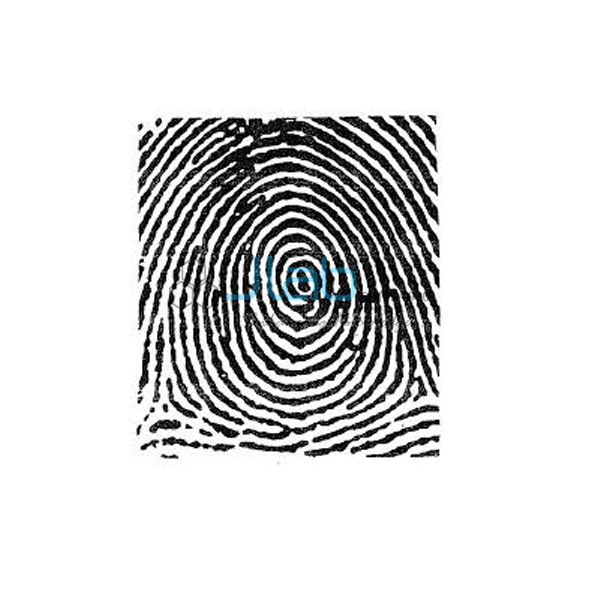
Product Code : EL-BE-5856
Jlab Export is a leading Fingerprint Whorl Model Manufacturer,and suppliers in India
Fingerprint Whorl Model (code EL-BE-5856) is a forensic science teaching model of the whorl, the fingerprint pattern in which the friction ridges circle or spiral round a central core. It helps students recognise and classify whorls in fingerprint lessons at colleges, police training centres and schools. It is made by Jain Laboratory Instruments Pvt Ltd (JLab) at its works in Ambala, India.
Specifications
| Parameter | Detail |
|---|---|
| Pattern shown | Whorl fingerprint pattern, as named |
| Typical users | Forensic science and criminology courses, police training, biology classes |
| Quality check | Each model is visually inspected before dispatch |
| Pack quantity | Each (sold individually) |
| Minimum order quantity | 10 units |
| Dispatch time | Usually 7–10 working days |
| Product code | EL-BE-5856 |
| Manufacturer | Jain Laboratory Instruments Pvt Ltd (JLab) — OEM |
| Country of origin | India (made in Ambala, Haryana) |
What Is the Fingerprint Whorl Model Used For?
Fingerprints are sorted into three families — arches, loops and whorls — under the classification that Edward Henry and his Indian assistants Azizul Haque and Hem Chandra Bose developed in Bengal. A whorl has a central core and at least two deltas, the small triangular meeting points of ridges on either side. Classifiers divide whorls into plain whorls, central pocket loops, double loops and accidentals. A teacher can point out the core, deltas and circular ridge flow on the model before students take their own inked prints and find which fingers carry whorls.
The lesson also covers an important limit: pattern type is a class characteristic shared by many people. Identification rests on minutiae such as ridge endings, bifurcations and dots, and on ridge detail that forms before birth and lasts for life.
Frequently Asked Questions
How is a whorl different from a loop or an arch?
A whorl circles a core and has at least two deltas; a loop enters and leaves on the same side and has one delta; a plain arch flows straight across with no delta.
Can a whorl pattern identify a person on its own?
No. Many people have whorls; examiners compare minutiae to identify an individual. The model teaches the first step, pattern classification.
Who manufactures it?
JLab, the trading name of Jain Laboratory Instruments Pvt Ltd, at its own works in Ambala, Haryana.
OEM Manufacturer
JLab is the trading name of Jain Laboratory Instruments Pvt Ltd, a manufacturer of forensic, biology and general laboratory teaching equipment in India, incorporated in 2017 and based on Hargolal Road, Ambala, Haryana. The company is registered under CIN U29309HR2017PTC069123 and holds MSME Udyam registration UDYAM-HR-01-0003849 (manufacturing enterprise). The fingerprint pattern models are made in its own works, so colleges, academies, dealers and importers buy factory-direct. JLab exports worldwide and ships to buyers in every region — for example Barbados in Central America and the Caribbean, Hong Kong in East Asia, Botswana in Southern Africa, Mauritius in East Africa and Gambia in West Africa.
Related Fingerprint and Forensic Items
- Fingerprint Loop Model — the pattern whose ridges recurve and exit on the entry side.
- Fingerprint Arch Model — ridges flowing across with no core.
- Fingerprint Composite Model — patterns combining features of more than one type.
- DNA Fingerprinting Classroom Kit — DNA profiling, a different identification technique.
- Forensics Prepared Slide — labelled slides of evidence-type specimens such as blood and hair.
See also the Forensics Equipment range, the Biology Equipment range and the full Biology Lab Equipment range.
Request a Quote
Every quotation comes direct from the manufacturer. Use Add To Cart on this page, or send the quantity (minimum 10 units), the other pattern models you want and the delivery address through the contact page.
Last updated: 4 October 2026