Leaf Modification Chart Manufacturer,Supplier and Exporter in India
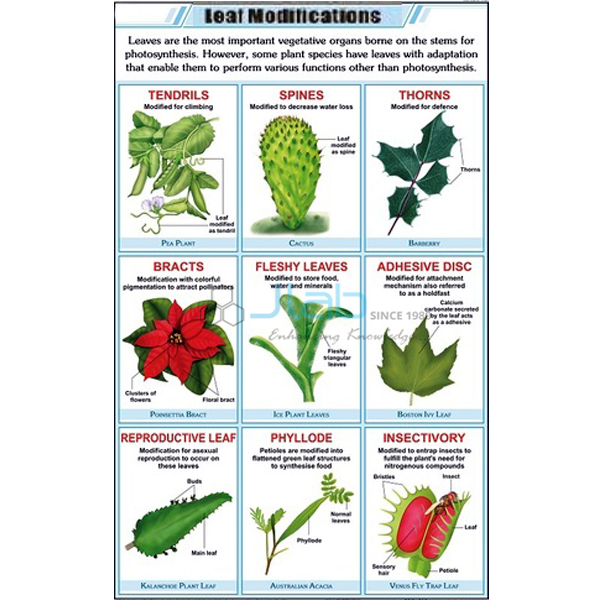
Product Code : EL-BC-9300
Jlab Export is a leading Leaf Modification Chart Manufacturer,and suppliers in India
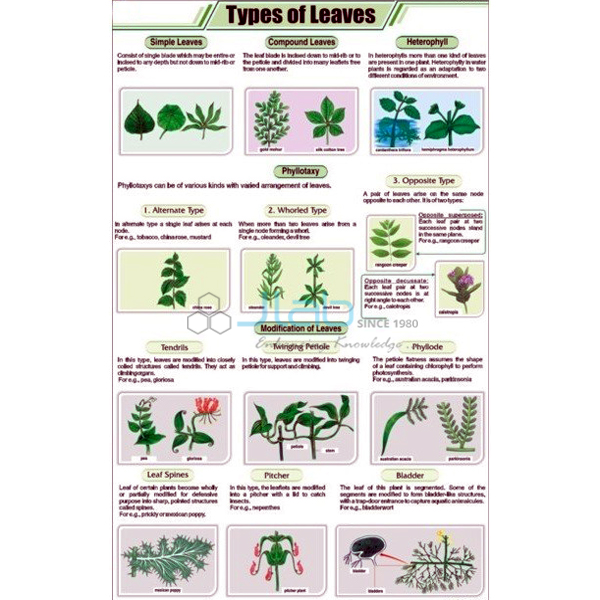
Leaf Modification Chart (code EL-BC-9300) is a wall chart for teaching how leaves are adapted into tendrils, spines, storage organs, traps and other forms, in school and college botany. It is printed in full colour on art paper, measures 58 x 90 cm, is laminated on both sides with thick plastic film and comes with plastic rollers; the text is in English only. JLab (Jain Laboratory Instruments Pvt Ltd, Ambala, India) supplies it to schools, colleges and dealers.
Get a quote: use the Add To Cart enquiry button below, or send your quantity and destination through the contact page.
Specifications
| Parameter | Detail |
|---|---|
| Chart topic | Modifications of the leaf |
| Size | 58 x 90 cm (about 22.8 x 35.4 in) |
| Printing | Full colour on art paper |
| Lamination | Both sides, thick plastic film |
| Fittings | Plastic rollers |
| Language | English only |
| Quality check | Each chart is visually inspected before dispatch |
| Pack quantity | Each (sold individually) |
| Minimum order quantity | 10 units |
| Dispatch time | Usually 7–10 working days |
| Product code | EL-BC-9300 |
| Supplied by | Jain Laboratory Instruments Pvt Ltd (JLab), Ambala, India |
What Is the Leaf Modification Chart Used For?
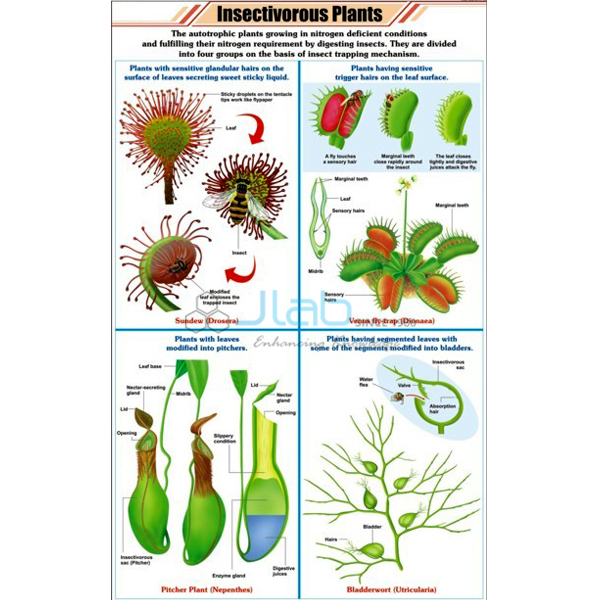
A typical leaf is a thin green blade built for photosynthesis, but in many plants leaves, or parts of them, have taken on other jobs. In the garden pea some leaflets become tendrils that help the plant climb. In cacti the leaves are reduced to spines, cutting water loss and deterring animals while the green stem makes the food. The fleshy scale leaves of onion and garlic store food, and in some Australian acacias the leaf stalk widens into a flat, leaf-like phyllode. Insectivorous plants such as the pitcher plant, sundew and Venus flytrap use modified leaves to trap insects for extra nitrogen, and Bryophyllum forms buds along its leaf margins that grow into new plants. These examples belong to the class 11 chapter on the morphology of flowering plants; the pitcher plant also appears in the class 7 lesson on nutrition in plants.
Students can collect pea tendrils, an onion, a cactus pad and a Bryophyllum leaf and match each with the chart while working out which part of the leaf has changed. Keep the chart clean by wiping its laminated surface, and roll it on its rollers when not in use. The listing does not say which examples the artwork includes, so ask JLab for a larger image to confirm it suits your syllabus.
What to Specify When Ordering
- Quantity — minimum order 10 units.
- Language — English only, as listed.
- Leaf and morphology aids — the leaf section model and the stem and root modification charts below can be added.
- Shipping — destination city and country or port, and any labelling for your institution.
Frequently Asked Questions
What is the Leaf Modification Chart used for?
It is used to teach the ways leaves are modified for climbing, protection, storage, trapping insects and reproduction, in class 11 biology and college botany. The listing does not detail the artwork; see the photograph on this page or ask JLab for a larger image.
What are the size and construction?
The chart is 58 x 90 cm (about 22.8 x 35.4 in), printed in full colour on art paper, laminated on both sides with thick plastic film and fitted with plastic rollers.
Are cactus spines modified leaves?
Yes. In most cacti the leaves are reduced to spines, which cut water loss and protect the plant, while the thick green stem carries out photosynthesis and stores water.
How can you tell a leaf tendril from a stem tendril?
Check its position. A leaf tendril replaces a whole leaf or some leaflets of a compound leaf, as in the pea; a stem tendril is a modified shoot that grows from a bud, usually an axillary bud, as in gourds and grapevines.
What is the minimum order and dispatch time?
The minimum is 10 units, each sold individually and visually checked before dispatch. Orders usually leave within 7–10 working days, with export transit additional.
Who supplies the Leaf Modification Chart?
Jain Laboratory Instruments Pvt Ltd, known as JLab, supplies the chart from Ambala, Haryana, India and quotes for it directly.
Supplier
JLab is the trading name of Jain Laboratory Instruments Pvt Ltd, a company incorporated in 2017 and based on Hargolal Road, Ambala, Haryana. It supplies biology teaching charts such as this one to schools, colleges, dealers and importers alongside its own lab equipment, inspects each chart by eye before dispatch, and takes care of repeat orders itself. Its company registration number is CIN U29309HR2017PTC069123, and its tax registration is GSTIN 06AADCJ9848D1ZE. JLab exports worldwide and ships to buyers in every region, for example Japan in East Asia, Romania in Eastern Europe, Cameroon in Central Africa, Madagascar in East Africa and Canada in North America. Tender buyers can consult the JLab lab tenders page.
Related Leaf and Morphology Teaching Aids
- T.S Leaf Model — a labelled diagram of a leaf section mounted on a cardboard base with a label key.
- Insectivorous Plants Chart — plants whose leaves trap insects, from the same series.
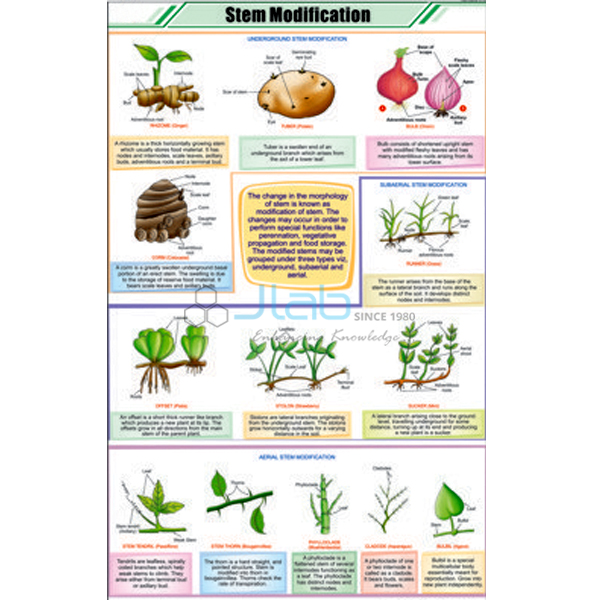
- Stem Modification Chart — modified stems, including stem tendrils and thorns.
- Root Modifications Chart — modified roots, completing the morphology set.
- Xerophytes Chart — plants of dry habitats, where leaf reduction is common.
Find more charts in the Botany Charts range and the full Charts range.
Request a Quote
Quotes are provided directly by JLab. Use the Add To Cart enquiry button on this page or the contact page, and tell us the quantity (minimum 10 units), any models or companion charts, and the delivery city and country.
Last updated: 3 October 2026