Manufacture of Phosphorus Manufacturer,Supplier and Exporter in India
Product Code : EL-CC-2879
Jlab Export is a leading Manufacture of Phosphorus Manufacturer,and suppliers in India
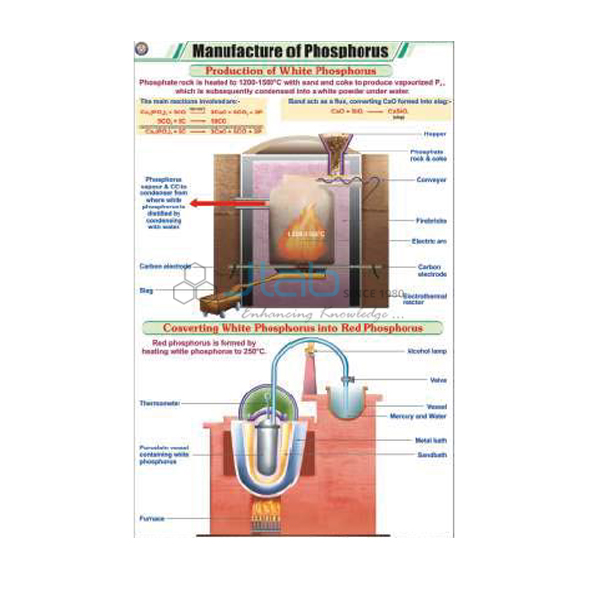
Manufacture of Phosphorus (code EL-CC-2879) is a 58 x 90 cm industrial-chemistry wall chart on how phosphorus is produced from phosphate rock, sand and coke in an electric furnace. It is laminated on both sides, fitted with plastic rollers and printed in English only. JLab (Jain Laboratory Instruments Pvt Ltd, Ambala, India) supplies it to schools, colleges and dealers.
Specifications
| Parameter | Detail |
|---|---|
| Chart topic | Industrial production of phosphorus (Chemistry Charts series) |
| Size (overall) | 58 x 90 cm (about 22.8 x 35.4 in) |
| Paper | Coated art paper, 130 gsm |
| Printing | Full colour, offset printed using CTP technology |
| Lamination | Both sides, 30 micron heat-sealable polyester film |
| Hanging | Wall hanging, fitted with plastic rollers |
| Surface | Markable and washable |
| Weight | 228 g |
| Size when rolled | 58 x 4 x 2 cm |
| Language | English only |
| Quality check | Each chart is visually inspected before dispatch |
| Pack quantity | Each (sold individually) |
| Minimum order quantity | 10 units |
| Dispatch time | Usually 7–10 working days |
| Product code | EL-CC-2879 |
| Supplied by | Jain Laboratory Instruments Pvt Ltd (JLab), Ambala, India |
What Is the Manufacture of Phosphorus Chart Used For?
Phosphorus is obtained from phosphate rock, which is mainly calcium phosphate. The rock is mixed with sand (silica) and coke and heated strongly in an electric furnace, where carbon reduces the phosphate and the silica combines with the calcium to form a molten calcium silicate slag: 2Ca3(PO4)2 + 6SiO2 + 10C → 6CaSiO3 + P4 + 10CO. Phosphorus leaves the furnace as a vapour with the carbon monoxide and is condensed under water as white phosphorus, while the slag is tapped off at the bottom. White phosphorus is a soft, waxy, poisonous solid that glows faintly in the dark and catches fire in air at a low temperature, so it is always stored under water.
When white phosphorus is heated for a long time in the absence of air it changes into red phosphorus, a more stable allotrope that does not glow, does not catch fire in air at room temperature and is far less poisonous. Red phosphorus is used in the striking strip of safety matchboxes, and phosphorus as a whole is used to make phosphoric acid and other phosphorus compounds. Middle-school science, around class 8 in NCERT books, uses phosphorus as the example of a non-metal kept under water, while the allotropes and the furnace process are covered in senior-secondary and college inorganic and industrial chemistry. The markable, washable lamination lets a teacher annotate the chart in class. The listing does not itemise the diagrams printed on it, so request a preview image if you need to check them.
What to Specify When Ordering
- Quantity — at least 10 units, each chart supplied individually.
- Furnace-process companions — Blast Furnace and Extraction of Zinc also use carbon reduction and a slag, in the same 58 x 90 cm format.
- Tender reference — quote it if the charts are for a tender.
- Destination — country, port or city and delivery terms for an export quotation.
Frequently Asked Questions
What does this chart cover?
Its subject is the industrial production of phosphorus from phosphate rock. The listing does not itemise the diagrams, so ask for a preview image to see exactly what is printed.
Why is white phosphorus stored under water?
It catches fire in air at a low temperature but does not react with water, so keeping it under water cuts off the oxygen.
How is red phosphorus obtained?
By heating white phosphorus for a long time in the absence of air, which converts it into the more stable red allotrope.
How do white and red phosphorus differ?
White phosphorus is waxy, poisonous, glows in the dark and ignites easily in air. Red phosphorus is a stable powder that does not glow, is much less reactive and is used on matchbox striking strips.
Which classes is the chart suited to?
Middle-school science (around class 8), senior-secondary chemistry on allotropy and college or polytechnic industrial chemistry.
How big is the chart and how is it finished?
It measures 58 x 90 cm (about 22.8 x 35.4 in), is offset printed in full colour on 130 gsm coated art paper, laminated on both sides with 30 micron polyester film and fitted with plastic rollers, and weighs 228 g.
What should an export enquiry include?
The quantity, destination country and port or city, delivery terms such as FOB or CIF, any packing or labelling needs and the tender reference, if any.
Who supplies this chart?
JLab, the trading name of Jain Laboratory Instruments Pvt Ltd of Ambala, Haryana, supplies it and quotes directly.
Supplier
Jain Laboratory Instruments Pvt Ltd, trading as JLab, was incorporated in 2017 and is based on Hargolal Road, Ambala, Haryana. It supplies printed chemistry charts such as this one together with its own range of laboratory apparatus for schools and colleges, so buyers can combine charts and equipment in a single order, and each chart is visually inspected before dispatch. JLab exports worldwide and can ship to buyers in every region — El Salvador in Central America and the Caribbean, Canada in North America, Eswatini in Southern Africa, Ukraine in Eastern Europe and Papua New Guinea in Oceania are examples. Tender information is on the JLab lab tenders page.
Related Industrial Chemistry Charts
- Blast Furnace — another furnace process with coke as the reducing agent and a calcium silicate slag.
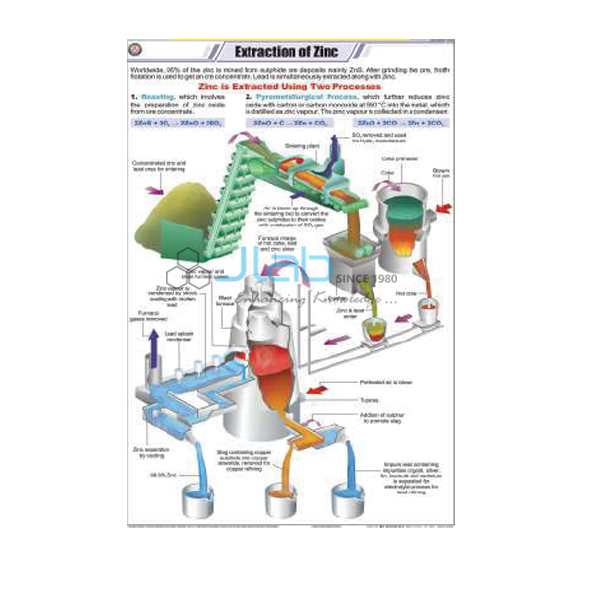
- Extraction of Zinc — a metal that, like phosphorus, leaves its furnace as a vapour and is condensed.
- Prep. of Sulphur Dioxide and Sulphuric Acid — another non-metal turned into an industrial acid.
See all Chemistry Charts or browse the Charts range.
Request a Quote
JLab quotes directly. Use the Add To Cart enquiry button on this page, or send the quantity (minimum 10 units), any related titles and your delivery location through the contact page.
Last updated: 4 October 2026