Cement and Concrete Manufacturer,Supplier and Exporter in India

Product Code : EL-CC-2860
Jlab Export is a leading Cement and Concrete Manufacturer,and suppliers in India
Cement and Concrete (code EL-CC-2860) is a 58 x 90 cm industrial-chemistry wall chart on how cement is made and how it sets into concrete, for senior-school chemistry and construction-materials classes at polytechnics and ITIs. Printed in full colour on coated art paper, it is laminated on both sides, fitted with plastic rollers and labelled in English only. JLab (Jain Laboratory Instruments Pvt Ltd, Ambala, India) supplies it to schools, colleges and dealers.
Specifications
| Parameter | Detail |
|---|---|
| Chart topic | Cement and concrete (Chemistry Charts series) |
| Size (overall) | 58 x 90 cm (about 22.8 x 35.4 in) |
| Paper | Coated art paper, 130 gsm |
| Printing | Full colour, offset printed using CTP technology |
| Lamination | Both sides, 30 micron heat-sealable polyester film |
| Hanging | Wall hanging, fitted with plastic rollers |
| Surface | Markable and washable |
| Weight | 228 g |
| Size when rolled | 58 x 4 x 2 cm |
| Language | English only |
| Quality check | Each chart is visually inspected before dispatch |
| Pack quantity | Each (sold individually) |
| Minimum order quantity | 10 units |
| Dispatch time | Usually 7–10 working days |
| Product code | EL-CC-2860 |
| Supplied by | Jain Laboratory Instruments Pvt Ltd (JLab), Ambala, India |
What Is the Cement and Concrete Chart Used For?
Portland cement is made by heating finely ground limestone and clay strongly in a rotary kiln until they partly fuse into hard lumps called clinker. The clinker is ground to a powder with a small amount of gypsum, which slows the setting so the cement can be worked. Chemically it is mostly lime combined with silica, together with alumina and iron oxide. Mixed with sand, coarse aggregate such as gravel or crushed stone, and water, cement becomes concrete. It does not harden by drying out: the cement compounds react with water in a process called hydration, which is why fresh concrete is kept moist, or cured, while it gains strength. Concrete resists crushing well but cracks under tension, so steel bars are cast into it to make reinforced cement concrete (RCC) for beams, slabs and columns.
The chart suits applied and industrial chemistry lessons in senior school, where students learn how everyday materials are produced, and the building-materials units of civil engineering diploma, ITI and polytechnic courses. Teachers can also use it to show how industries are linked — slag from iron-making blast furnaces, for example, is used in some cements. The laminated surface is markable and washable, so reaction schemes can be written on it and wiped away. The listing does not itemise the diagrams printed on the chart; ask JLab for a preview image if you need to check them.
What to Specify When Ordering
- Quantity — minimum 10 units, each chart sold individually.
- Industrial chemistry set — Blast Furnace, Aluminium Metallurgy and Plastics are listed in the same 58 x 90 cm format.
- Language — this chart is in English only.
- Delivery — destination country, port or city and delivery terms for export orders.
Frequently Asked Questions
What is the Cement and Concrete chart used for?
Teaching how cement is produced and how it sets and hardens into concrete, in senior-school industrial chemistry and in construction-materials courses at polytechnics and ITIs. The listing does not itemise the diagrams, so request a preview image if exact content matters.
What are the size and weight?
The chart is 58 x 90 cm (about 22.8 x 35.4 in) and weighs 228 g; rolled up it measures 58 x 4 x 2 cm.
How is it made to last in a classroom?
It is printed on 130 gsm coated art paper, laminated on both sides with 30 micron heat-sealable polyester film and fitted with plastic rollers, and the surface is markable and washable.
Is it suitable for civil engineering students?
Yes, as a general wall chart on cement and concrete for building-materials lessons; it is a teaching aid rather than a design or testing reference.
What should an export quotation request contain?
The quantity, destination country and port or city, delivery terms (for example FOB or CIF), any packing or labelling requirements and your tender reference, if any.
Who supplies the Cement and Concrete chart?
Jain Laboratory Instruments Pvt Ltd, trading as JLab in Ambala, Haryana, supplies it and quotes directly.
Supplier
JLab is the trading name of Jain Laboratory Instruments Pvt Ltd, incorporated in 2017 and based on Hargolal Road, Ambala, Haryana. JLab supplies printed chemistry charts like this one together with its own range of school and college laboratory equipment, so an institution can order teaching charts and apparatus in one consignment; each chart is visually inspected before dispatch. The company is registered for GST under GSTIN 06AADCJ9848D1ZE and exports under Importer-Exporter Code 3317504552. It ships worldwide and can supply buyers in every region — for example Brunei in Southeast Asia, Ukraine in Eastern Europe, Estonia in Northern Europe, Zimbabwe in East Africa and Malta in Southern Europe. Tender buyers can refer to the JLab lab tenders page.
Industrial Chemistry Charts
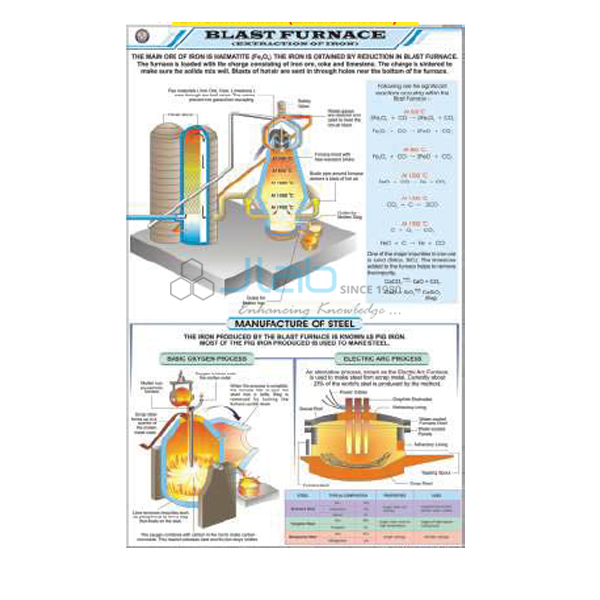
- Blast Furnace — iron-making, whose slag also finds use in some cements, on a 58 x 90 cm chart.
- Aluminium Metallurgy — another large-scale industrial process in the same chart series.
- Plastics — a further construction and packaging material, in the same format.
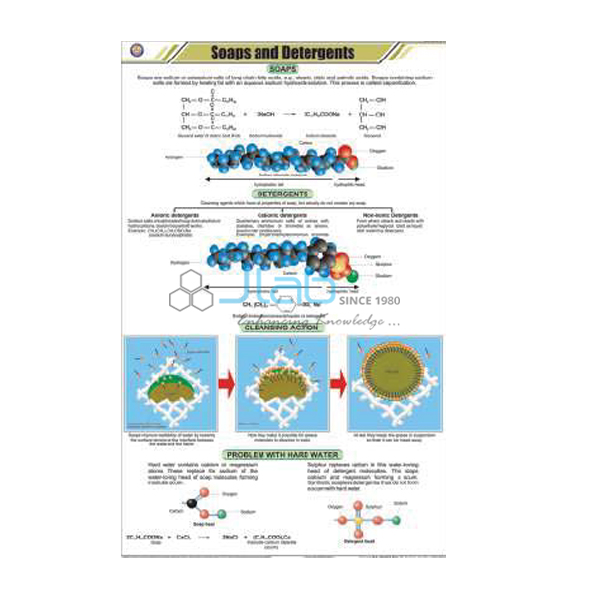
- Soaps and Detergents — everyday industrial chemistry on a matching 58 x 90 cm laminated chart.
See the complete Chemistry Charts range or browse all Charts.
Request a Quote
JLab sends quotations directly. Use the Add To Cart enquiry button on this page, or send the number of charts (minimum 10 units), any other chart titles and your delivery location through the contact page.
Last updated: 4 October 2026