Precision EDM Machine Manufacturer,Supplier and Exporter in India
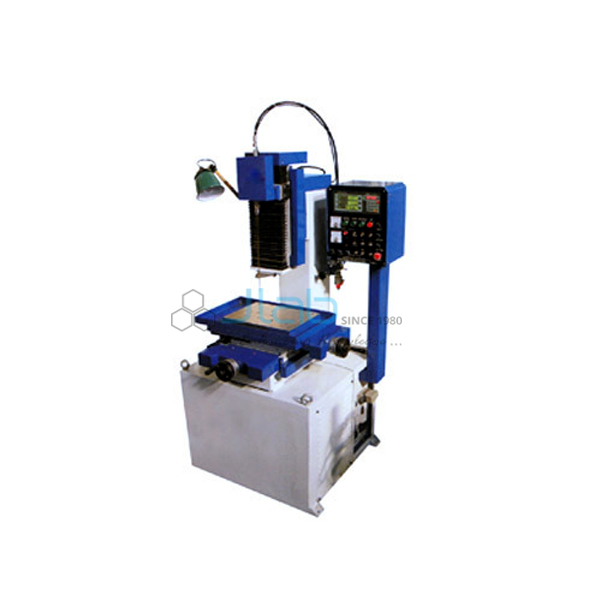
Product Code : EL-CTM-9078
Jlab Export is a leading Precision EDM Machine Manufacturer,and suppliers in India
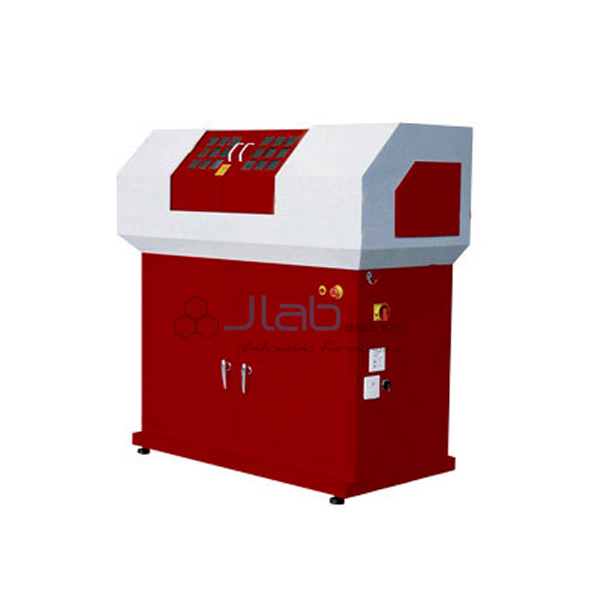
This EDM machine drills holes by spark erosion. Sparks jump between a thin brass or copper electrode and the work, and each one melts away a tiny amount of metal. The hardness of the work does not stop the cut, as long as it conducts electricity. It runs on a 415 V three-phase supply and takes electrodes from 0.3 to 3.0 mm.
Specifications
| Process | Electrical discharge (spark erosion) drilling |
| Power supply | 415 V, 3 phase, 50 Hz |
| Electrodes | Brass or copper, 0.3–3.0 mm, special drilling electrodes 3.1–10 mm |
| Axes | Ball screws on X and Y, LM guideways on Z |
| Drive | DC stepper motor with belt drive |
| Coolant system | Pump, stainless steel water tank, stainless steel accumulator for constant pressure, pressure variable 0–100 kg/cm² |
| Circuits | Special circuit for deep drilling, current booster for high-speed drilling |
| Safety | Pressure switch for over coolant pressure, safety interlock |
| Design | Two-part design, low working height |
| Supplied with | Brass electrodes 1.0 mm x 400 mm, two 1.0 mm phenolic guides, ruby guide, 5 rubber stoppers, machine lamp |
| Minimum order quantity | 1 unit |
| Dispatch time | Usually 14–18 working days |
| Manufacturer | JLab (Jain Laboratory Instruments Pvt Ltd), Ambala, India |
EDM Practicals for Toolroom Students
In an ITI or toolroom lab, students drill small holes through a hardened steel plate and a mild steel plate. They time each hole with a Digital Stop Watch. Before and after each hole they measure how far the electrode sticks out below its holder with a Vernier Caliper. The difference is the electrode used.
Teachers can then show how coolant pressure and the current booster change the drilling speed, and why the guide must suit the electrode size. For contrast, the class can try an ordinary twist drill on the same hardened plate in a Pillar Drill Machine, where the drill soon blunts.
Frequently Asked Questions
Which materials can EDM drill?
Any metal that conducts electricity, including hardened tool steel, stainless steel, brass and copper. Hardness does not matter because the metal is melted by sparks, not cut by an edge. Glass, plastics and other non-conductors cannot be drilled this way.
What electrode sizes can it use?
Standard electrodes run from 0.3 to 3.0 mm, and special drilling electrodes cover 3.1 to 10 mm. The hole comes out a little larger than the electrode because of the spark gap. Supplied parts include 1.0 mm brass electrodes 400 mm long, two 1.0 mm guides and a ruby guide.
Why is the coolant pressure adjustable?
Water is pumped to the cut to carry away eroded particles and keep the spark gap clear. Deep holes need more flushing than shallow ones, so the pressure can be set from 0 to 100 kg/cm². A stainless steel accumulator holds it steady, and a safety switch guards against over-pressure.
Does the electrode wear?
Yes. The electrode erodes along with the work, so it gets shorter as holes are drilled. Brass and copper electrodes are consumables, and spare lengths should be kept with the machine. Measuring the loss per hole makes a good lab exercise.
Other Machines for Drilling and Toolroom Work
For a quote, use Add To Cart or send us a message through the contact page.
Last updated: 6 November 2026