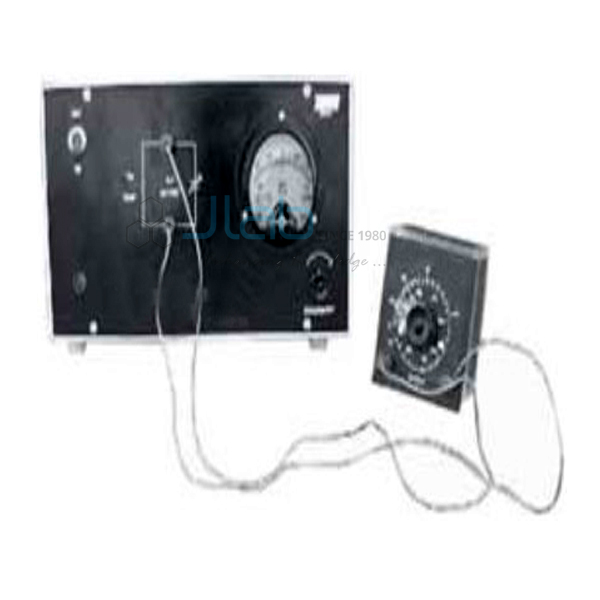
Diac Characteristics Apparatus Manufacturer,Supplier and Exporter in India
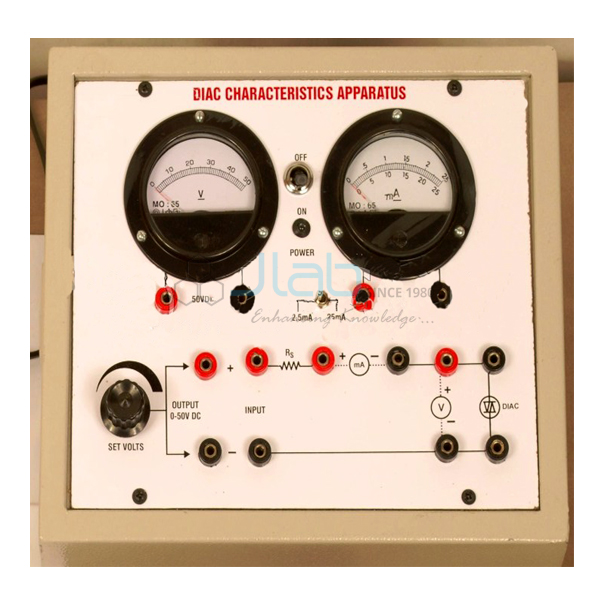
Product Code : EL-SCD-1096
Jlab Export is a leading Diac Characteristics Apparatus Manufacturer,and suppliers in India
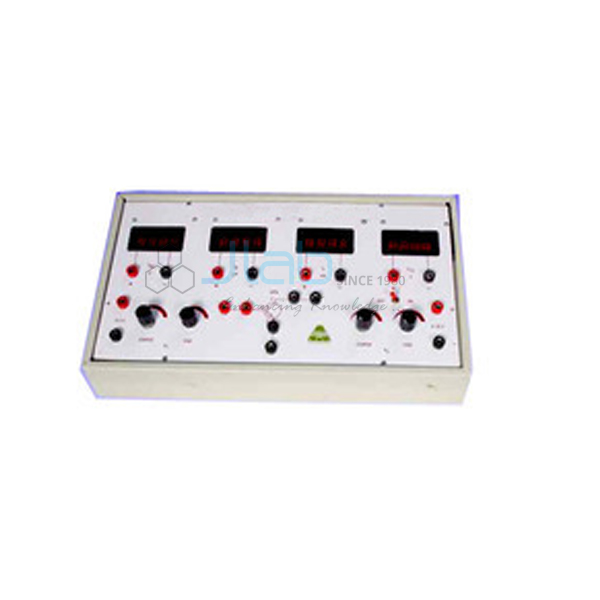
Diac Characteristics Apparatus (code EL-SCD-1096) is a bench unit for plotting the V–I characteristics of a diac in electronics and physics practicals. A diac is mounted on the panel with a 0–50 V DC regulated power supply and two round meters, so students can trace how the device switches on in either direction. It is made by Jain Laboratory Instruments Pvt Ltd (JLab) at its works in Ambala, India.
Specifications
| Parameter | Detail |
|---|---|
| Experiment | To study the V–I characteristics of a diac |
| Power supply | DC regulated, 0–50 V DC / 100 mA |
| Meters | Two round meters, for voltage and current measurement |
| Device under test | One diac mounted on the panel |
| Connections | Supply and diac connections brought out to terminals |
| Dimensions | 15 x 8 x 4 in (about 38 x 20 x 10 cm) |
| Quality check | Each apparatus is visually inspected before dispatch |
| Pack quantity | Each (sold individually) |
| Minimum order quantity | 10 units |
| Dispatch time | Usually 7–10 working days |
| Product code | EL-SCD-1096 |
| Manufacturer | Jain Laboratory Instruments Pvt Ltd (JLab) — OEM |
| Country of origin | India (made in Ambala, Haryana) |
What Is the Diac Characteristics Apparatus Used For?
A diac (diode for alternating current) is a two-terminal trigger device that blocks current until the voltage across it reaches its breakover value, then switches into conduction while the voltage across it falls. Because it behaves the same way in both directions, its characteristic curve is symmetrical about the origin. This apparatus lets a class measure that curve: students raise the regulated supply in small steps, record the readings on the voltage and current meters, note the breakover point and the negative-resistance region beyond it, and then reverse the diac connections at the terminals to plot the second quadrant.
The experiment belongs to the thyristor family of practicals in B.Sc. physics and electronics labs, polytechnic and engineering power-electronics courses, and ITI electronics workshops. It leads naturally into triac work, since a diac is the usual trigger element for a triac in AC phase-control circuits such as lamp dimmers and fan regulators. Near breakover, raise the supply in small steps and take readings at each one, and turn the control back to zero before changing connections.
What to Specify When Ordering
- Quantity — the minimum order is 10 units; labs often order this unit together with the triac and SCR apparatus to cover a full thyristor practical.
- Mains supply of your lab — state the voltage and plug type you need so the quotation can confirm them.
- Connecting leads and spare diacs — the listing does not state whether these are included, so ask for them in the same enquiry if your bench needs them.
- Delivery details — destination country, port or city, and delivery terms for export orders.
Frequently Asked Questions
What does a student measure with this diac apparatus?
The current through the diac at each applied voltage, in both directions. From the readings they plot the V–I curve, find the breakover voltage and see the switching action that makes the diac useful as a trigger device.
What power supply and meters are built in?
The unit has a DC regulated power supply of 0–50 V DC at 100 mA and two round meters, one for voltage and one for current. The supply and diac connections are brought out to terminals on the panel.
How is it different from the Characteristics and Applications Thyristors kit?
This apparatus is dedicated to a single device, the diac. The thyristors kit, listed separately, covers the diac, triac, UJT and SCR with several regulated supplies and dual-range meters, so it suits labs that want one combined trainer rather than separate units.
What should an export enquiry include?
The quantity, destination country and port or city, preferred delivery terms such as FOB or CIF, any packing or labelling needs, and the tender reference if the order is part of a tender.
Who manufactures this apparatus?
Jain Laboratory Instruments Pvt Ltd, trading as JLab, builds it at its works in Ambala, Haryana, and quotes for it directly.
OEM Manufacturer
JLab is the trading name of Jain Laboratory Instruments Pvt Ltd, an electronics and physics lab equipment manufacturer in India, incorporated in 2017 and based on Hargolal Road, Ambala, Haryana. The diac apparatus is assembled at JLab’s own works rather than sourced from a trader, so colleges, institutes, dealers and importers deal with the maker directly; each unit is visually inspected before dispatch, and repeat orders and service questions go back to the same team. The company holds MSME Udyam registration UDYAM-HR-01-0003849 as a manufacturing enterprise and exports under Importer-Exporter Code 3317504552. JLab exports worldwide and ships to buyers in every region — for example Turkmenistan in Central Asia, the USA in North America, Algeria in North Africa, Denmark in Northern Europe and Tonga in Oceania. Institutions buying through a tender can find details on the JLab lab tenders page.
Related Thyristor and Semiconductor Apparatus
- Triac Characteristics Apparatus — studies the main-terminal characteristics of a triac with a gate signal, the device a diac usually triggers.
- Characteristics and Applications Thyristors — one trainer covering the diac, triac, UJT and SCR.
- SCR Characteristics Apparatus — plots anode current against anode–cathode voltage for a silicon controlled rectifier.
- FET Characteristics Apparatus — static and transfer characteristics of a field-effect transistor for the same electronics practical course.
See every unit in the Semi Conductor Devices range or the wider Scientific Instrument range.
Request a Quote
Quotes come straight from the manufacturer. Use the Add To Cart enquiry button on this page, or send the quantity (minimum 10 units), your mains voltage, any leads or spare diacs you want added, and the delivery location through the contact page.
Last updated: 9 October 2026