Non Conventional Sources of Energy Manufacturer,Supplier and Exporter in India

Product Code : EL-MAE-3158
Jlab Export is a leading Non Conventional Sources of Energy Manufacturer,and suppliers in India
Non Conventional Sources of Energy (code EL-MAE-3158) is a 50 x 75 cm wall chart presenting wind energy, bio-energy, solar energy, geothermal energy and tidal energy, for geography, science and environmental studies lessons on energy resources. It is printed in natural colours on 80 gsm map litho paper, laminated on both sides and fitted with plastic rollers, in English, Hindi or Marathi. JLab (Jain Laboratory Instruments Pvt Ltd, Ambala, India) supplies it to schools, colleges and dealers.
Specifications
| Parameter | Detail |
|---|---|
| Energy sources shown | Wind energy, bio-energy, solar energy, geothermal energy and tidal energy |
| Size | 50 x 75 cm |
| Printing | Multicolour, in natural colours, on 80 gsm map litho paper |
| Lamination | Hot-seal polyester film on both sides |
| Hanging | Plastic rollers at top and bottom |
| Language editions | English, Hindi or Marathi (separate charts) |
| Quality check | Each chart is visually inspected before dispatch |
| Pack quantity | Each (sold individually) |
| Minimum order quantity | 10 units |
| Dispatch time | Usually 7–10 working days |
| Product code | EL-MAE-3158 |
| Supplied by | Jain Laboratory Instruments Pvt Ltd (JLab), Ambala, India |
What Is the Non Conventional Energy Chart Used For?
Conventional sources such as coal, oil, natural gas and firewood will not last for ever and pollute the air when burnt. Non-conventional sources are renewed by nature and pollute far less, and this chart sets five of them side by side. Wind turbines turn moving air into electricity on windy coasts and open plains. Bio-energy comes from plant and animal matter — biogas from cow dung and farm waste, for example, gives a cooking and lighting fuel and leaves slurry that can be used as manure. Solar energy powers solar cookers, water heaters and photovoltaic cells that produce electricity directly.
Geothermal energy taps the heat inside the Earth, where hot rocks and hot springs come close to the surface; Manikaran in Himachal Pradesh and the Puga Valley in Ladakh are the Indian examples textbooks give. Tidal energy uses the rise and fall of the sea to drive turbines, and the Gulf of Kachchh and the Gulf of Khambhat are named as suitable sites. The topic appears in NCERT class 8 geography on mineral and power resources and in class 10 on minerals and energy resources.
What to Specify When Ordering
- Language edition — English, Hindi or Marathi.
- Quantity — minimum 10 units, sold individually.
- Practical items — add solar or wind equipment to the enquiry if students will do hands-on work.
Frequently Asked Questions
Which energy sources does the chart cover?
Wind energy, bio-energy, solar energy, geothermal energy and tidal energy.
What is the difference between conventional and non-conventional energy?
Conventional sources such as coal, oil and natural gas are limited and pollute when burnt. Non-conventional sources such as sunlight, wind, tides, biomass and the Earth’s heat are renewed by nature and cause far less pollution.
What size is the chart and how is it finished?
It is 50 x 75 cm, printed in multicolour on 80 gsm map litho paper, laminated with hot-seal polyester film on both sides and fitted with plastic rollers at top and bottom.
Which language editions are available?
English, Hindi and Marathi, as separate charts; mention the one you need.
Who supplies this chart?
JLab, the trading name of Jain Laboratory Instruments Pvt Ltd, Ambala, Haryana, India, supplies the chart and quotes directly.
Supplier
JLab is the trading name of Jain Laboratory Instruments Pvt Ltd, incorporated in 2017 and based on Hargolal Road, Ambala, Haryana. It supplies energy and environment charts like this one alongside the science and laboratory equipment in its own range, so schools, colleges and dealers can order charts and practical items together, and each chart is checked visually before dispatch. JLab exports worldwide and ships to buyers in every region — for example Tanzania in East Africa, North Macedonia in Southern Europe, Namibia in Southern Africa, DR Congo in Central Africa and Japan in East Asia. Tender buyers will find details on the JLab lab tenders page.
Related Energy Charts and Equipment
- Renewable Sources of Energy — sunlight, wind, flowing water and biomass, the sources nature keeps replenishing.
- Solar Cooker — a chart on devices that cook food with sunlight instead of fuel.
- Energy Needs — why we need energy and the forms in which we use it.
- Solar Energy, Photovoltaic, Wind Power System — a separately listed item on solar photovoltaic and wind power.
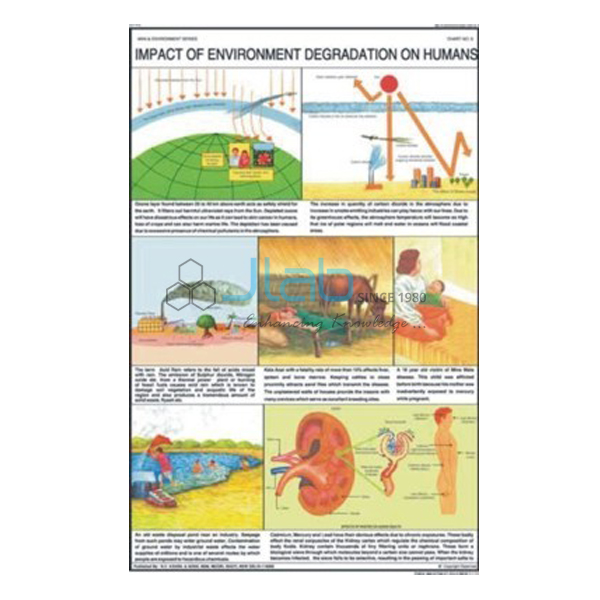
- Impact of Environment Degradation on Humans Chart — the ozone layer and the greenhouse effect of carbon dioxide.
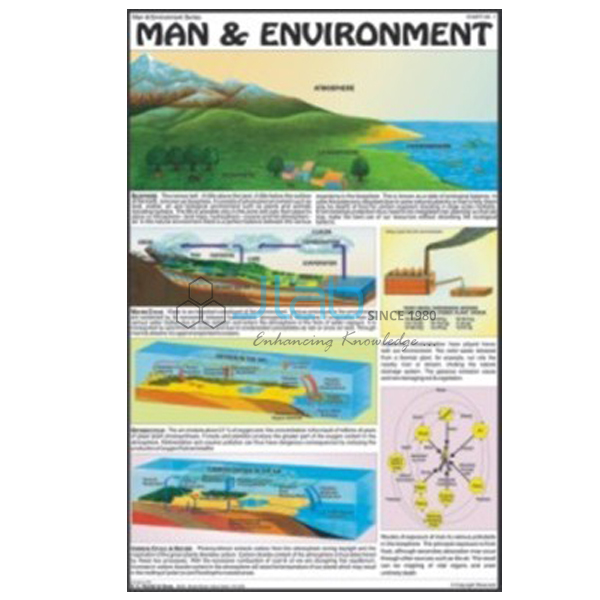
See the other titles in Man and Environment and the full Charts range.
Request a Quote
JLab quotes directly for this chart. Use the Add To Cart enquiry button or the contact page to send the edition, the quantity (minimum 10 units) and your delivery destination.
Last updated: 4 October 2026