Algae Chart Manufacturer,Supplier and Exporter in India
Product Code : EL-BC-9272
Jlab Export is a leading Algae Chart Manufacturer,and suppliers in India
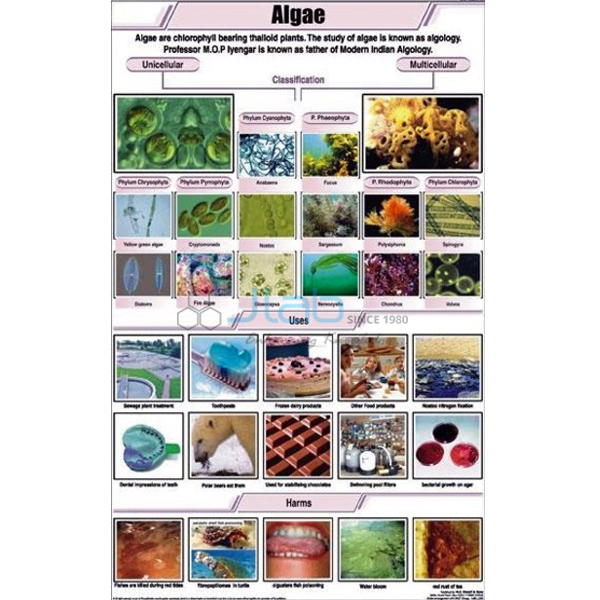
Algae Chart (code EL-BC-9272) is a 58 x 90 cm botany wall chart on algae, the simple, mostly aquatic organisms that carry out photosynthesis, for senior secondary biology and college botany lessons on the plant kingdom. It is printed in full colour on art paper, laminated on both sides with thick plastic film, fitted with plastic rollers and in English only. JLab (Jain Laboratory Instruments Pvt Ltd, Ambala, India) supplies it to schools, colleges and dealers.
Specifications
| Parameter | Detail |
|---|---|
| Subject | Algae |
| Chart group | Botany Charts |
| Size | 58 x 90 cm |
| Printing | Full colour on art paper |
| Finish | Laminated on both sides with thick plastic film |
| Rollers | Plastic rollers fitted |
| Language | English only |
| Quality check | Each chart is visually inspected before dispatch |
| Pack quantity | Each (sold individually) |
| Minimum order quantity | 10 units |
| Dispatch time | Usually 7–10 working days |
| Product code | EL-BC-9272 |
| Supplied by | Jain Laboratory Instruments Pvt Ltd (JLab), Ambala, India |
What Is the Algae Chart Used For?
Algae are simple, chlorophyll-bearing, thalloid organisms — they have no true roots, stems or leaves — and most live in fresh or salt water, though some grow on damp soil, rocks and tree bark. They range from single cells such as Chlamydomonas, through colonies such as Volvox and filaments such as Ulothrix and Spirogyra, to large seaweeds such as the kelps. Botany courses divide them into three main classes by pigment and stored food: green algae (Chlorophyceae), with chlorophyll a and b and starch, such as Chlamydomonas, Volvox, Spirogyra and Chara; brown algae (Phaeophyceae), with fucoxanthin and laminarin or mannitol, such as Ectocarpus, Laminaria, Fucus and Sargassum; and red algae (Rhodophyceae), with r-phycoerythrin and floridean starch, such as Polysiphonia, Porphyra, Gracilaria and Gelidium.
Algae carry out a large share of the world’s photosynthesis and form the base of aquatic food chains. Agar from Gelidium and Gracilaria is used to grow microbes in the laboratory and to set ice creams and jellies, algin and carrageen come from brown and red algae, and Porphyra and other seaweeds are eaten; on the other hand, excess nutrients in water can cause algal blooms that harm fish. Algae are part of the class 11 biology chapter on the plant kingdom. Students can look at pond water or a strand of Spirogyra under a microscope and compare it with the chart, which wipes clean and rolls up for storage.
What to Specify When Ordering
- Quantity — minimum 10 units; the Spirogyra and plant kingdom charts can be added to the same order.
- Language — English only as listed; ask before ordering if you need another language.
- Photo of the print — ask for one to see which algae are shown.
Frequently Asked Questions
What are the three main classes of algae?
Green algae (Chlorophyceae), brown algae (Phaeophyceae) and red algae (Rhodophyceae), told apart mainly by their pigments, stored food and cell wall make-up.
Are algae plants?
In school and college botany they are studied under the plant kingdom as simple, chlorophyll-bearing thalloid organisms without true roots, stems or leaves. The blue-green algae are now classed with the bacteria as cyanobacteria.
What is agar and where does it come from?
A jelly-like substance obtained from red algae such as Gelidium and Gracilaria. It is used to make culture media for growing microbes and as a setting agent in foods such as ice creams and jellies.
Who supplies the Algae Chart?
JLab — Jain Laboratory Instruments Pvt Ltd of Ambala, Haryana, India — supplies it and quotes directly.
Supplier
The supplier is JLab, the trading name of Jain Laboratory Instruments Pvt Ltd, a company incorporated in 2017 and based on Hargolal Road, Ambala, Haryana. JLab’s own catalogue covers botany lab equipment and other teaching apparatus, and it supplies printed charts alongside, so a botany department can order practical material and wall charts together. For buyers who need company identifiers, the GSTIN is 06AADCJ9848D1ZE and the Legal Entity Identifier is 549300DTGS77DGYD6N03. Each chart is checked by eye before dispatch, and repeat orders stay with the same team. JLab exports worldwide, for example to the Maldives in South Asia, Uruguay in South America, Namibia in Southern Africa, Belgium in Western Europe and Niger in West Africa. Tender information is on the JLab lab tenders page.
Related Charts on Algae and the Plant Kingdom
- Spirogyra Chart — a filamentous green alga.
- Plant Kingdom Chart — the main groups of the plant kingdom.
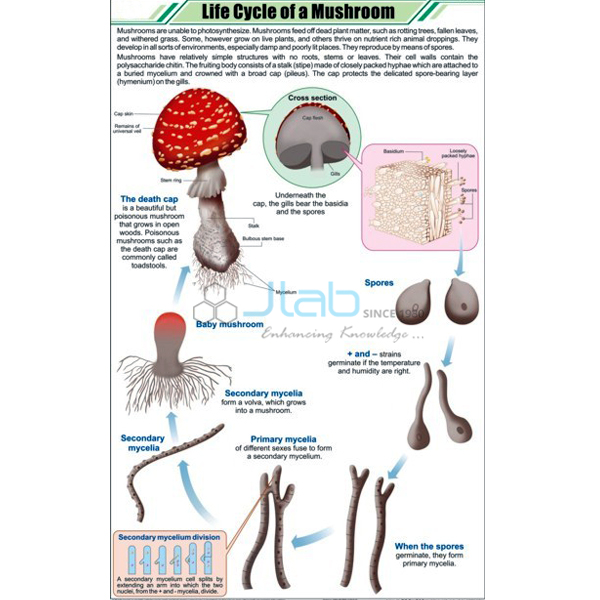
- Fungi Chart — fungi, often studied alongside algae in introductory botany.
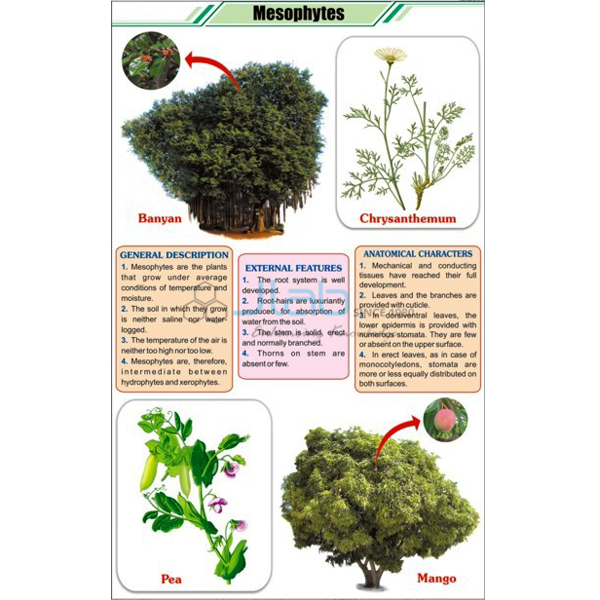
- Hydrophytes Chart — flowering plants that live in water.
The rest of the Botany Charts series and the full Charts range are a click away.
Request a Quote
Quotations come directly from JLab. Use the Add To Cart enquiry button, or send the quantity (minimum 10 units), the other botany charts you need and your delivery address or destination port through the contact page.
Last updated: 3 October 2026